
Windmills at Montmartre — History & Facts
What if silence could speak through light? In Windmills at Montmartre, the very essence of decay whispers through the soft glow of the evening sun, casting a poignant reflection on a once-thriving landscape. Focus on the windmills in the distance, their silhouettes stark against the fading sky. Notice how the warm hues of gold and burnt orange envelop the scene, contrasting with the cool blues and grays of the shadows that stretch along the ground. The brushstrokes are both delicate and deliberate, lending texture to the crumbling structures and the lush, yet untamed, foliage surrounding them.
This interplay of light and shadow reveals the passage of time, inviting the viewer to meditate on what was lost. The composition evokes a feeling of nostalgia, as if the windmills themselves are relics of a past era, embodying both resilience and decline. The quietude of the scene hints at a broader narrative of change, where nature reclaims its hold on human creations, and whispers of life intertwine with remnants of decay. Each detail, from the gentle sway of grass to the weathered wood of the mill, invites contemplation on impermanence and the beauty inherent in the fading moments of life. Painted in Paris between 1820 and 1830, this piece emerged during a time of profound transformation in the art world.
Georges Michel was navigating the transition from neoclassicism to romanticism, capturing the essence of a changing landscape both literally and metaphorically. His work reflects a growing fascination with nature's power, as well as a deep melancholy for what is inevitably lost to time.
More Artworks by Georges Michel
Browse all →
The Approaching Storm
Georges Michel

Landschap met zandweg
Georges Michel

Landschaft bei Paris
Georges Michel
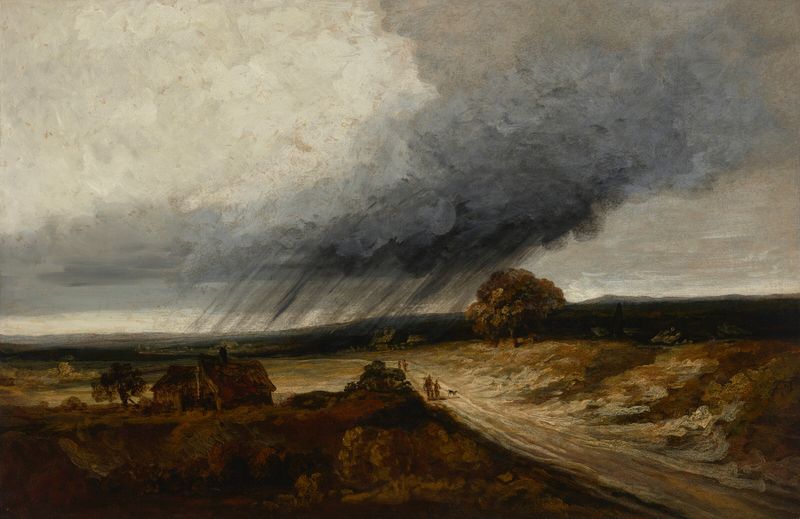
The Approaching Storm
Georges Michel

Landschap met overtrekkende bui
Georges Michel
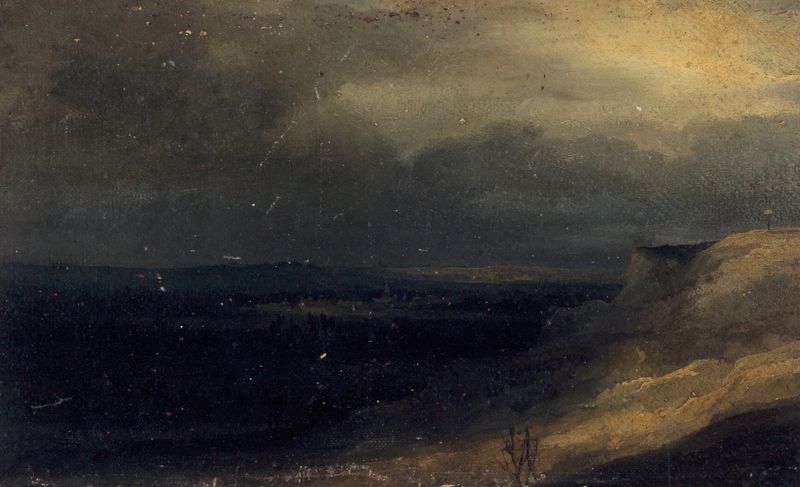
Vue présumée de Montmartre.
Georges Michel

Landschap met figuren en vee
Georges Michel

Approaching Storm
Georges Michel
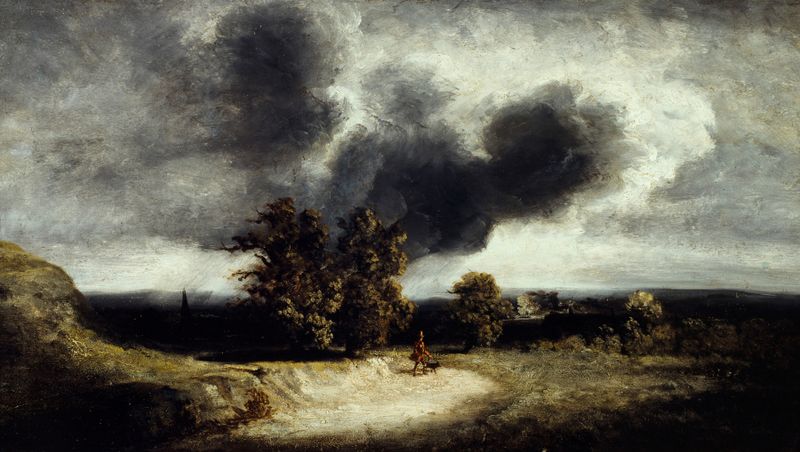
Paysage des environs de Paris.
Georges Michel

Gezicht op de Dome des Invalides uit de Champ de Mars
Georges Michel





