
Winter in Nittedal — History & Facts
Can beauty exist without sorrow? In Winter in Nittedal, the question hangs like the frosted breath of a winter's day, inviting contemplation on the intertwining threads of joy and melancholy. Focus first on the delicate interplay of light and shadow across the snow-laden landscape. Notice how the pale blues and whites create a serene atmosphere, while deeper grays subtly suggest the weight of the season. The soft contours of the hills undulate gently, drawing the viewer’s eye deeper into the tranquil scene, while the shadows cast by the trees hint at an unseen presence lurking just beyond the frame. Delve into the contrasts presented in this work.
The vibrant, almost playful strokes of white juxtapose the darker areas, invoking a sense of isolation yet simultaneously a profound beauty. The scattered patches of brighter color peeking through the white evoke a sense of hope amidst the chilling stillness, emphasizing how the cold can amplify warmth, making the heart yearn for the hidden joys beneath the surface. In 1905, Gerhard Munthe painted Winter in Nittedal amidst a burgeoning interest in naturalism and symbolism in art. Living in Norway, he was inspired by the rich landscapes of his homeland, which were often marked by harsh winters.
At this time, Munthe was exploring the tensions between reality and the emotional resonance of nature, aiming to capture not just what was seen, but what was felt in the heart of the viewer.
More Artworks by Gerhard Munthe
Browse all →
Waterfall at Stange in Hedmark
Gerhard Munthe
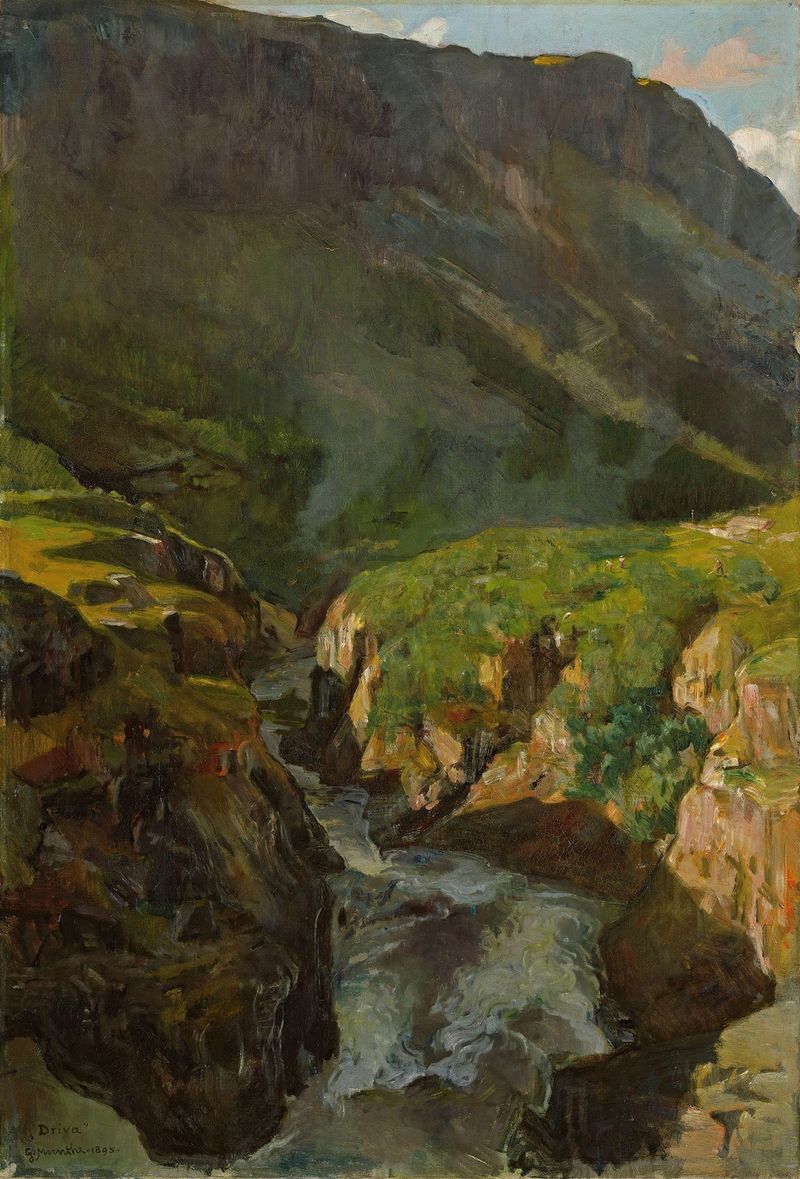
The River Driva
Gerhard Munthe
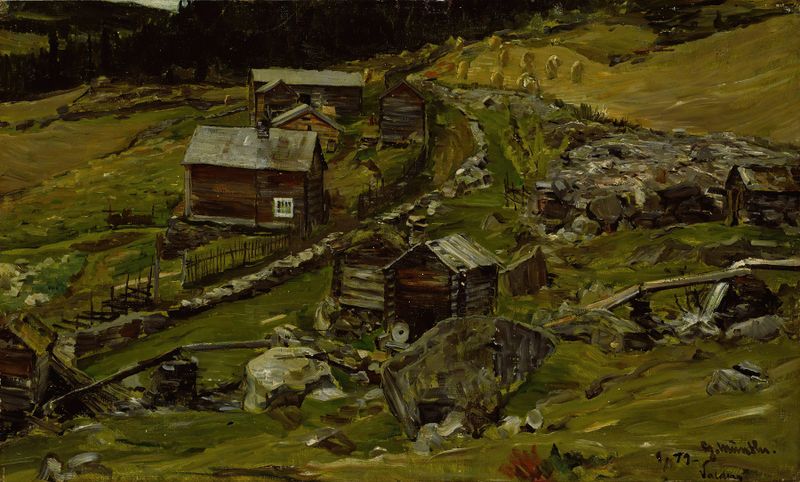
Farm in Valdres
Gerhard Munthe

At the Farm, Ulvin
Gerhard Munthe
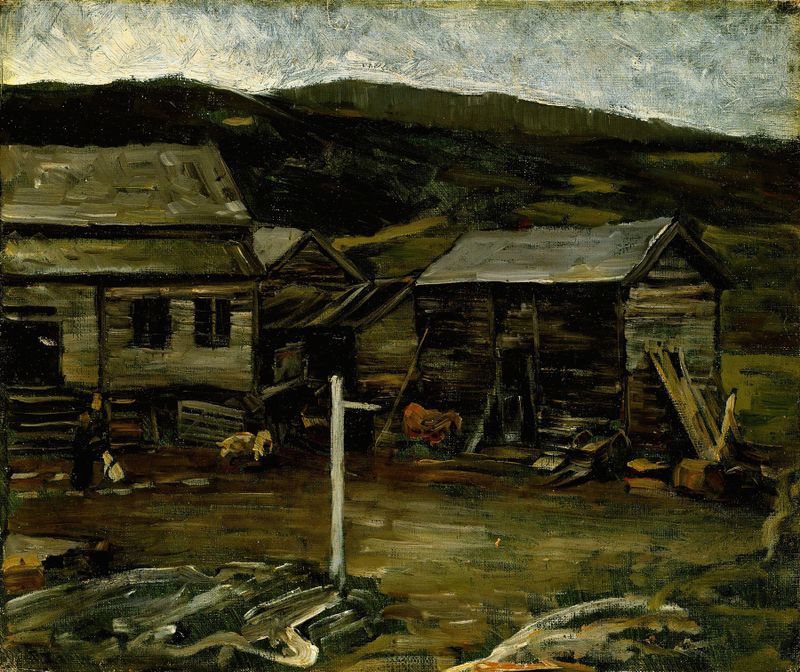
Autumn Evening at the Farm, Øylo
Gerhard Munthe
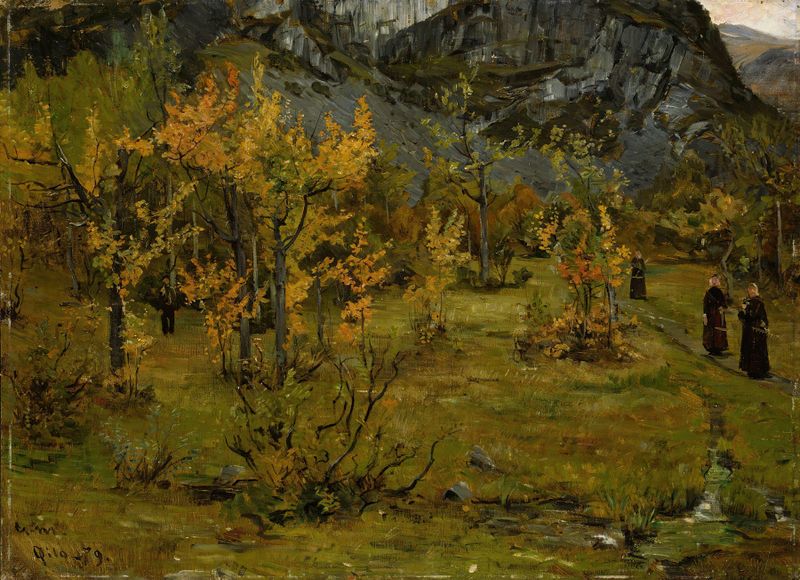
Autumn Landscape, Øylo
Gerhard Munthe

Throwing Snowballs
Gerhard Munthe

Brook at Øylo
Gerhard Munthe

Fields at Hedmark in Summer
Gerhard Munthe

Autumn Landscape, Øylo
Gerhard Munthe





