
Winter Landscape — History & Facts
What secret hides in the quiet of the canvas? In Winter Landscape, the chill of the season seems to whisper of mortality’s gentle touch, inviting contemplation beyond the serene beauty of nature. Look to the foreground where the stark white snow blankets the earth, punctuated by dark, skeletal trees reaching skyward. The composition draws the eye along the winding path, leading towards a distant horizon that promises both hope and desolation. Notice how the muted palette of grays and blues imprints a sense of stillness, while hints of warm light cast a glow on the figures trudging through the snow, embodying both struggle and resilience amidst the frigid landscape. Delve deeper into the work's emotional layers, and you’ll find a contrast between the vibrant life of the figures and the overwhelming stillness of their environment.
The subtle interplay of shadow and light suggests a transitory moment, capturing life’s fleeting nature as it dances on the edge of oblivion. The silhouettes of the trees loom like sentinels, guardians of the secrets buried beneath the snow, hinting at the fragility of existence. Between 1835 and 1838, the artist painted this work during a pivotal time in the Romantic movement, embracing nature's majesty while reflecting on the human condition. Emerging from the Dutch tradition, his focus on atmospheric effects and emotive landscapes aligned with a broader European fascination with the sublime.
As he stood before the canvas, he too was shaped by the tensions of his era—where industrialization threatened the natural world, echoing the themes of mortality and the ephemeral beauty that echoed in Winter Landscape.
More Artworks by Barend Cornelis Koekkoek
Browse all →
Italian Landscape
Barend Cornelis Koekkoek
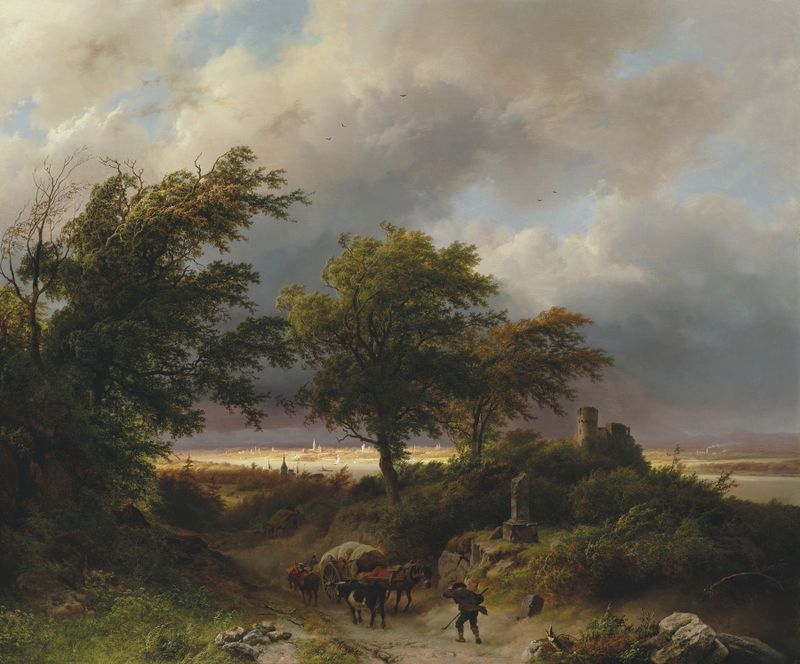
A wooded landscape
Barend Cornelis Koekkoek

Panoramalandschaft am Mittelrhein
Barend Cornelis Koekkoek
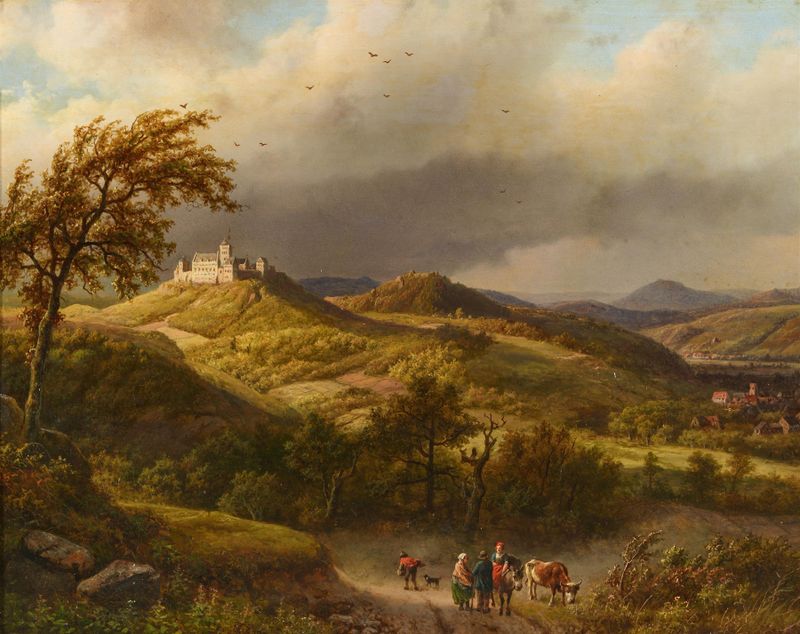
Die Wartburg bei Eisenach
Barend Cornelis Koekkoek
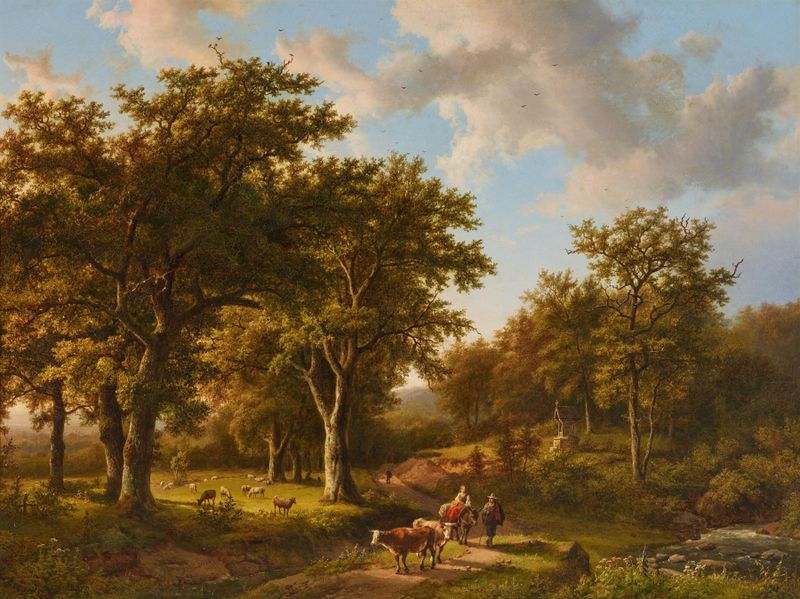
Waldlandschaft mit Hirten und Vieh
Barend Cornelis Koekkoek
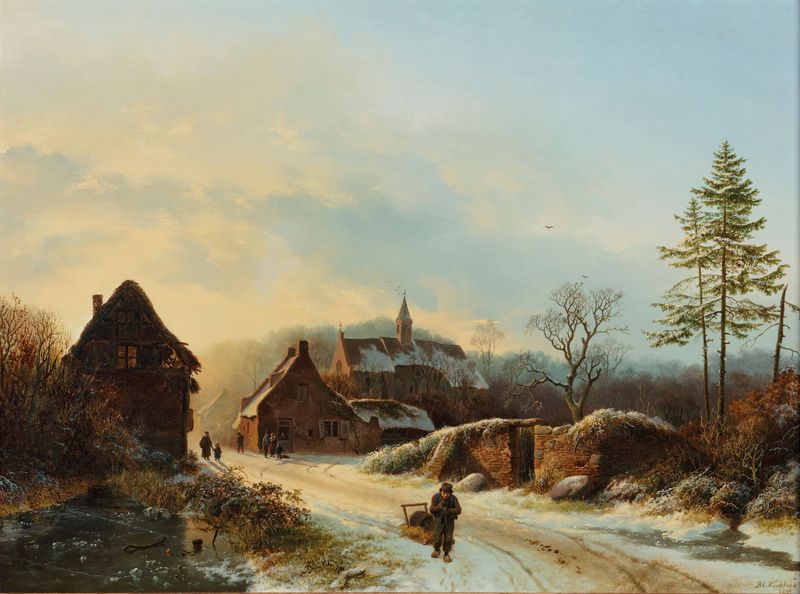
A winter’s day
Barend Cornelis Koekkoek

Travellers On A Road
Barend Cornelis Koekkoek
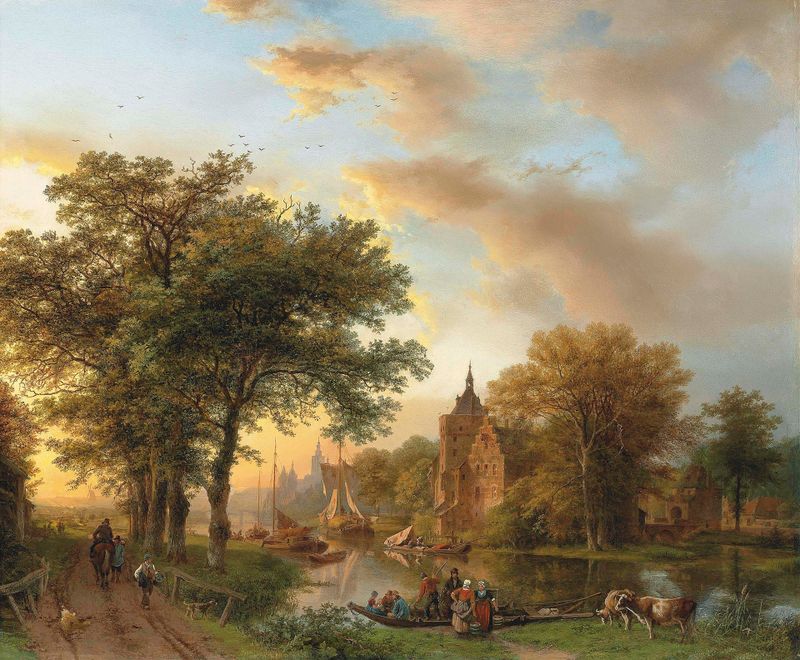
A River Landscape in Holland at Sunset
Barend Cornelis Koekkoek

A panoramic landscape with a view on the Middle-Rhine with a castle
Barend Cornelis Koekkoek
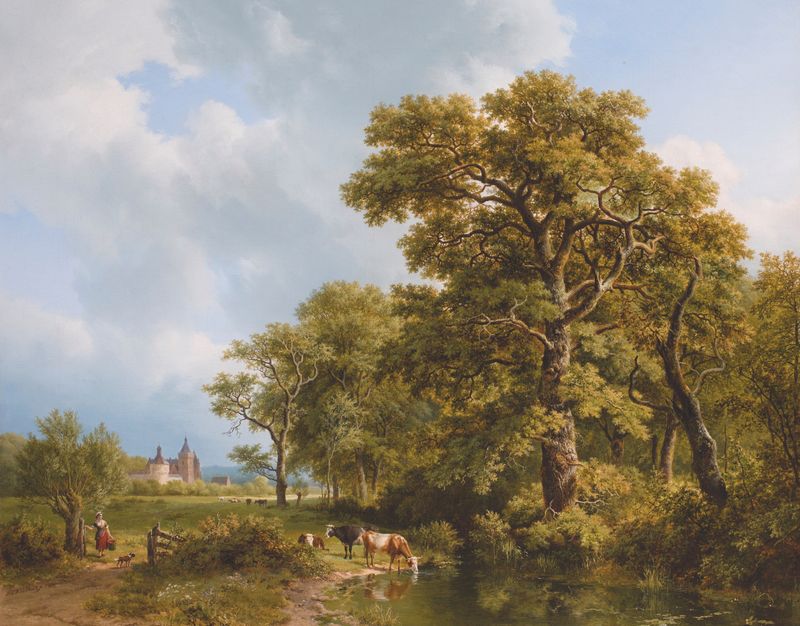
A Summer Landscape With cows Watering, A Castle In The Distance
Barend Cornelis Koekkoek





