Winterabend am Niederrhein — History & Facts
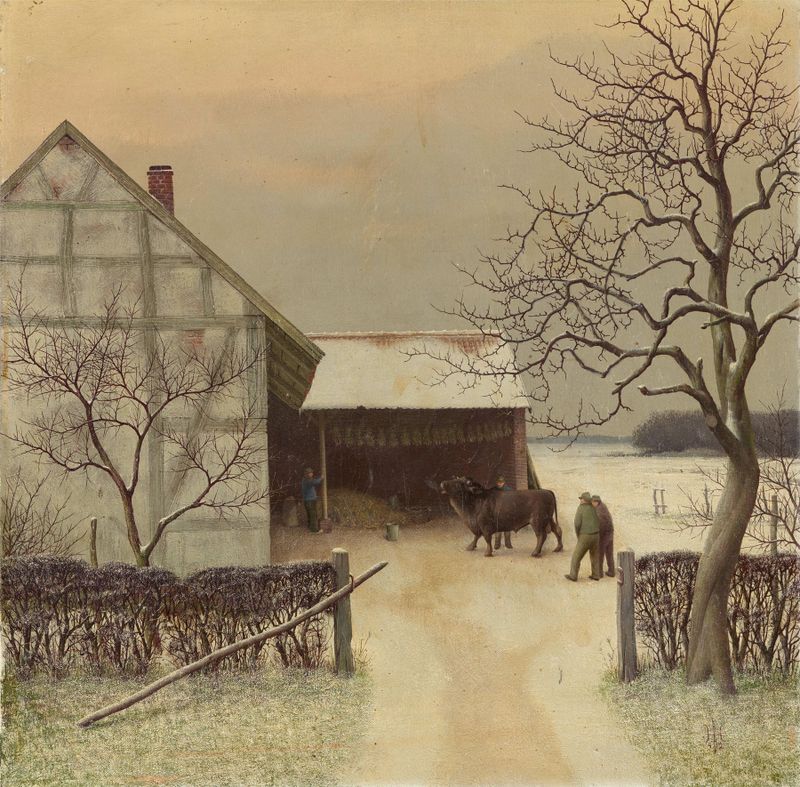
Can paint confess what words never could? In Herbert Böttger's Winterabend am Niederrhein, the canvas breathes with the quiet ache of longing, capturing both the essence of a winter evening and the deeper sorrows simmering beneath its serene surface. Focus on the cool blues and grays that dominate the landscape, drawing your eye first to the horizon where the fading light meets the rigid outlines of bare trees. Notice how the gentle brushstrokes convey a sense of stillness, while the delicate play of light on the snow suggests an ethereal glow, as if the scene is caught between reality and memory. The composition, marked by a muted palette, evokes a sense of nostalgia, inviting viewers to linger in the moment. Further delve into the emotional undercurrents present in the work.
The contrast between the starkness of the winter landscape and the warmth implied by the fading sunlight creates a poignant tension, echoing the profound sense of loss and yearning. Tiny details, like the footprints leading into the distance, hint at absent figures, suggesting stories untold and connections lost. This interplay between presence and absence adds layers to the narrative, making it resonate with anyone who's ever felt the pangs of distance. Created in 1943 while Böttger was in Germany during the war years, Winterabend am Niederrhein reflects a time of uncertainty and upheaval.
The artist, grappling with the chaos around him, turned to the tranquility of his surroundings, using his brush to articulate the emotional landscape of longing and nostalgia during a tumultuous period. This piece stands as a testament to the power of art in conveying what words often fail to express.