
Woman Standing near a Pond — History & Facts
Could a single brushstroke hold eternity? In Woman Standing near a Pond, a moment suspended in time echoes the delicate madness of existence, as the viewer grapples with the interplay of nature and solitude. Look to the left at the pond, where ripples form a serene dance across the water’s surface. The woman's silhouette, adorned in soft ochres and muted greens, draws the eye with its graceful curve, seamlessly intertwined with the natural landscape. Notice how the brushwork reveals a soft yet vibrant palette, with the sun filtering through leaves, casting dappled shadows that breathe life into the scene.
Each stroke seems imbued with a quiet longing, allowing the viewer to feel both the warmth of the sun and the coolness of the water. Hidden within this tranquil setting lies a tension between isolation and connection. The figure stands apart, yet her presence resonates with the environment, as if she is both a part of the pond's essence and a spectator of her own life. This duality evokes feelings of madness—an overwhelming urge for introspection amidst the beauty of nature.
The gentle waves of the pond mirror the complexities of her thoughts, as reflections shimmer, hinting at emotions that run deeper than the surface suggests. Painted in 1880, Bannister captured this scene during a period of artistic exploration in America, where the Impressionist movement began to innovate beyond traditional forms. Living in Providence, Rhode Island, he navigated both personal challenges and the social climate of post-Civil War America, striving for recognition in a predominantly white art world. This work reflects not only his mastery of color and light but also his deep engagement with the emotional landscapes of human experience amidst nature’s tranquility.
More Artworks by Edward Mitchell Bannister
Browse all →
Landscape
Edward Mitchell Bannister
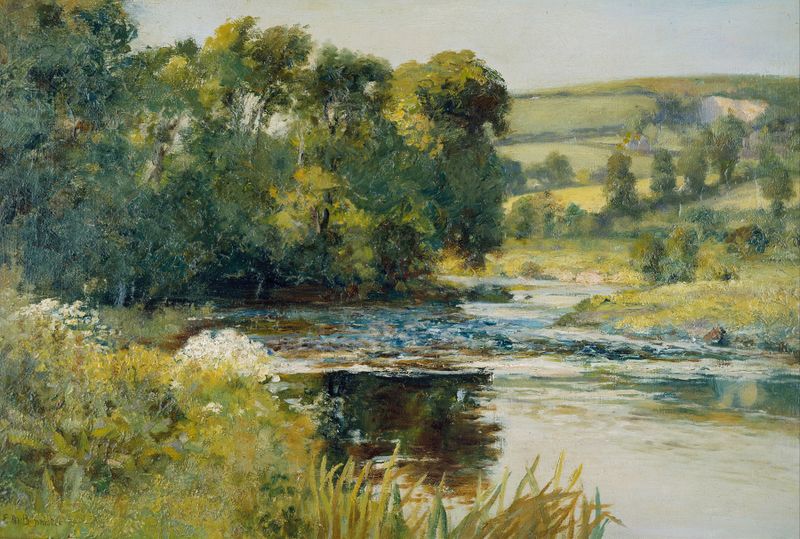
Streamside
Edward Mitchell Bannister

Untitled
Edward Mitchell Bannister

On the Seekonk
Edward Mitchell Bannister

Morning on the Shore
Edward Mitchell Bannister

Summer Twilight
Edward Mitchell Bannister
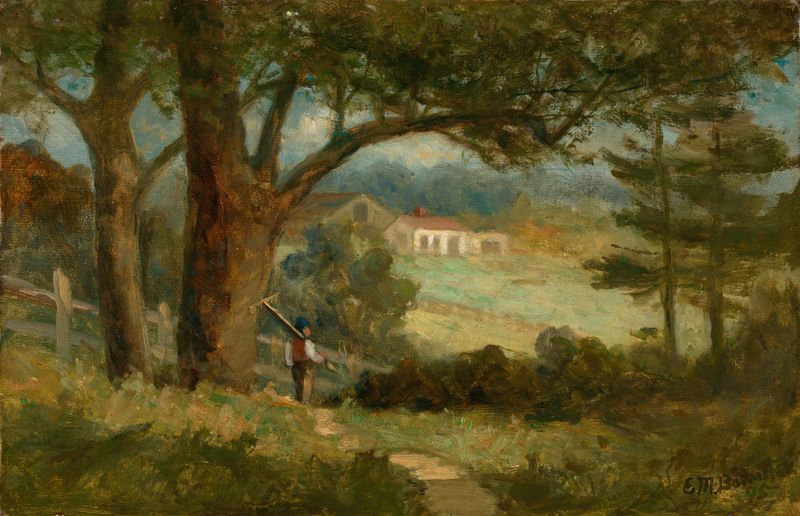
Homeward
Edward Mitchell Bannister
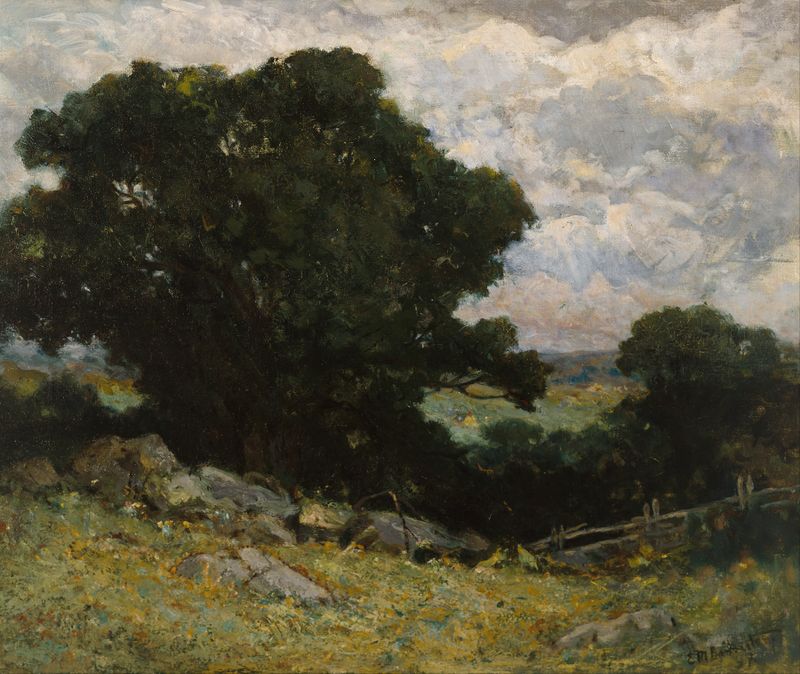
Landscape
Edward Mitchell Bannister
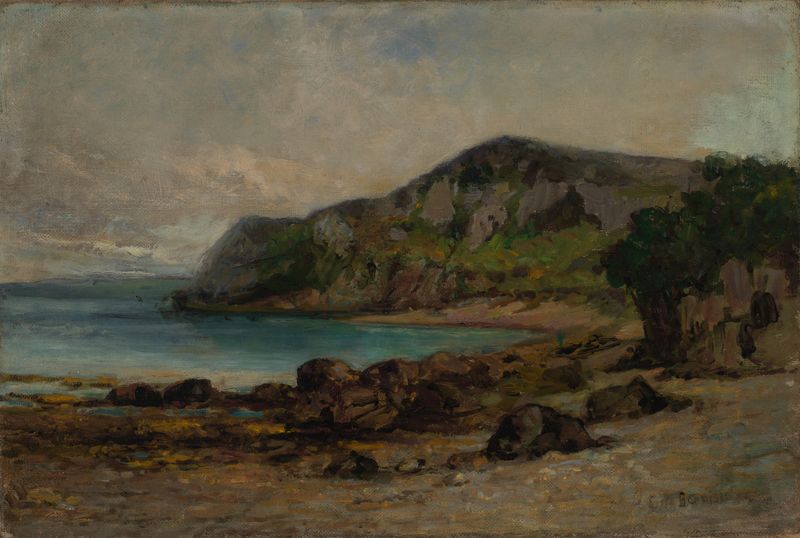
Rocks at Newport
Edward Mitchell Bannister

Sunset
Edward Mitchell Bannister





