
Wooded Landscape — History & Facts
In the heart of nature, faith intertwines with the rawness of existence, whispering secrets through the rustling leaves and the shimmering light. Look to the left at the towering trees, their trunks standing firm against the delicate brushstrokes of vibrant greens and earthy browns that form the lush landscape. The light filters through the foliage, creating a dappled effect on the forest floor while highlighting subtle textures in the undergrowth. The path beckons the observer, inviting a journey deeper into the wilderness, where shadows and light playfully dance, adding depth and intrigue. The contrast between the serene beauty of the foliage and the dark undercurrents of the path evokes a sense of duality.
Each stroke seems to breathe life into the verdant scenery while simultaneously hinting at the trials one may encounter on this journey. The intermingling of light and shadow symbolizes hope and despair, suggesting that faith exists alongside hardship and uncertainty in nature's embrace. During the late 19th century, as he painted this work, Gude was deeply influenced by the Romantic movement, which emphasized emotional depth and the sublime aspects of nature. Living in Norway, he was surrounded by breathtaking landscapes that inspired his art.
At this time, the art world was shifting towards a more introspective view of the natural world, and Gude's works reflected the complexity of beauty, urging viewers to acknowledge both light and darkness in their surroundings.
More Artworks by Hans Gude
Browse all →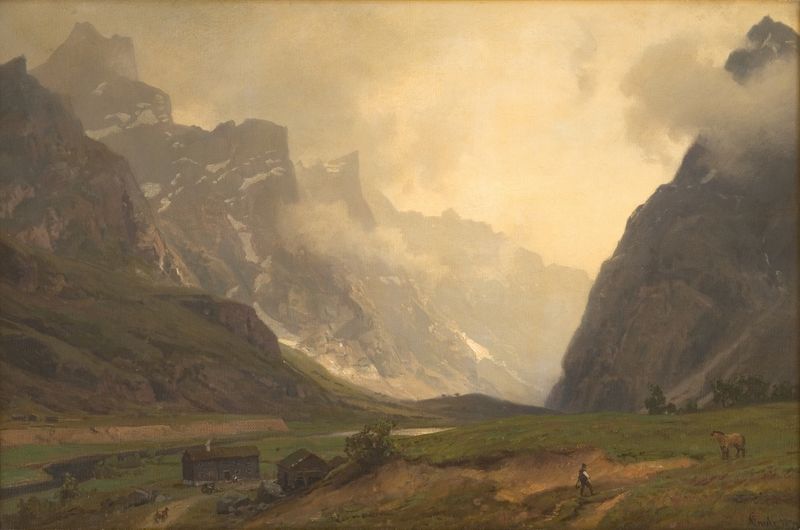
The Troll Peaks in Romsdalen, The Foot of Romsdalshorn to the Right
Hans Gude
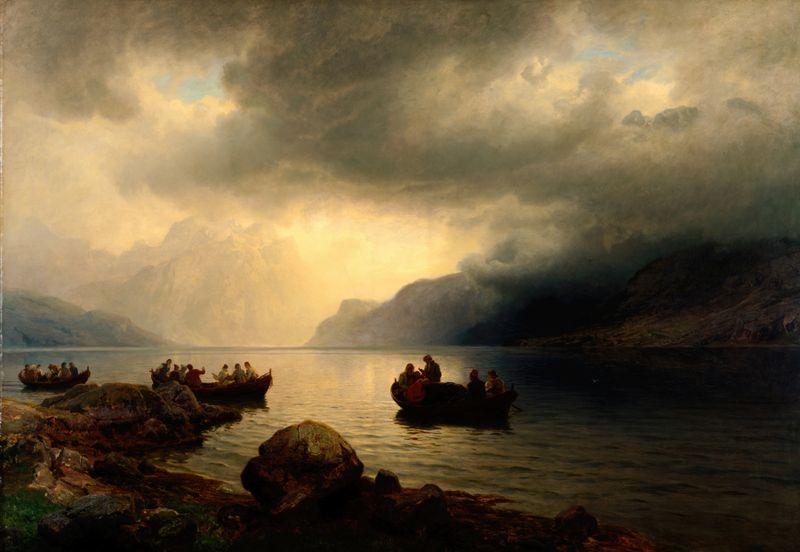
Funeral Procession on the Sogne Fjord
Hans Gude
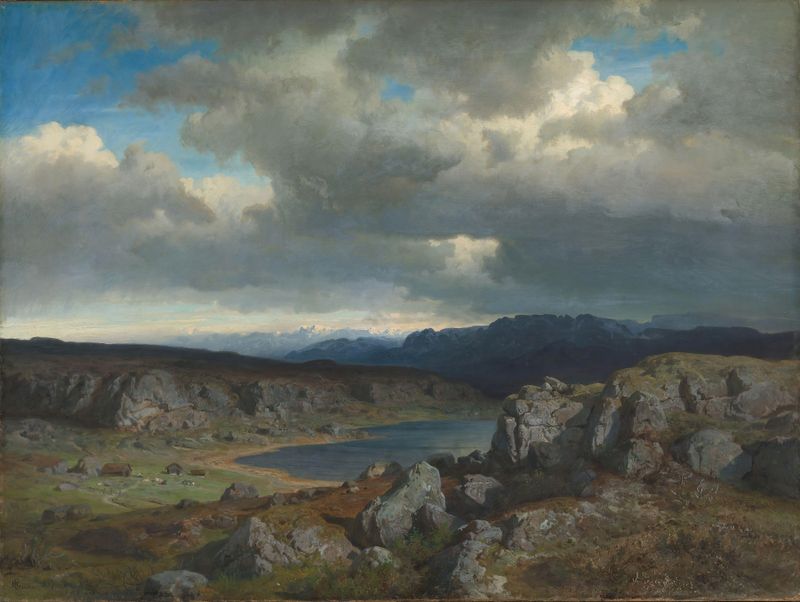
Norwegian Highlands
Hans Gude
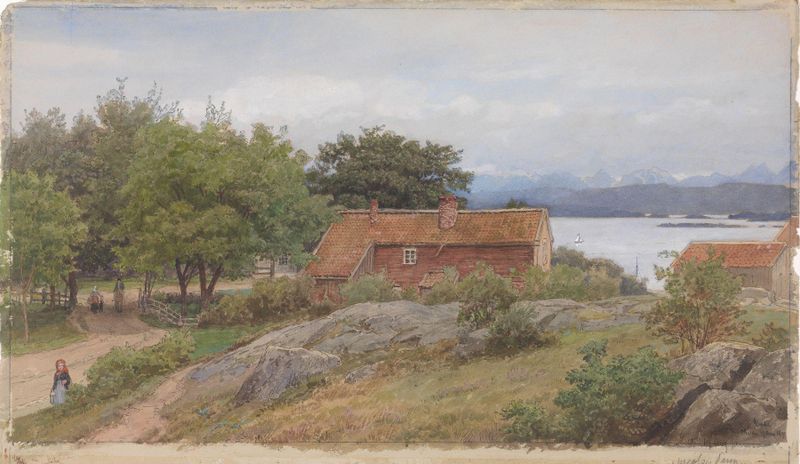
Landskap med bondegård ved Molde
Hans Gude
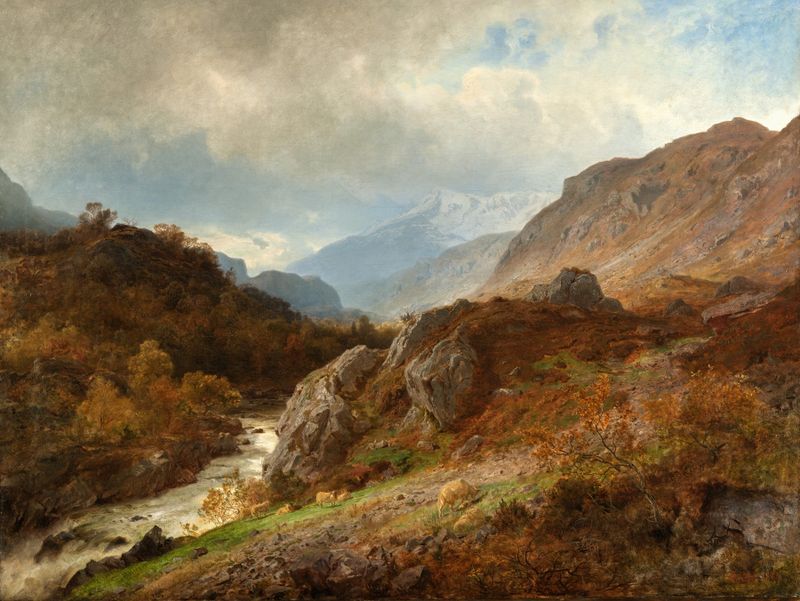
Mountain Landscape
Hans Gude
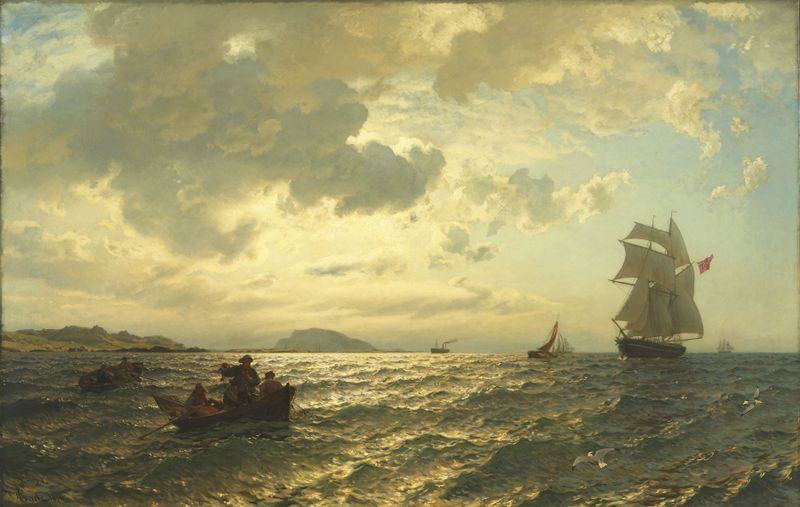
Fresh Breeze on the Norwegian Coast
Hans Gude
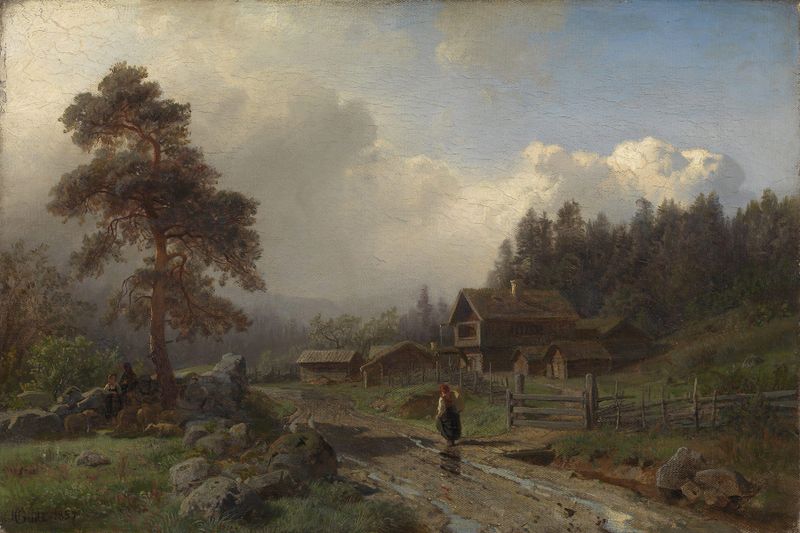
Norwegian Landscape in Rain
Hans Gude
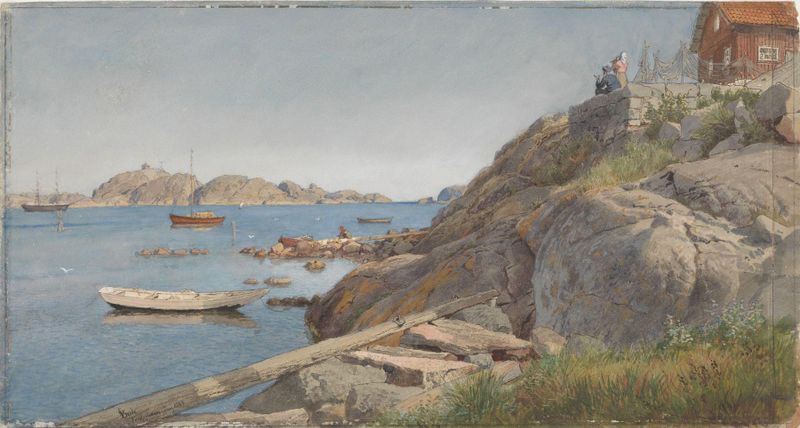
Landscape by Stavern
Hans Gude
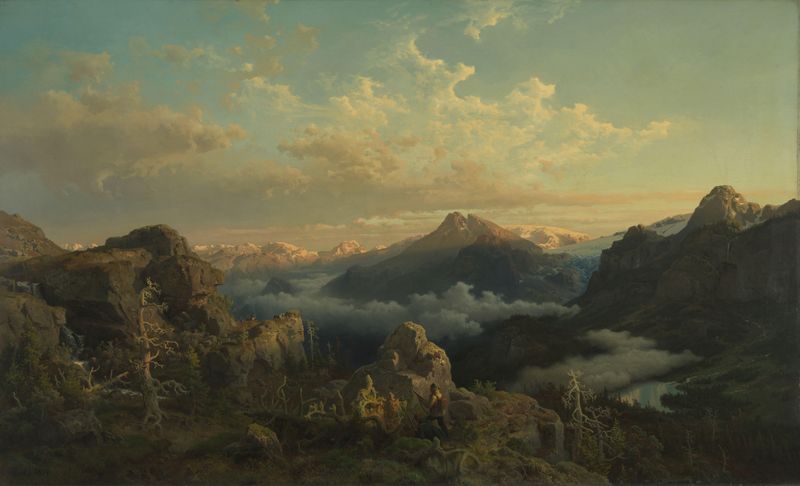
Norwegian Highlands in Sunrise
Hans Gude
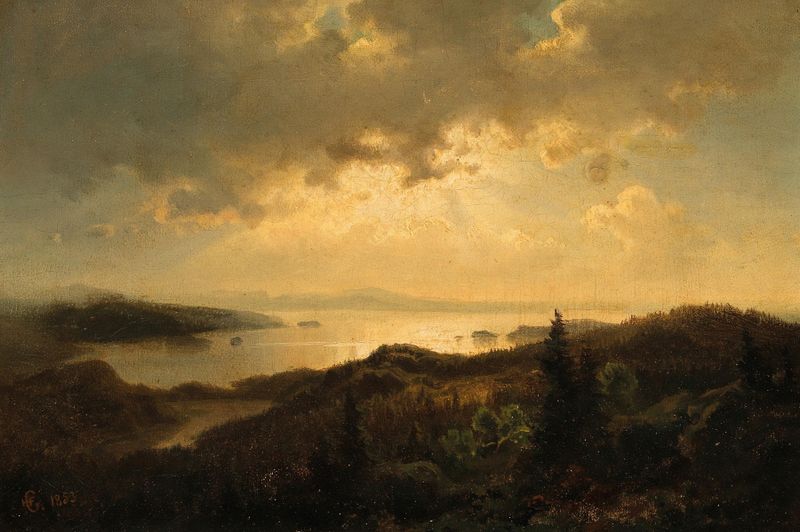
A Scene at Dusk in Norway
Hans Gude





