
Wrakhout op het strand van Renesse te Schouwen-Duivenland — History & Facts
Can paint confess what words never could? In Wrakhout op het strand van Renesse te Schouwen-Duivenland, the canvas speaks of profound loneliness, capturing the desolate beauty of a beach strewn with driftwood. Here, nature's remnants whisper stories of solitude, beckoning a quiet contemplation of existence. Look to the center, where a tangle of weathered wood lies stark against the pale sand. The artist expertly employs a muted palette, with soft grays and browns that evoke a sense of melancholy.
Notice how the light dances on the surface of the wood, illuminating its textures and creating a gentle contrast with the surrounding emptiness. The horizon stretches wide, inviting the eye to wander yet simultaneously emphasizing the isolation of the scene. The juxtaposition of the organic forms and the relentless expanse of the beach reveals layers of meaning: the driftwood is not merely debris but a symbol of displacement and time’s passage. Each piece seems to carry the weight of memories, evoking both a sense of nostalgia and an unshakeable presence of solitude.
This interplay transforms the landscape into a poignant reflection on the human condition, where the inherent beauty of nature coexists with feelings of abandonment. Willem Anthonie van Deventer painted this work during his active years between 1834 and 1893, a time marked by a growing interest in capturing the Dutch landscape. Living in an era when Romanticism influenced art, he sought to convey emotional depth through nature, often portraying the interplay of light and shadow as a metaphor for inner feelings. The artist’s focus on solitude and natural beauty in this piece resonates with the broader discussions of identity and introspection prevalent in the 19th century.
More Artworks by Willem Anthonie van Deventer
Browse all →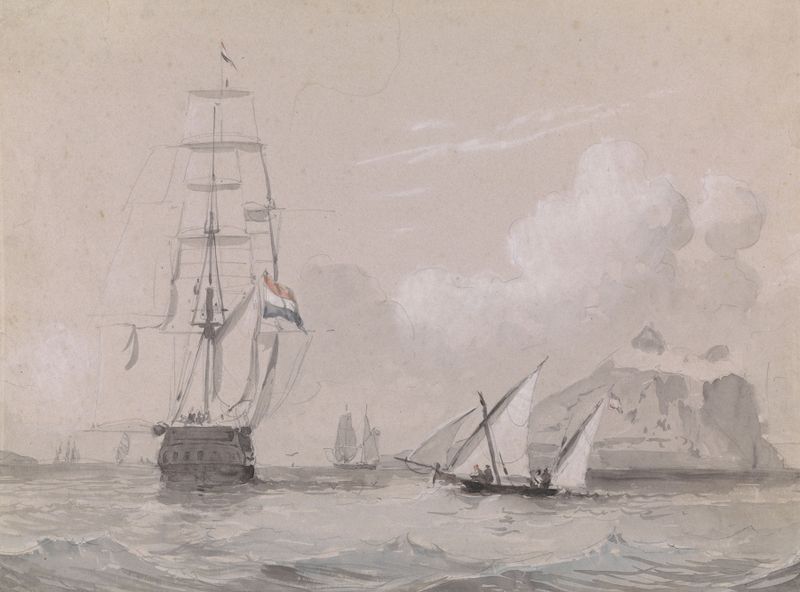
Hollands zeilschip voor de kust van Gibraltar
Willem Anthonie van Deventer

Maas voor Rotterdam, met een Amerikaans en Zweeds schip
Willem Anthonie van Deventer
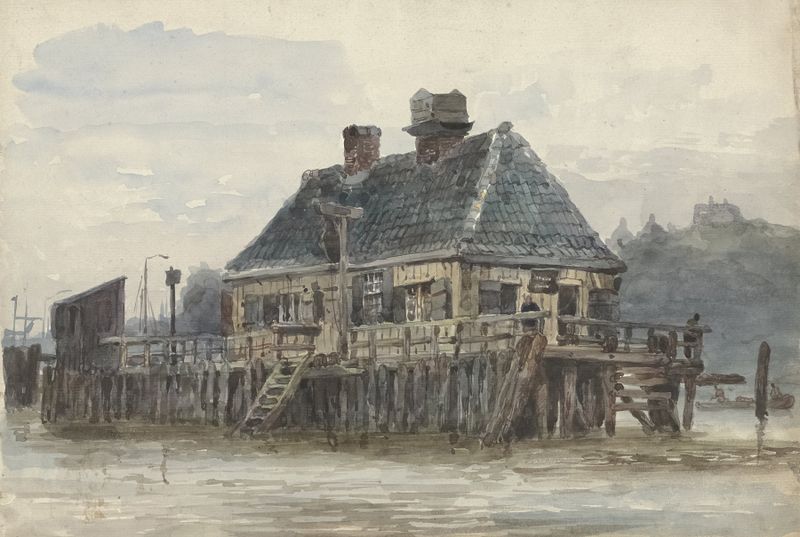
Huis op een steiger
Willem Anthonie van Deventer
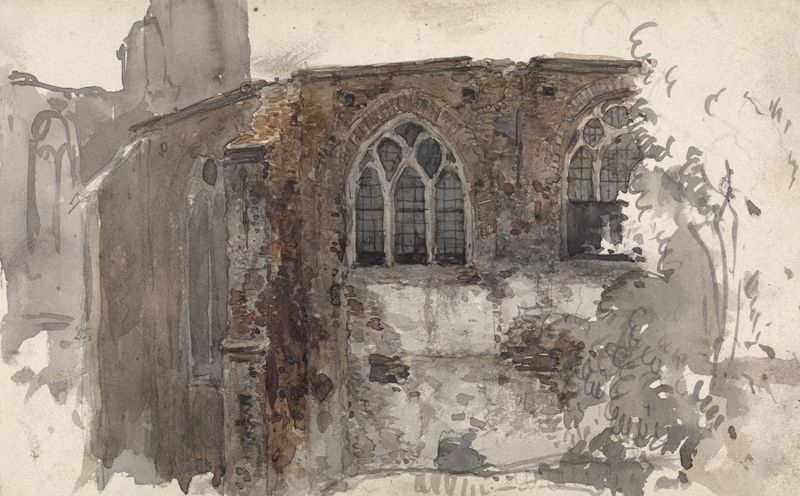
Ruïne van een kerk
Willem Anthonie van Deventer
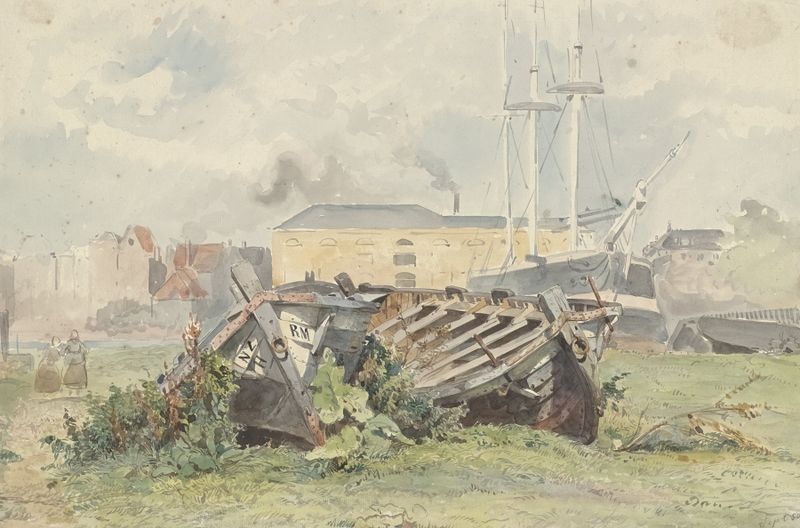
Scheepswerf
Willem Anthonie van Deventer
Oude schuur
Willem Anthonie van Deventer
Schuiten op het strand
Willem Anthonie van Deventer
Kerktoren te Delft
Willem Anthonie van Deventer

Katwijk
Willem Anthonie van Deventer

Rots van Gibraltar
Willem Anthonie van Deventer





