
Y no hai remedio — History & Facts
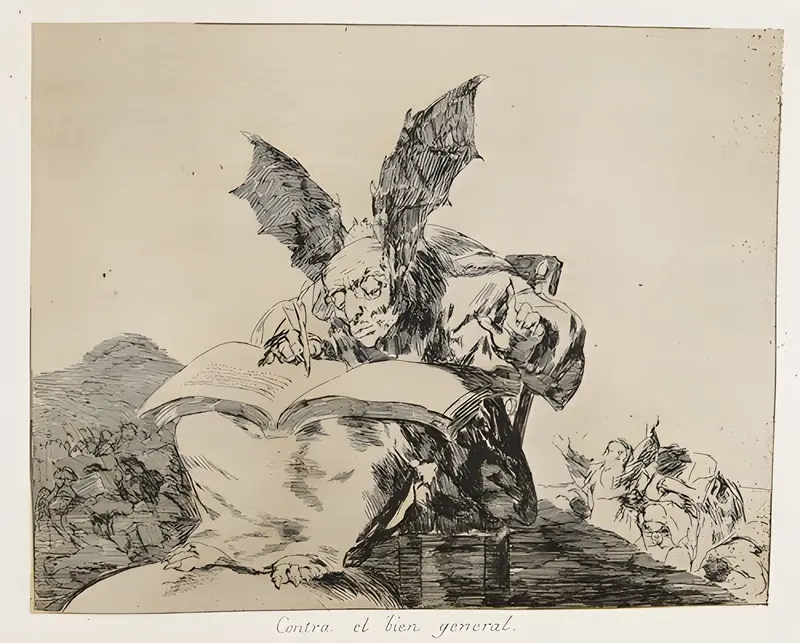
In Y no hai remedio, Francisco de Goya presents a stark scene filled with dark colors and haunting figures. The painting depicts the aftermath of a brutal execution, where a group of men is shown facing their fate. The somber tones of gray and brown dominate the canvas, enhancing the sense of despair and hopelessness.
The expressions of the figures convey a deep sense of fear and resignation, making the viewer acutely aware of the tragedy unfolding. This artwork is an oil on canvas, showcasing Goya's skill in capturing human emotion and suffering. The dimensions are approximately 150 x 200 cm, making it a large and impactful piece. Goya's use of light and shadow adds depth to the figures, emphasizing their plight.
The composition is carefully arranged to draw the viewer's eye to the central figures, creating a powerful focal point. Francisco de Goya created Y no hai remedio during a tumultuous period in Spanish history, marked by the Peninsular War. This painting is part of his series known as the 'Disasters of War', which reflects his response to the horrors he witnessed. An interesting fact about this work is that it was not published until after Goya's death, highlighting the controversial nature of its subject matter.
The painting serves as a poignant reminder of the brutality of war and its impact on humanity.
More Artworks by Francisco de Goya

El sueño de la razon produce moustruos (Serie Caprichos)
Francisco de Goya

Portrait of Doña María Teresa de Vallabriga y Rozas (1759-1820)
Francisco de Goya

Portrait of the Duchess of Osuna
Francisco de Goya

Queen of Spain Maria Louisa, née Bourbon-Parma
Francisco de Goya

Queen María Luisa on horseback
Francisco de Goya

The Immaculate Conception
Francisco de Goya

Portrait of Gaspar Melchor de Jovellanos
Francisco de Goya

Portrait of Maria Josefa of Spain
Francisco de Goya

Charles IV in his Hunting Clothes
Francisco de Goya
Los desastres de la guerra
Francisco de Goya





