
The Immaculate Conception — History & Facts
When Francisco de Goya accepted the commission for The Immaculate Conception in 1784, he was not yet the celebrated court painter we know today, but a rising artist eager to prove himself to the powerful clergy of Spain. This work was created for the church of San Francisco el Grande in Madrid, a prestigious commission that placed Goya alongside established names such as Francisco Bayeu. The theme was a familiar one in Spanish art, but Goya’s approach would soon be recognized for its freshness and intensity.
The painting stands at a turning point in Goya’s career: it is among his earliest major religious works, marking his transition from tapestry cartoons to large-scale altarpieces. At the heart of the painting, the Virgin Mary appears at the moment of her miraculous conception, untouched by original sin—a doctrine passionately embraced in 18th-century Spain. Goya presents her ascending, eyes uplifted, hands crossed in humility, surrounded by a swirling host of cherubs and clouds. The crescent moon at her feet and the lilies in her arms are age-old symbols of purity, while the enveloping light draws the viewer’s gaze upward, echoing the spiritual ascent.
Compared to the serene, almost static Virgins of Murillo, Goya’s Mary is dynamic and alive, her drapery and the putti around her animated by movement and light. The composition’s energy and the boldness of the brushwork hint at the expressive force that would later define Goya’s mature style. After its installation in San Francisco el Grande, The Immaculate Conception remained largely in place, admired by parishioners and visitors alike, though it never gained the fame of Goya’s later, darker works. The painting’s attribution has never been in doubt, thanks to surviving records of the commission and Goya’s own signature.
Today, it is recognized as a significant milestone in Goya’s early religious output, foreshadowing the psychological depth and technical daring of his later masterpieces. For the artist, this painting was both a public declaration of faith and a demonstration of ambition, securing his reputation among Madrid’s ecclesiastical patrons and paving the way for his future ascendancy at court.
More Artworks by Francisco de Goya

El sueño de la razon produce moustruos (Serie Caprichos)
Francisco de Goya

Portrait of Doña María Teresa de Vallabriga y Rozas (1759-1820)
Francisco de Goya

Portrait of the Duchess of Osuna
Francisco de Goya

Queen of Spain Maria Louisa, née Bourbon-Parma
Francisco de Goya

Queen María Luisa on horseback
Francisco de Goya

Y no hai remedio
Francisco de Goya

Portrait of Gaspar Melchor de Jovellanos
Francisco de Goya

Portrait of Maria Josefa of Spain
Francisco de Goya

Charles IV in his Hunting Clothes
Francisco de Goya
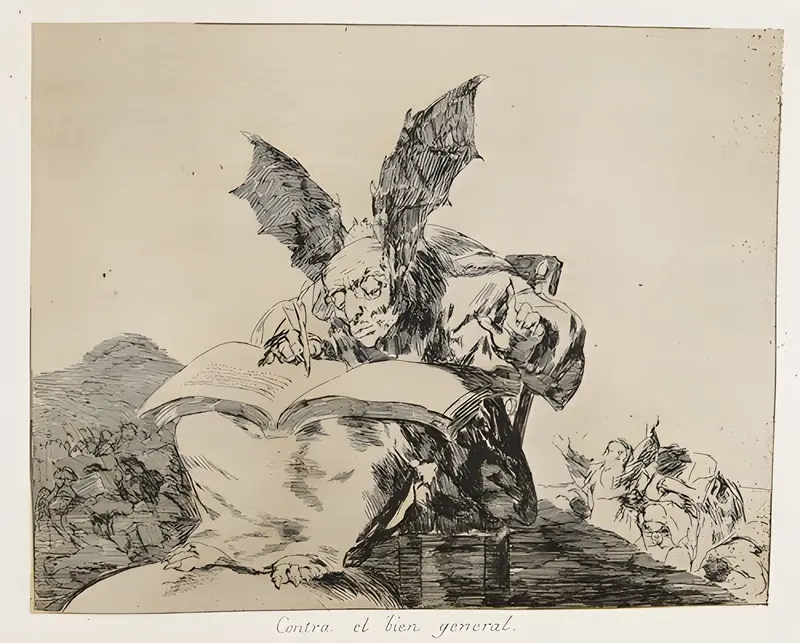
Los desastres de la guerra
Francisco de Goya





