Young farmer holding his hat — History & Facts
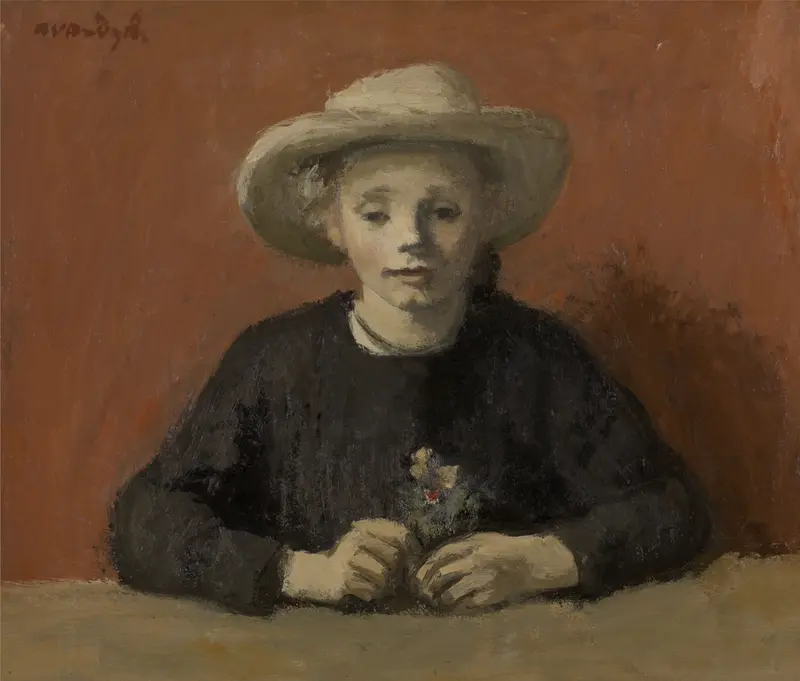
A young man stands paused in a moment of quiet, his gaze cast downward, one hand gently circling the brim of a straw hat. The brushwork of Albert Van Dyck is loose yet deliberate, the strokes in the jacket and background swirling with energy, yet the figure himself is still, almost meditative. The light falls softly over his features, picking out the copper in his hair and the pale tones of his skin, while the green and russet backdrop frames him without distraction.
The hat, battered and practical, is not worn but held, as if marking the end of a long day's labor or the beginning of a reflective pause. This is not just a portrait but a study in inwardness, the sitter’s expression unreadable but deeply human. Painted between 1925 and 1941, this work belongs to a period when Belgian artists like Van Dyck were turning their attention to everyday rural life, capturing the dignity and individuality of working people. Such portraits were rarely grand commissions; instead, they were often created for local patrons or as personal explorations of character and mood.
The textured paint and earthy palette root the image firmly in its time, echoing a Europe between wars, where the rhythms of the countryside still shaped daily existence. Little is recorded about this specific painting’s journey, now found in a modern auction collection, but its quiet honesty invites the viewer to linger and imagine the world behind the sitter’s steady hands and thoughtful face.