
Zealand Landscape. View from Bjerresø Mark towards Vejrhøj and Dragsholm Manor — History & Facts
In Zealand Landscape, Johan Thomas Lundbye encapsulates a profound sense of emptiness, where nature’s splendor reveals a haunting solitude within its vastness. Look to the horizon where rolling hills meet an expansive sky, brushed with gentle strokes of blue and gold. The subtle interplay of light creates a soft glow that bathes the landscape, highlighting the contours of Vejrhøj and the distant silhouette of Dragsholm Manor. Notice how the foreground, populated with tender green blades of grass, draws your eye into this serene yet stark depiction of the Danish countryside.
Lundbye’s meticulous technique and careful color choices evoke a sense of tranquility, while also inviting contemplation. Yet, within this beauty lies an emotional tension. The horizon stretches infinitely, hinting at the isolation that often accompanies such picturesque scenes. The delicate clouds, though ethereal, carry an undercurrent of melancholy as they drift, mirroring the fleeting nature of life.
This juxtaposition between tranquility and emptiness becomes a poignant reflection on human existence, where beauty can sometimes mask an underlying void. In 1840, Lundbye painted this work during a period of personal introspection and a growing recognition within the Romantic movement. He settled in Denmark, navigating the tension between the allure of nature and the complexity of human emotion. At this time, artists were increasingly drawn to the themes of landscape and identity, as society grappled with the rapid changes of the modern world.
This piece stands as a testament to Lundbye’s ability to capture the duality of beauty and solitude.
More Artworks by Johan Thomas Lundbye
Browse all →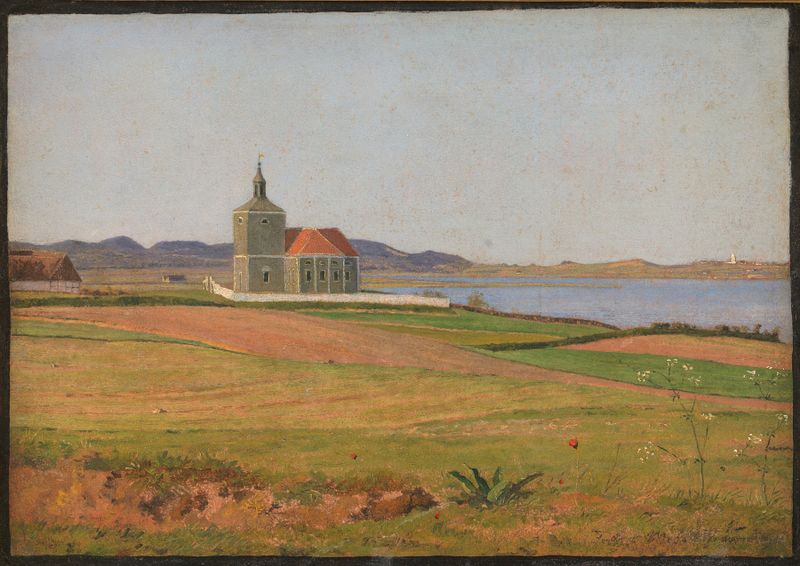
Vinderød Church near Frederiksværk
Johan Thomas Lundbye
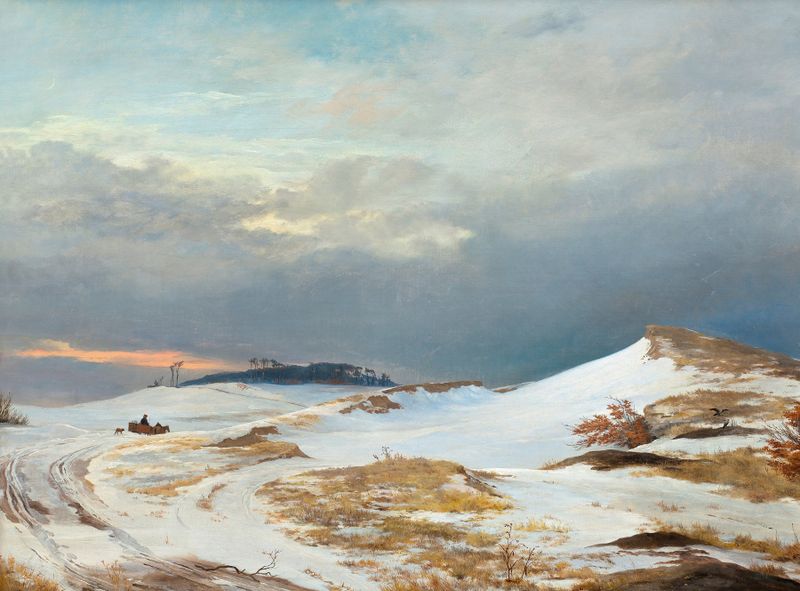
Winter landscape with Northern Zealand character
Johan Thomas Lundbye
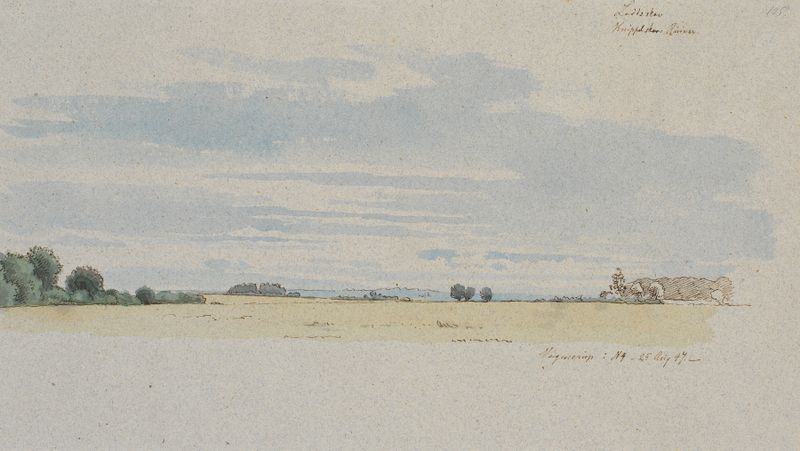
Udsigt over marker mod skove
Johan Thomas Lundbye
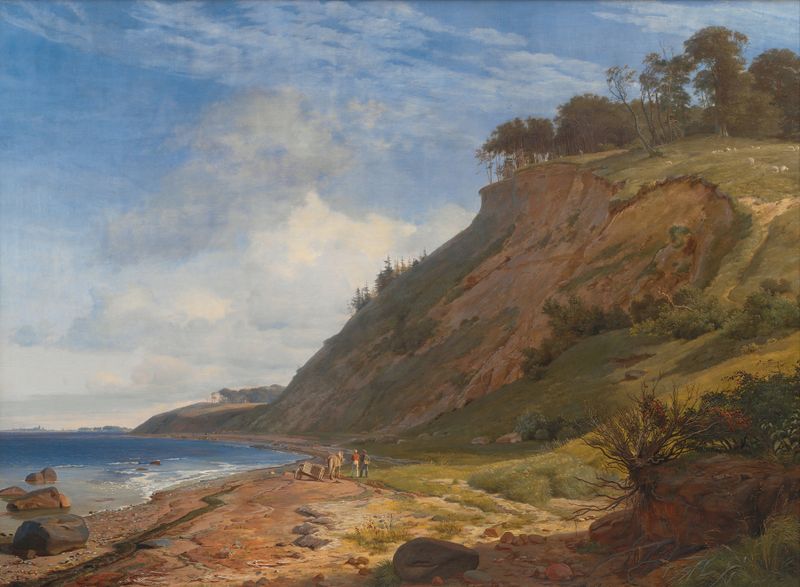
A Danish Coast. View from Kitnæs on Roskilde Fjord. Zealand
Johan Thomas Lundbye

Dolmen At Raklev, Røsnæs
Johan Thomas Lundbye

An Evening beside Lake Arresø
Johan Thomas Lundbye
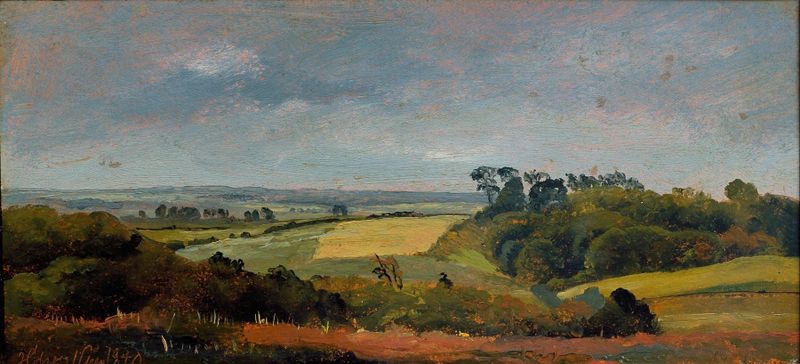
Near Høbjerg. Frederiksværk. Study
Johan Thomas Lundbye

Zealand Landscape. Open Country in North Zealand
Johan Thomas Lundbye
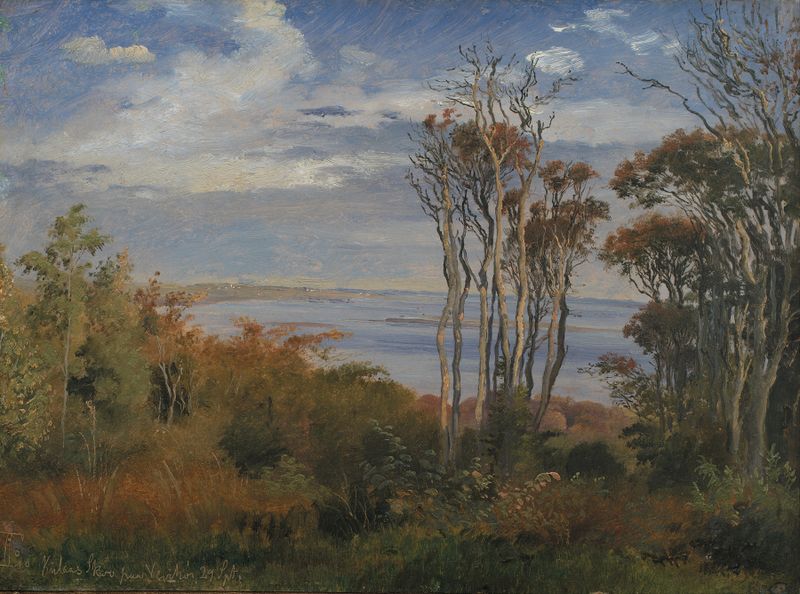
Kolås Wood, Vejrhøj
Johan Thomas Lundbye
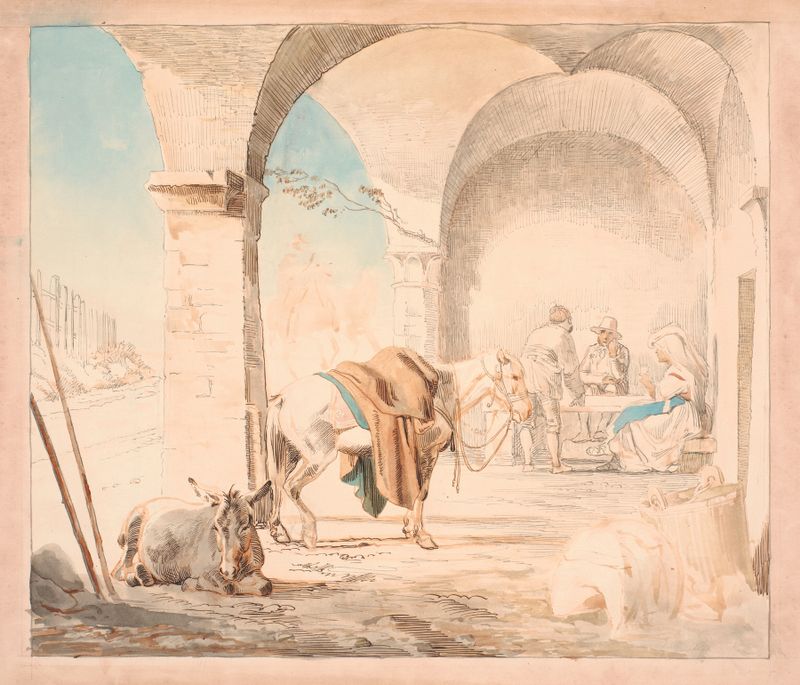
Scene fra et osteri
Johan Thomas Lundbye





