
Seascape with a Rocky Coast, Fishermen and Ships — History & Facts
What first draws the eye in Zeegezicht met rotsachtige kust, vissers en schepen is the sense of quiet industry beneath a vast, cloud-laden sky. The painter, Adam Willaerts, sets the drama not in the ships themselves but in the lives unfolding on the rocky shore: men stoop to sort their catch, a figure hauls nets from the surf, and a solitary fisherman stands at the water’s edge, his gaze lost in thought. The sails, tinged with ochre, catch the last of the light and guide the viewer from the foreground bustle to the distant, misty silhouettes of ships at anchor.
The low horizon allows the sky to dominate, its shifting greys and golds echoing the uncertain fortunes of those who live by the sea. Every gesture and patch of color serves a purpose, from the crimson caps of the fishermen to the careful arrangement of fish along the shore, inviting the viewer to linger over each detail. Works like this, painted between 1595 and 1660, belong to a world where Dutch and Flemish artists turned everyday labor and local landscape into subjects worthy of careful observation and pride. In the early seventeenth century, scenes of coastal life were prized by a new class of urban collectors—merchants, shipowners, and burghers whose fortunes rose and fell with the tides.
The genre celebrated both the dangers and rewards of maritime enterprise, reflecting a society deeply tied to the sea. Adam Willaerts was known for weaving narrative into his seascapes, blending real observation with imagined drama, and this painting—now in the collection of Rijksmuseum Twenthe—offers a window into that era’s fascination with the interplay of nature, work, and community. Look again, and notice how the rocky outcrop and distant ruins hint at stories beyond the frame, inviting you to imagine the world just out of sight.
More Artworks by Adam Willaerts
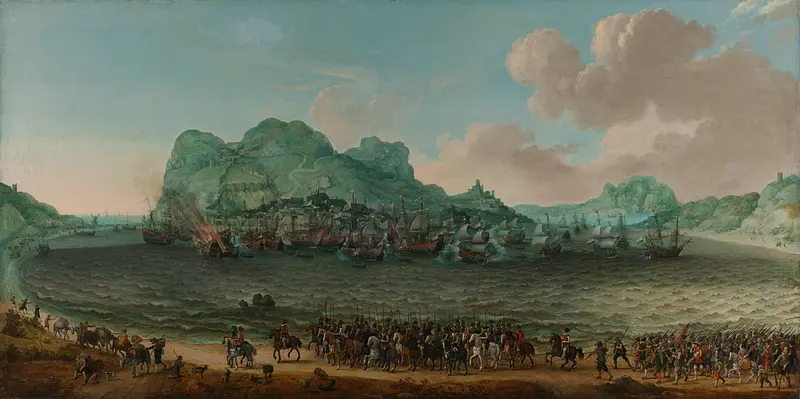
Victory over the Spanish near Gibraltar by a Fleet Commanded by Admiral Jacob van Heemskerck, 25 April 1607
Adam Willaerts
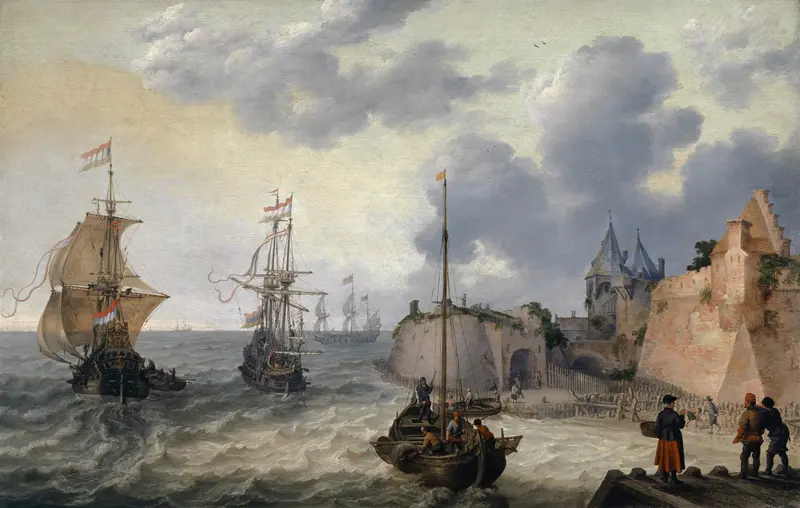
Dutch Harbour with Sailing Ships
Adam Willaerts
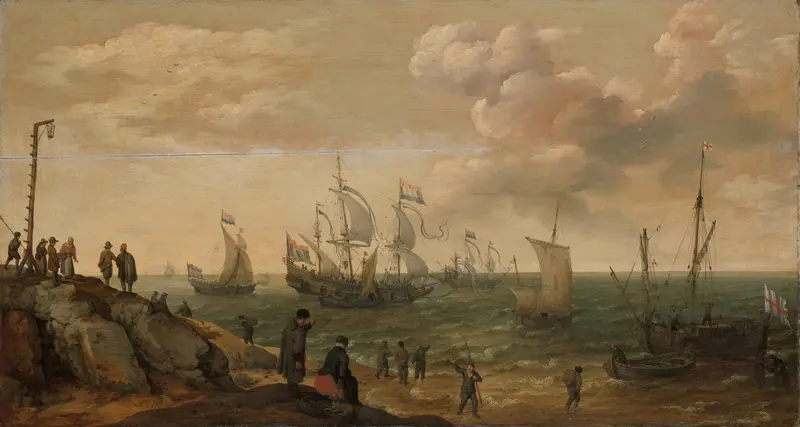
Ships along the Shore
Adam Willaerts
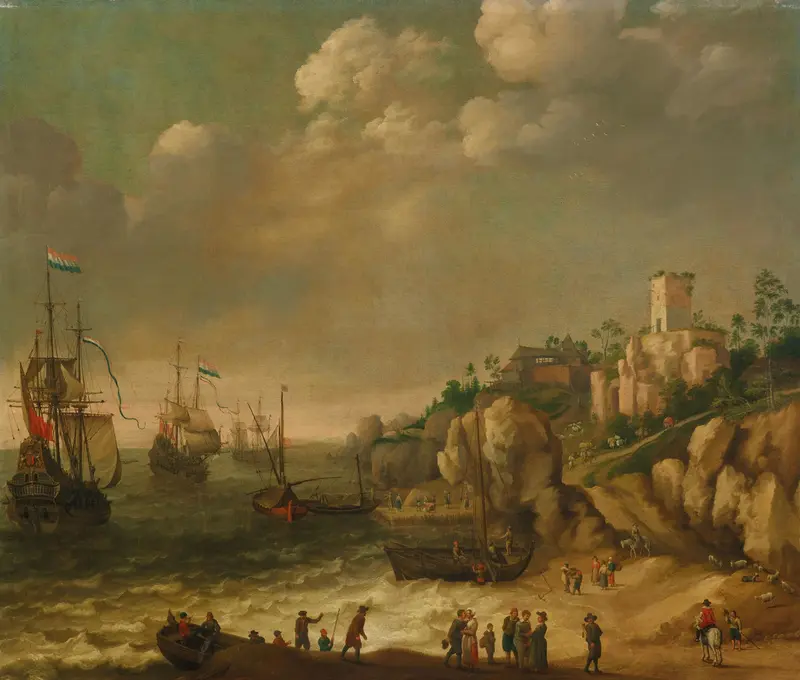
Dutch ships in front of a rocky coast with figures, buildings beyond
Adam Willaerts
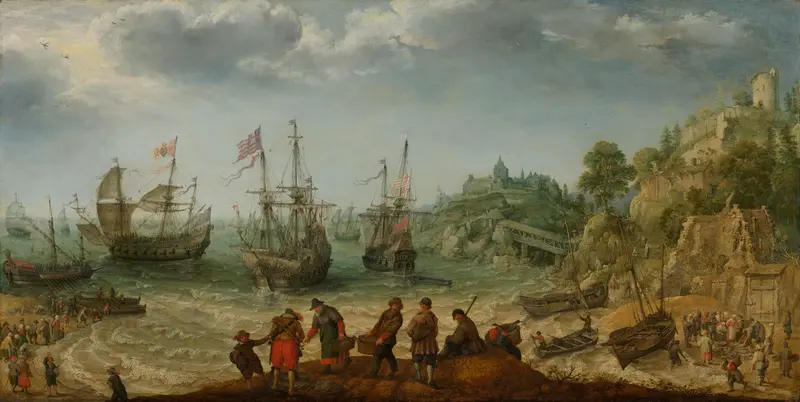
Ships off a Rocky Coast
Adam Willaerts
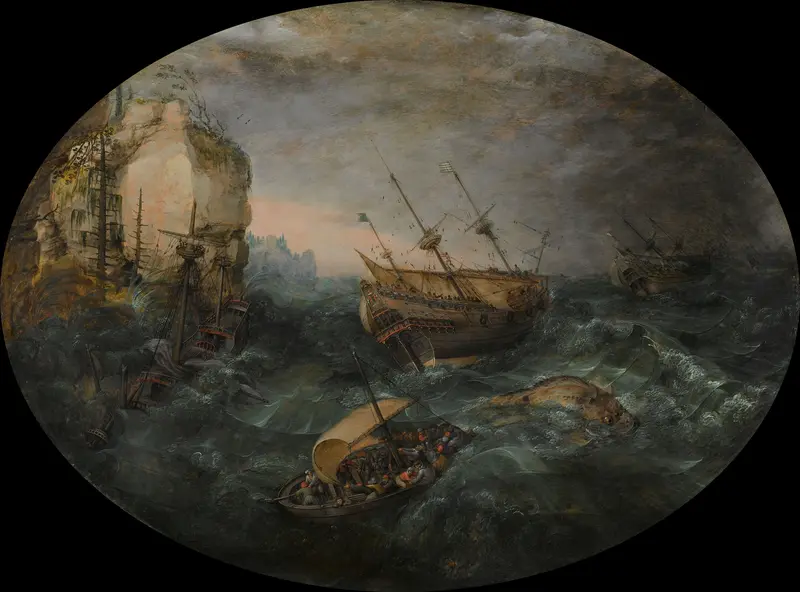
Shipwreck off a Rocky Coast
Adam Willaerts
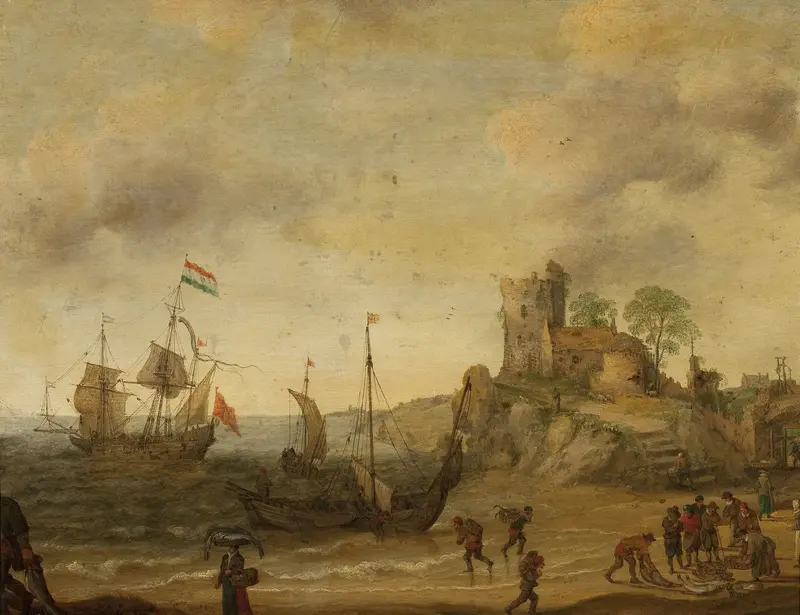
Fishermen at the seaside
Adam Willaerts
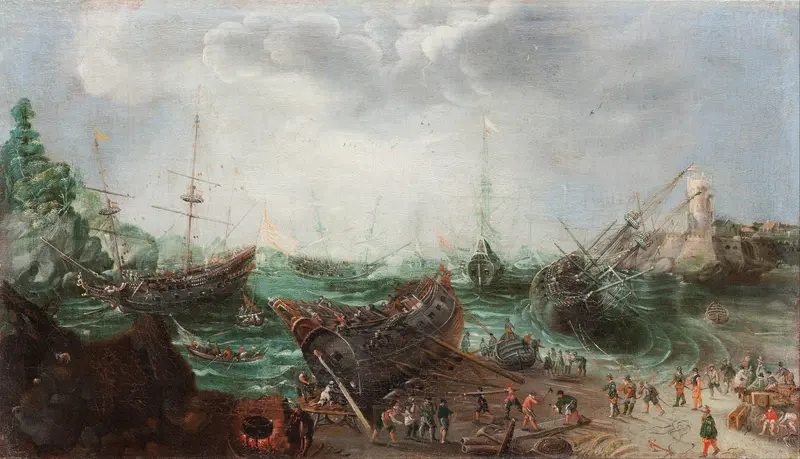
Harbour scene
Adam Willaerts
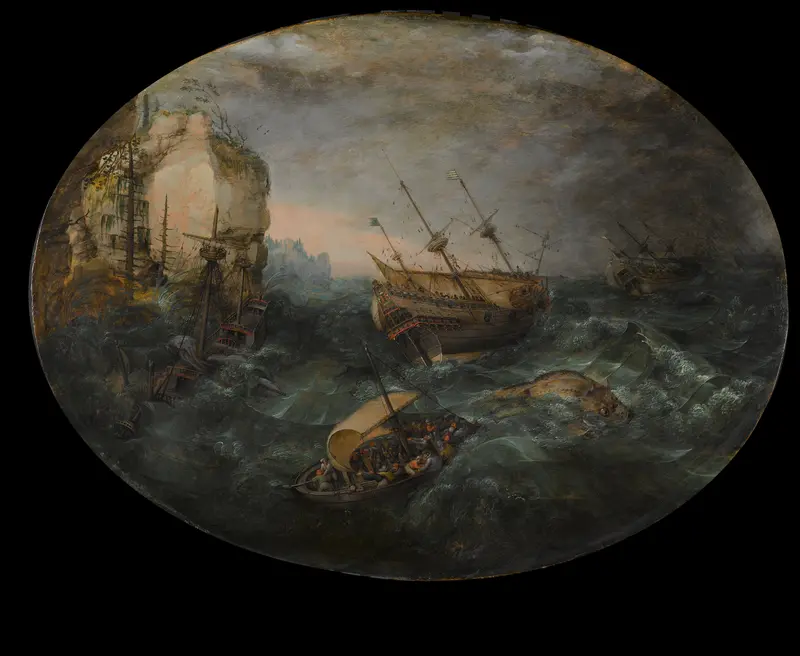
Shipwreck off a Rocky Coast
Adam Willaerts
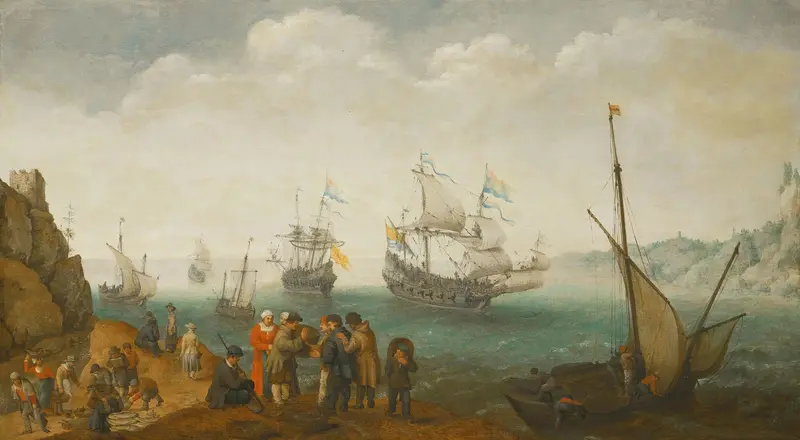
A Marine With Five Vessels Out To Sea And Another In Port, And With Groups Of Largely Male Figures Engaged In Buying Or Selling Fish Or Other Wares
Adam Willaerts





