
Zur Erntezeit — History & Facts
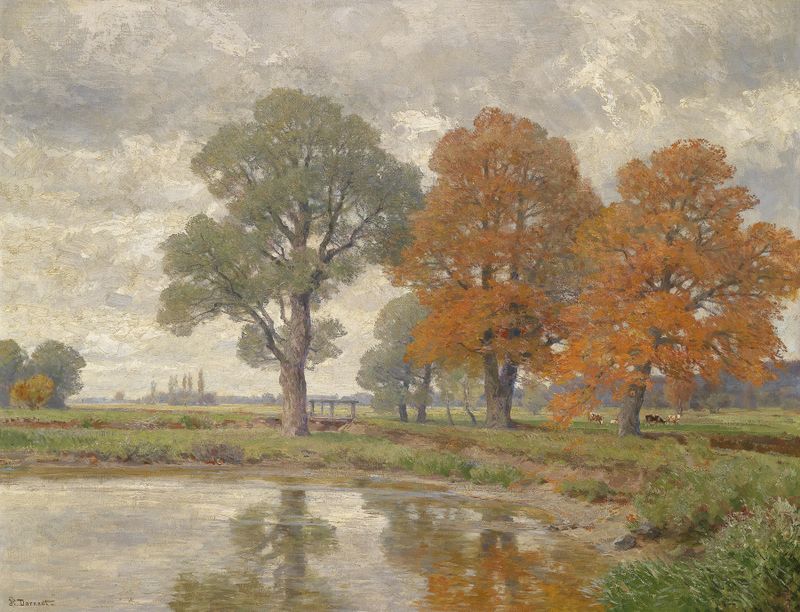
What if silence could speak through light? In Zur Erntezeit, an unsettling tension hangs in the air, suggesting not just the harvest, but the quiet violence of labor and nature’s indifference. Look closely at the figures in the foreground, their weary expressions etched with the weight of toil. Notice how the light falls upon their sun-kissed skin, illuminating the contrast between their bodies and the shadowy fields behind them. The muted palette, dominated by earthy tones and drab greens, evokes a sense of fatigue and inevitability, while the diagonal lines of the plowed earth guide the eye toward the horizon, where the sky hints at an impending storm. This work breathes life into the juxtaposition of nourishment and struggle.
The sturdy hands gripping the tools highlight the laborer's strength, but the clenched jaws and downturned eyes betray an underlying desolation. Here, harvest is not merely a celebration of bounty, but a reminder of the violence inherent in survival — a cycle of growth and decay, abundance and sacrifice, entwined in the heart of nature. In 1901, Hugo Darnaut painted this piece during a time of great change in Europe’s agricultural landscape. The rise of industrialization was shifting traditional farming practices and threatening livelihoods.
For the artist, this painting became a poignant reflection of the struggles faced by rural communities, as he sought to capture the resilience of the human spirit amid the encroaching challenges of the modern era.
More Artworks by Hugo Darnaut
Browse all →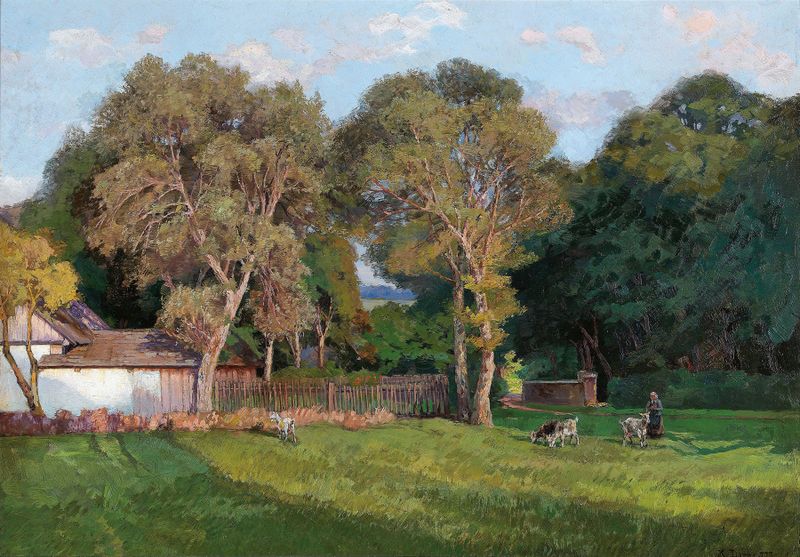
Aus dem Wienerwald
Hugo Darnaut
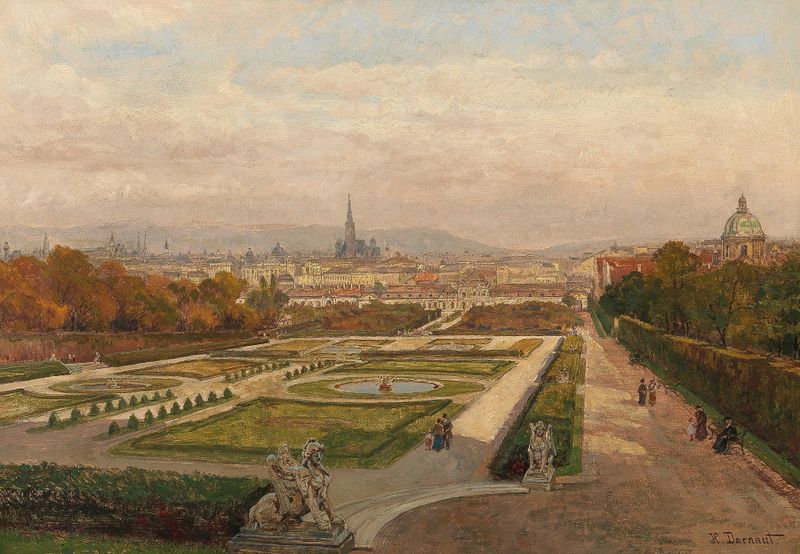
Blick vom Belvedere auf Wien
Hugo Darnaut

Motiv aus Plankenberg
Hugo Darnaut

In einem Wiener Garten (II., Praterstraße 60)
Hugo Darnaut

A Scene at Dusk in Late Autumn
Hugo Darnaut
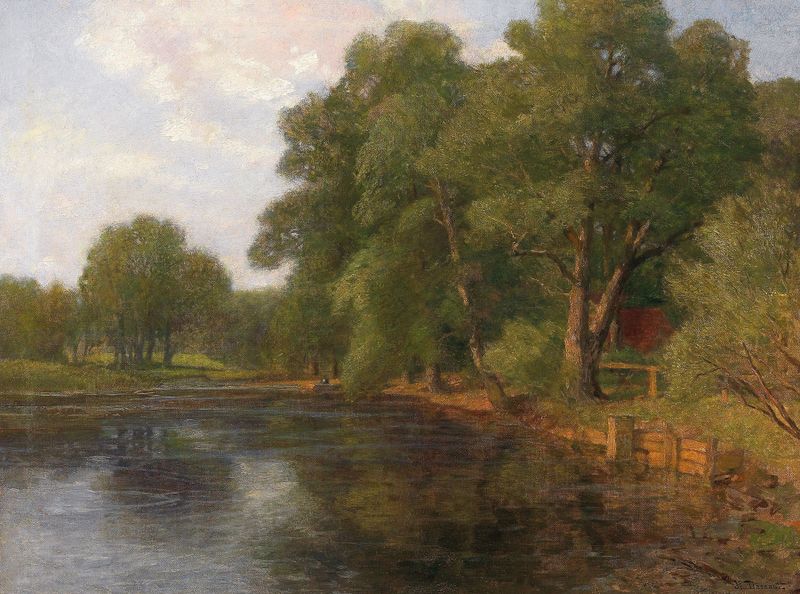
Motiv bei Plankenberg
Hugo Darnaut

Die Ruine Starhemberg im Piestingtal
Hugo Darnaut
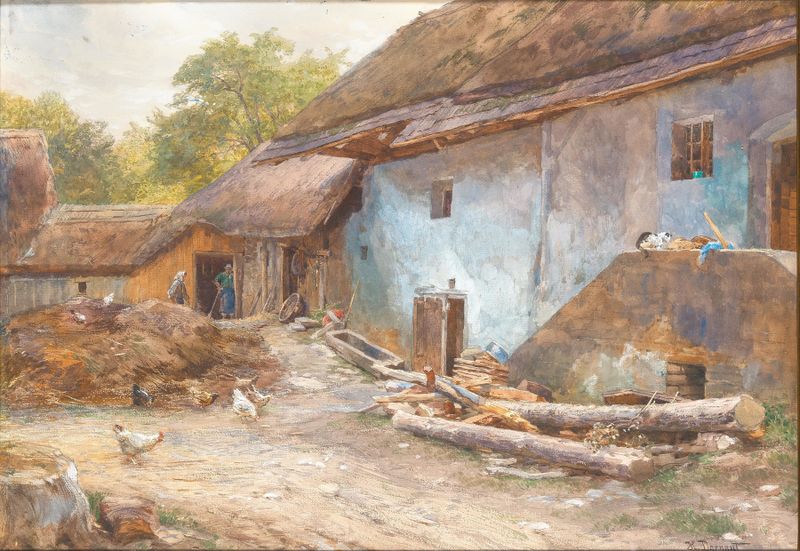
Niederösterreichischer Bauernhof
Hugo Darnaut

River Landscape with Small Herd of Cows and a Village in the background
Hugo Darnaut
Spätherbsttag
Hugo Darnaut





