
Famous Mythology Paintings: 8 Baroque Works to Download Free
Famous mythology paintings have long fascinated art enthusiasts and historians alike, capturing the allure of ancient stories through the lens of artistic genius. The Baroque period, in particular, saw a flourishing of such works, where artists like Peter Paul Rubens and Diego Velázquez brought mythical tales to life with vivid detail and dramatic flair. Here, we explore eight remarkable paintings that exemplify the era's fascination with mythology, all available for free high-resolution download on FineArtFree.
Abundance (Abundantia) by Peter Paul Rubens

Peter Paul Rubens's Abundance (Abundantia), dated circa 1630 and housed in the Museo del Prado, showcases the artist's skill in capturing the opulence and vitality of the Baroque era. This painting, one of several versions, features the personification of abundance, reflecting the high demand for allegorical subjects among Rubens's patrons. The exuberant composition and sensuous modeling of Abundantia are hallmarks of Rubens's work, illustrating his mastery in depicting the virtues and wealth of his time.
Apollo and Daphne by Peter Paul Rubens
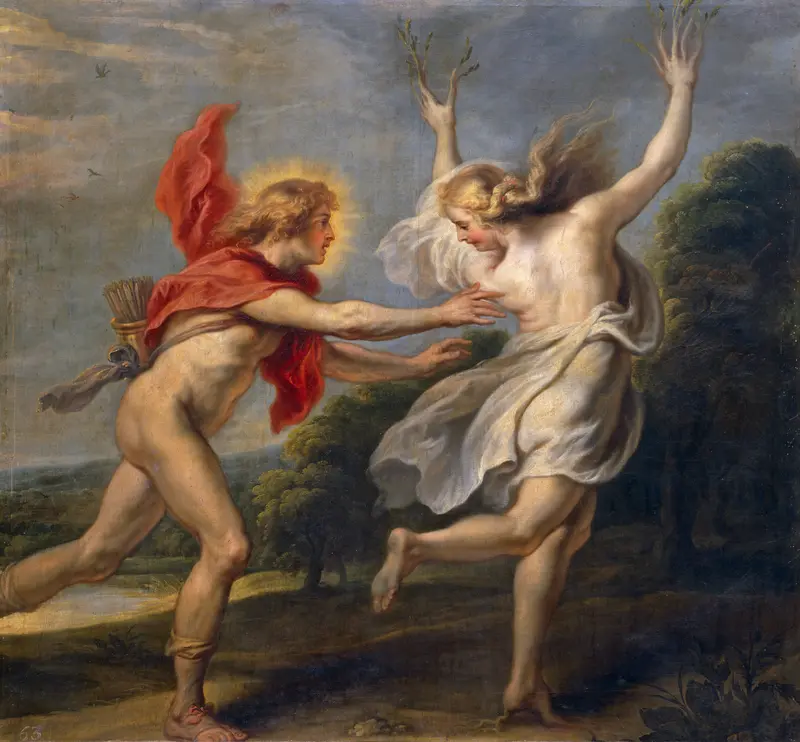
In Apollo and Daphne, painted in 1636, Rubens captures the dramatic moment of transformation from Ovid’s Metamorphoses. Created for Philip IV’s Torre de la Parada, this work is noted for its explosive movement, embodying the Baroque fascination with dynamic storytelling. The painting illustrates the instant Apollo reaches for Daphne, who transforms into a laurel tree, a subject that captivated Baroque audiences with its blend of beauty and tragedy.
Bacchus by Diego Velázquez
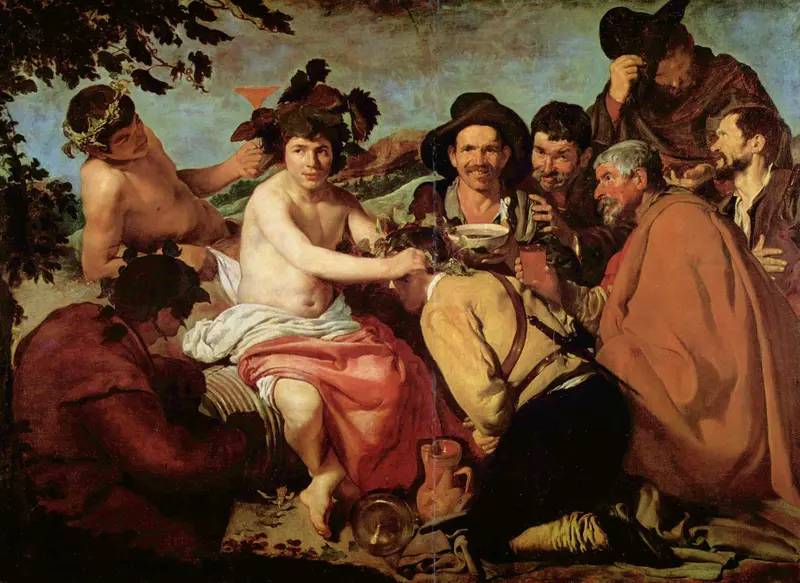
Diego Velázquez's Bacchus, also known as The Triumph of Bacchus, challenges the traditional portrayal of mythological subjects by blending the divine with the everyday. Painted around 1628-1629, this work presents Bacchus as an approachable figure among Spanish peasants, sparking debate for its earthy realism. Velázquez's innovative approach to mythology is evident in this painting, which remains a subject of scholarly interest today.
Medusa by Caravaggio
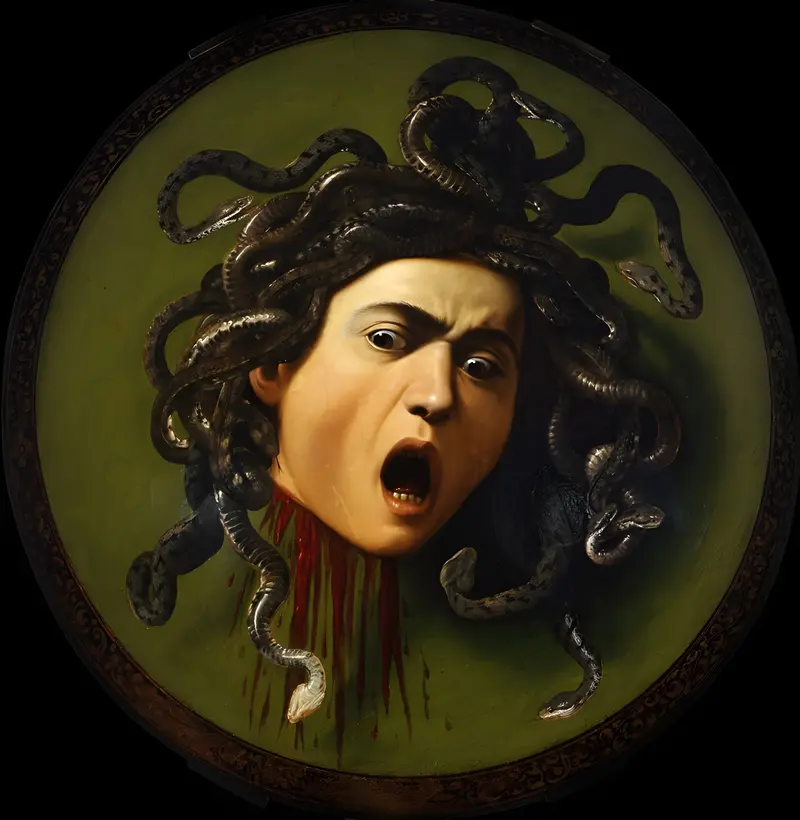
Caravaggio's Medusa is a striking depiction of the mythical figure known for her snake hair and petrifying gaze. Created around 1595, this artwork uses chiaroscuro to emphasize Medusa’s intense expression, capturing the moment of her transformation. The painting's dramatic use of light and shadow draws viewers into the horror and despair of Medusa's fate, making it a compelling study of Baroque artistry.
Diana and her Nymphs Spied upon by Satyrs by Peter Paul Rubens
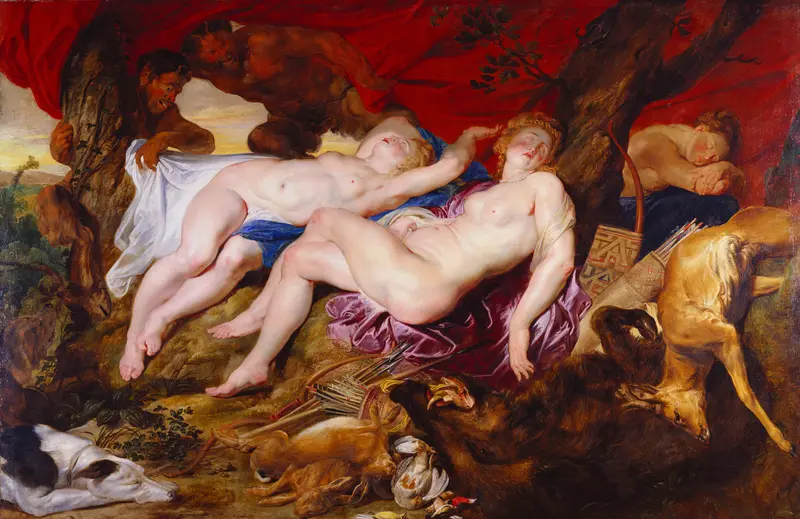
Rubens's Diana and her Nymphs Spied upon by Satyrs, painted in 1616, is a dynamic composition that blurs the line between mythological narrative and sensual spectacle. This work, part of several treatments of the myth by Rubens, captures the moment of surprise as Diana and her nymphs are caught unaware by satyrs. The painting exemplifies Rubens's ability to infuse classical themes with Baroque vitality.
Deucalion and Pyrrha by Peter Paul Rubens
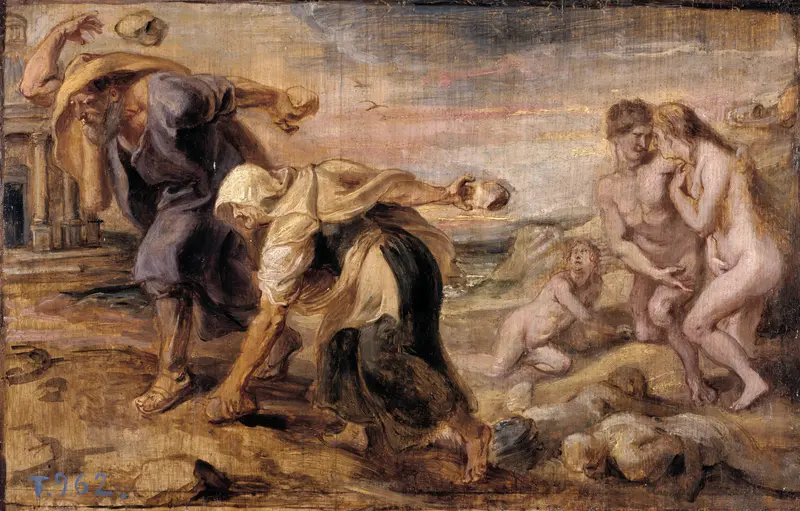
In Deucalion and Pyrrha, Rubens captures a pivotal moment from Ovid’s Metamorphoses, depicting the aftermath of a world-ending flood. Painted in 1636 for the Torre de la Parada, this work illustrates the rebirth of humanity through the couple's act of casting stones that transform into people. Rubens's composition reflects the themes of survival and renewal, central to Baroque interpretations of classical mythology.
Hercules and Cerberus by Peter Paul Rubens
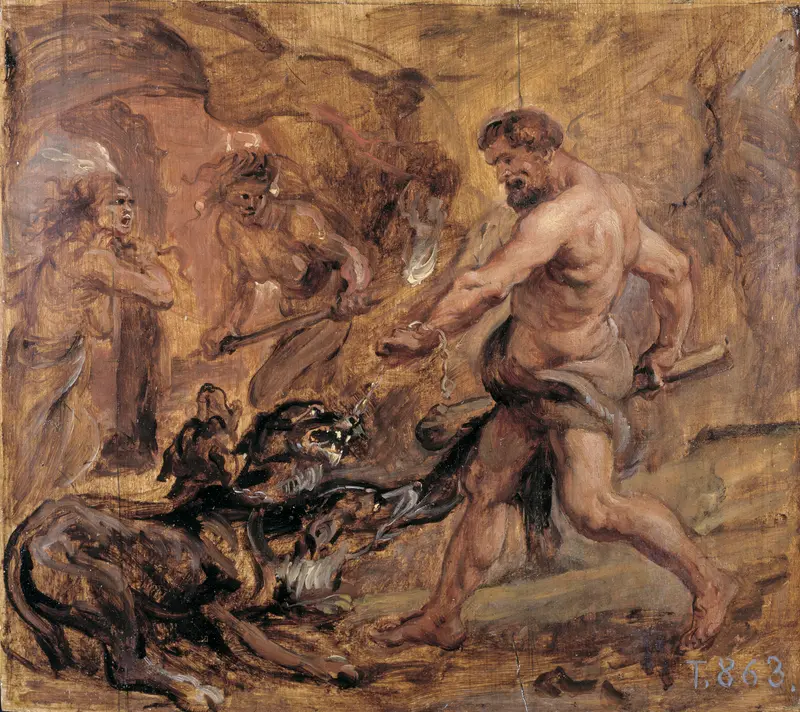
Rubens’s Hercules and Cerberus, created in 1636, stands out for its dynamic energy, capturing Hercules’s twelfth labor. The painting, part of a series for King Philip IV's Torre de la Parada, depicts the hero dragging Cerberus from the underworld. Rubens’s portrayal of Hercules emphasizes the physical and dramatic tension, characteristic of Baroque art's fascination with mythological heroism.
Las Hilanderas by Diego Velázquez
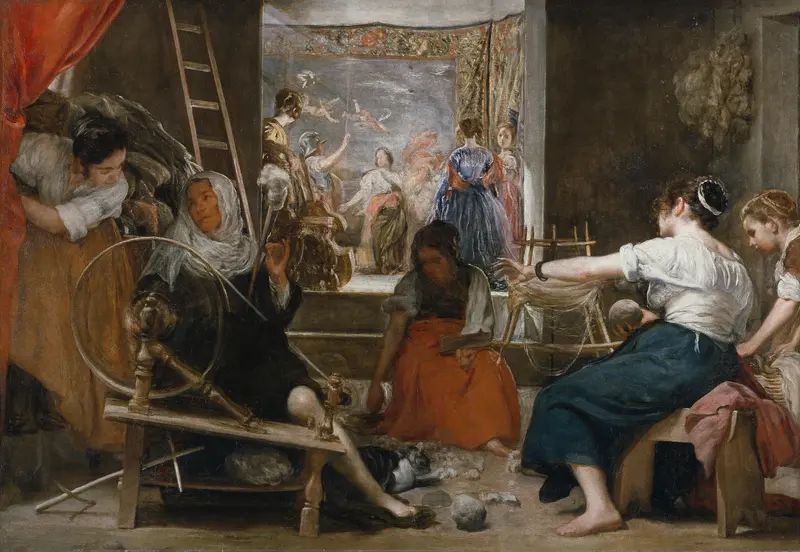
Las Hilanderas, painted by Velázquez around 1655, intertwines the daily life of spinners with the myth of Arachne, who challenged the goddess Athena. This enigmatic painting, also known as The Spinners, is a prime example of Velázquez’s ability to blend genre and mythology. The work's layered narrative invites viewers to explore its deeper meanings, making it a fascinating study of Baroque art.
These famous mythology paintings offer a glimpse into the Baroque period's rich interplay of art and storytelling. Each piece reflects the era's fascination with myth and its ability to convey complex narratives through visual art. Explore and download these compelling works in high resolution for free on FineArtFree, and bring a piece of art history into your collection.