Apollo and Daphne — History & Facts
When Peter Paul Rubens painted Apollo and Daphne in 1636, he was working at the height of his fame for the Spanish court, producing a series of mythological canvases for the Torre de la Parada, Philip IV’s hunting lodge outside Madrid. The commission was immense: Rubens and his workshop created dozens of works illustrating Ovid’s Metamorphoses, intended to fill the royal retreat with vivid stories of gods and mortals. This painting stands out among the series for its explosive movement and the way it captures the very instant of transformation, a favorite subject of the Baroque imagination. The moment Rubens chose is the climax of Ovid’s tale: Apollo, god of light, reaches for the nymph Daphne just as her father, the river god Peneus, answers her desperate plea for escape by turning her into a laurel tree.
Daphne’s fingers sprout leaves, her toes root into the earth, and her flowing hair stiffens into branches, while Apollo’s outstretched hand grasps only air and bark. The golden light that bathes Apollo’s muscular form contrasts with the pallor overtaking Daphne, signaling her passage from flesh to wood. Unlike Bernini’s marble sculpture of the same myth, which freezes the transformation in stone, Rubens’s brushwork makes the metamorphosis feel almost liquid, as if the figures might shift again before our eyes. After its creation, Apollo and Daphne became part of the Spanish royal collections, where it was admired alongside other mythological scenes by Rubens and his contemporaries.
The original series was dispersed over the centuries, with many works lost or altered, but this painting survived and is now housed in the Museo del Prado. Its energetic style and sensuous forms are characteristic of Rubens’s late period, when he combined the lessons of Italian Renaissance masters with his own exuberant approach to myth. Today, it remains a vivid testament to the power of storytelling in Baroque art, and to Rubens’s enduring fascination with the boundary between the human and the divine.
Sources: Wikidata Q27701539 · Image source (Wikimedia Commons)
More Artworks by Peter Paul Rubens

The Coronation of Henri IV
Peter Paul Rubens

Portrait de Marie de Médicis
Peter Paul Rubens

Anne of Austria, Queen of France
Peter Paul Rubens

Bacchus and Ariadne
Peter Paul Rubens

Christ on the Cross with Maria, Mary Magdalene and St John
Peter Paul Rubens

Equestrian portrait of Charles Colonna, Duke of Marsi
Peter Paul Rubens

Hippomenes and Atalanta
Peter Paul Rubens

Perseus and Andromeda
Peter Paul Rubens

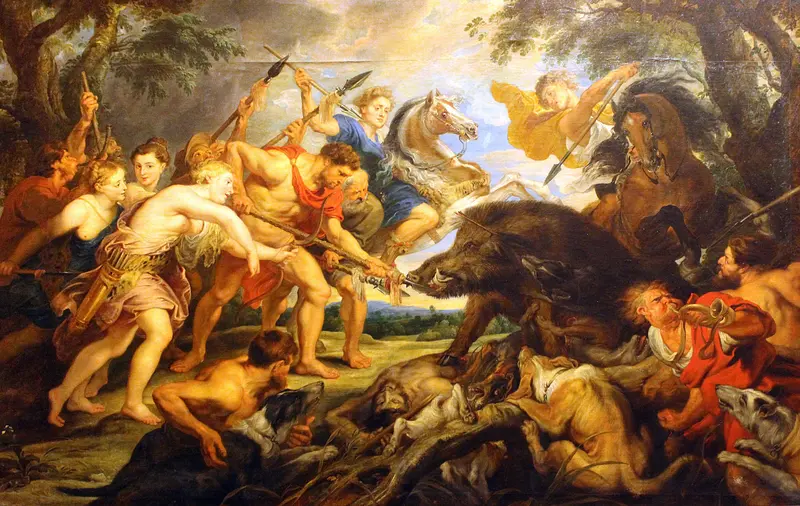
Meleager and Atalanta and the Hunt of the Calydonian Boar
Peter Paul Rubens
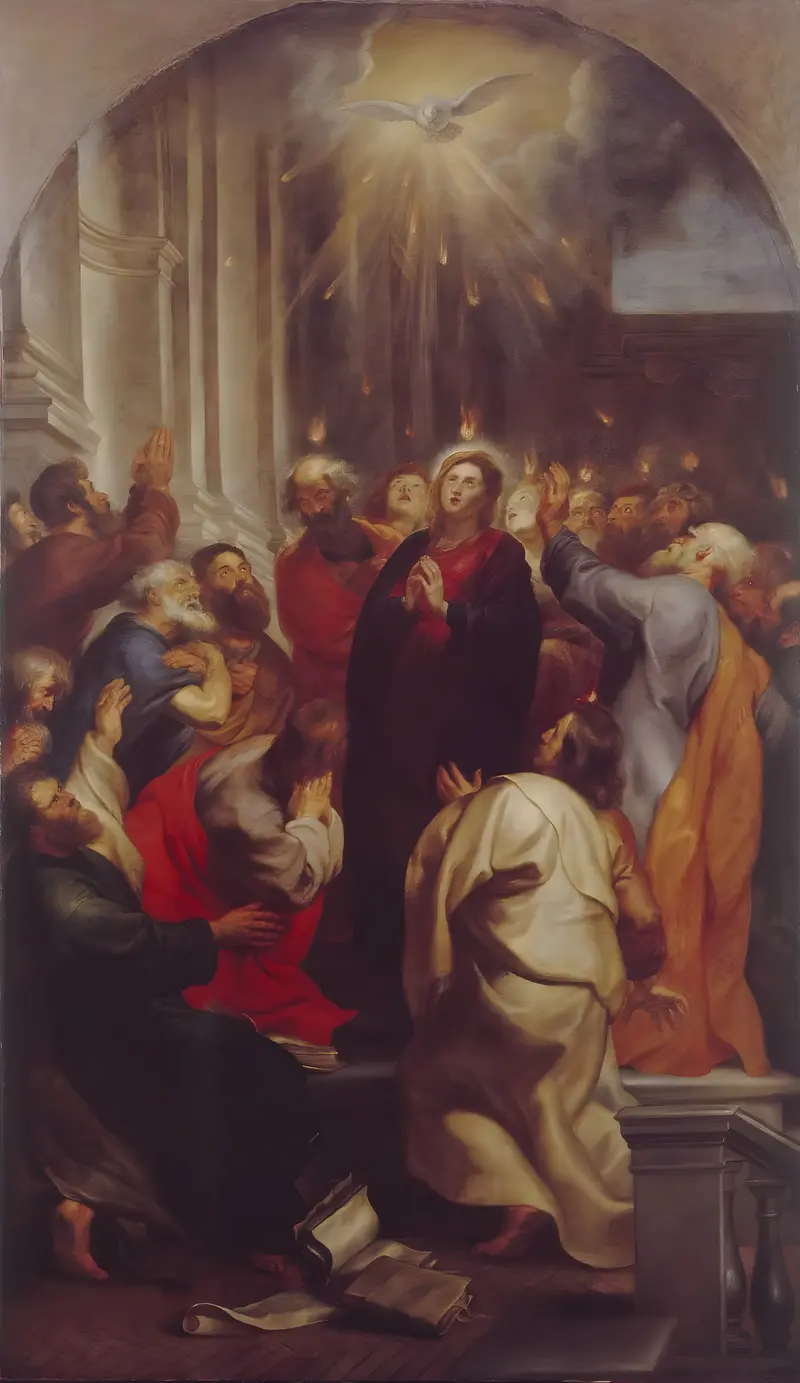
Pentecost
Peter Paul Rubens