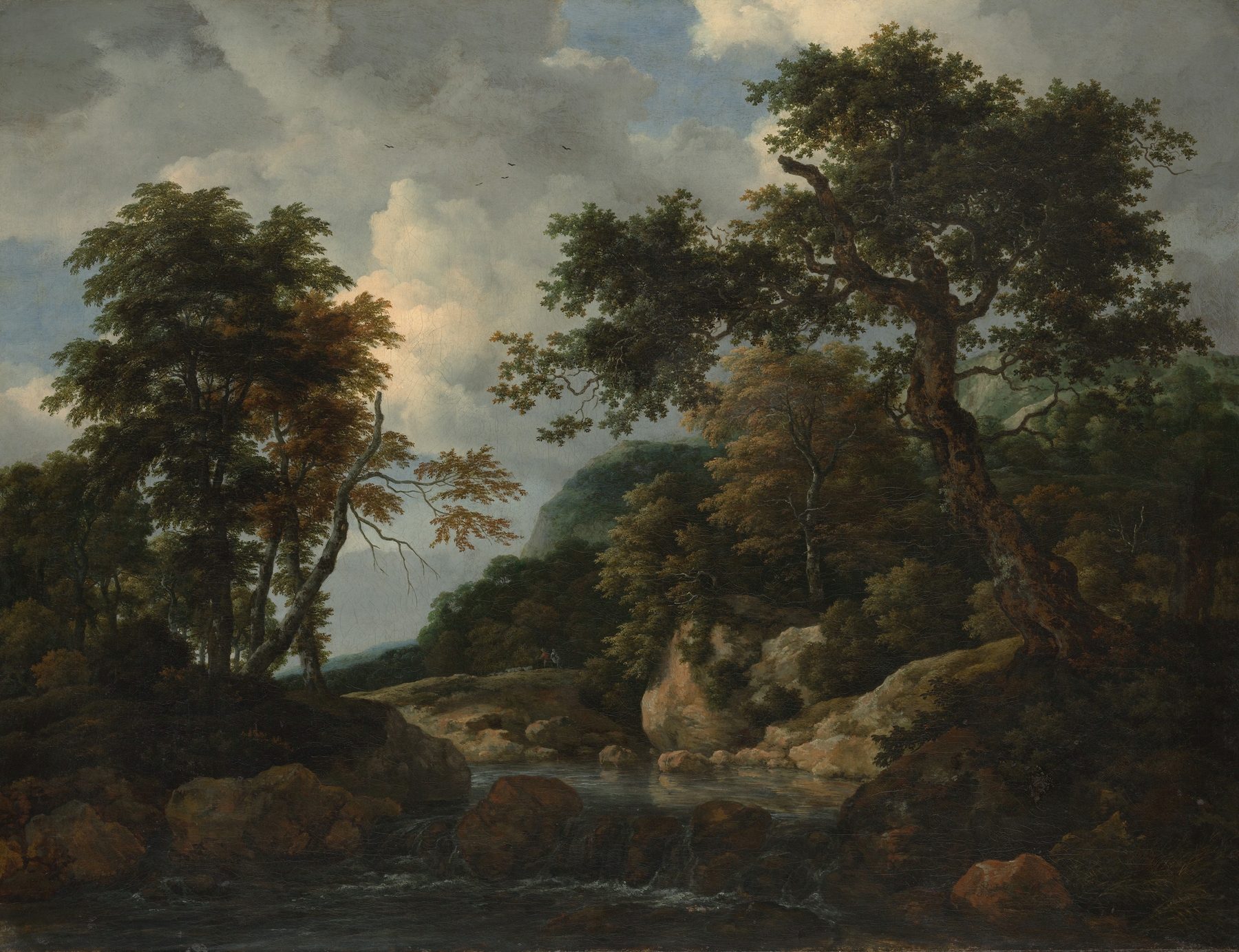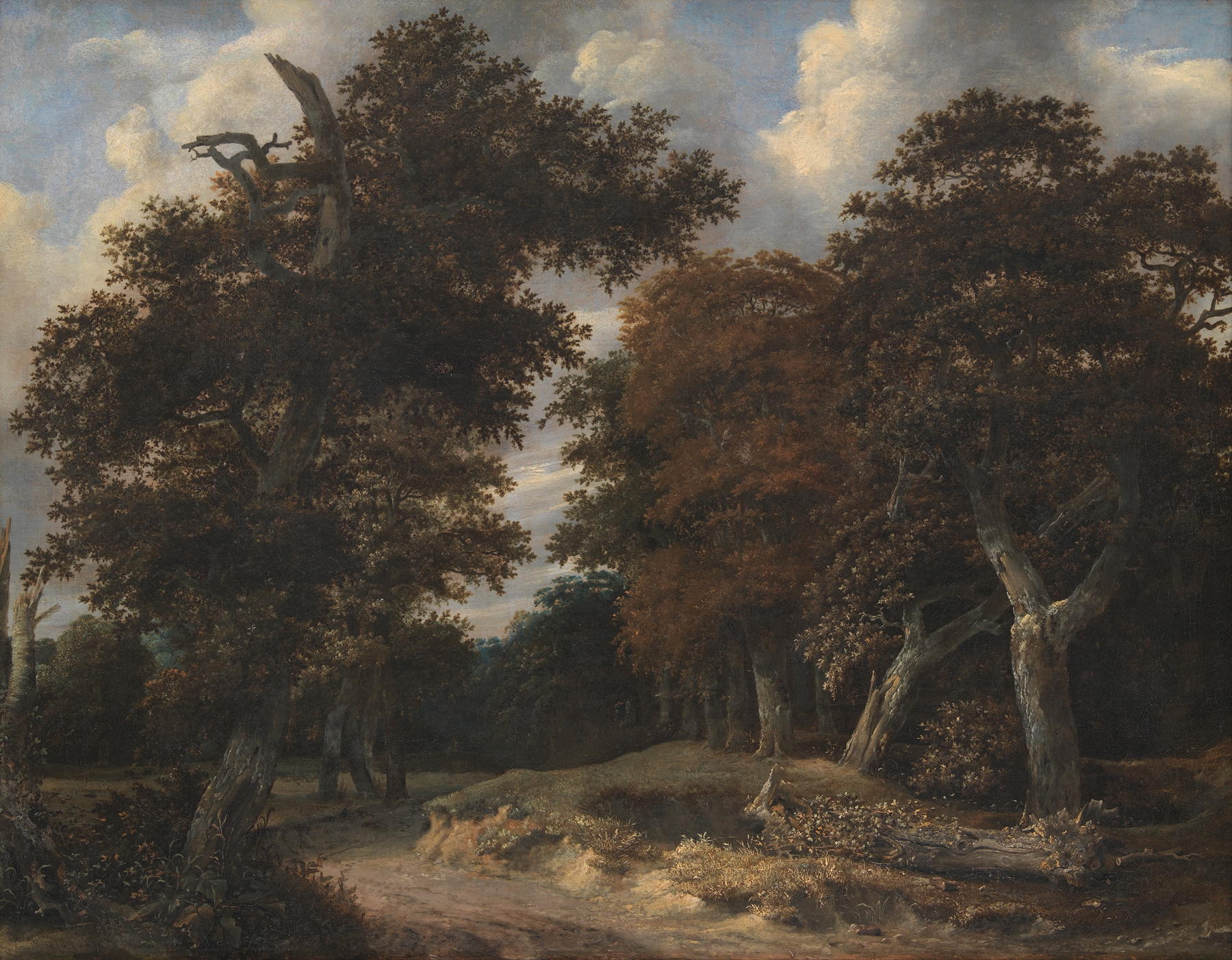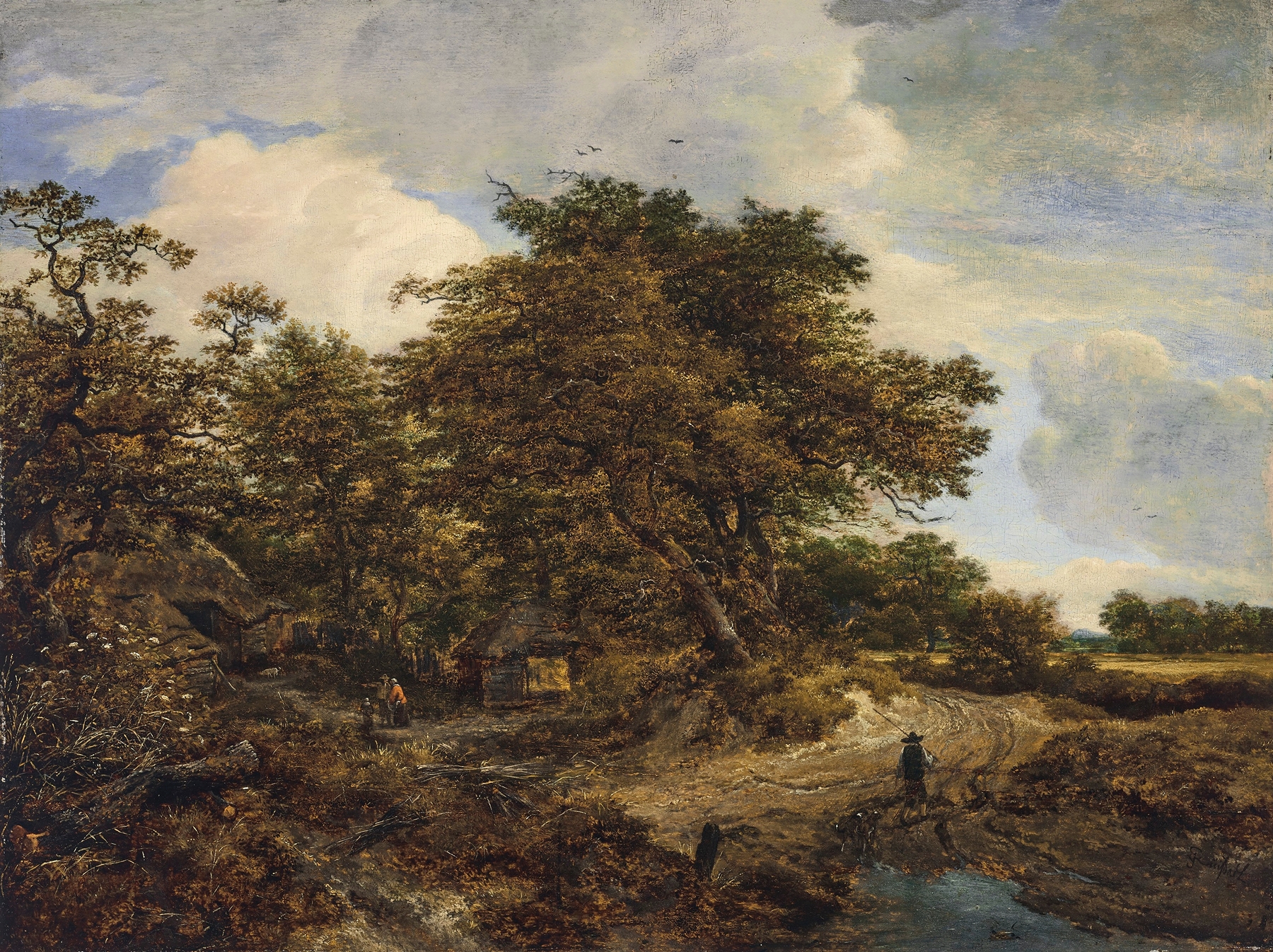
A wooded landscape with cottages and a figure and dogs on a dirt path — History & Analysis
“The canvas doesn’t lie — it simply waits.” In the stillness of nature, we often find divinity hidden in the ordinary. It beckons us, inviting reflection and contemplation. Look to the left at the towering trees, their branches forming a natural cathedral, filtering a soft, dappled light that dances on the ground below. Notice how the earthy tones of the dirt path guide the eye towards the cottages nestled in the distance. The gentle use of light and shadow creates a serene atmosphere, while the presence of dogs and a figure introduces a sense of life and movement, grounding the scene in familiarity. Within this tranquil landscape, contrasts unfold. The peaceful cottages symbolize domestic harmony, yet the rugged path suggests a journey filled with unknowns. The dogs, poised between the figure and the wilderness, embody both companionship and an instinctive connection to nature. Each element speaks to the delicate balance between civilization and the wild, inviting viewers to ponder their place within this divine tapestry. This artwork emerged from the hands of Jacob van Ruisdael during a time when the Dutch Golden Age was thriving, with nature painting gaining prominence. Operating in the mid-17th century, Ruisdael’s work reflects both personal exploration and broader artistic movements that celebrated realism and the sublime beauty of the natural world. As he crafted this piece, he navigated a landscape rich in both aesthetic exploration and the philosophical inquiries of existence.