
À la Côte-Saint-André — History & Facts
What if beauty was never meant to be finished? In Johan Barthold Jongkind’s À la Côte-Saint-André, the viewer is invited into a moment of revelation, where nature’s transient allure is captured in fleeting strokes of color and light. Look to the foreground, where the shimmering river glides gracefully past, reflecting the myriad hues of the sky above. Notice how the soft blues and greens meld together, creating a serene tapestry that dances with the light. The brushwork is both delicate and energetic, hinting at the winds that ripple across the water’s surface.
The simple yet evocative composition draws the eye toward the horizon, where the sun's warm embrace bathes the distant hills in gold, suggesting a world at peace yet alive with movement. In this canvas, contrasts reveal deeper meanings. The tranquil waters sit in stark juxtaposition to the dynamic clouds overhead, perhaps signifying the balance between calm and chaos in life. The interplay of light and shadow suggests fleeting moments that are both cherished and ephemeral, evoking a sense of nostalgia for beauty that remains just out of reach.
Each brushstroke seems to whisper secrets of transience, urging the viewer to pause and reflect on their own revelations amidst nature's splendor. Jongkind painted À la Côte-Saint-André in 1881 while living in France, a time when he was deeply influenced by the Impressionist movement. His works sought to express the essence of landscapes through light and atmosphere, a departure from the rigid formalities of earlier styles. This painting, embodying his revolutionary spirit, aligns with a growing appreciation for plein air painting, capturing the vibrant energy of the world outside while inviting viewers into a personal moment of beauty.
More Artworks by Johan Barthold Jongkind
Browse all →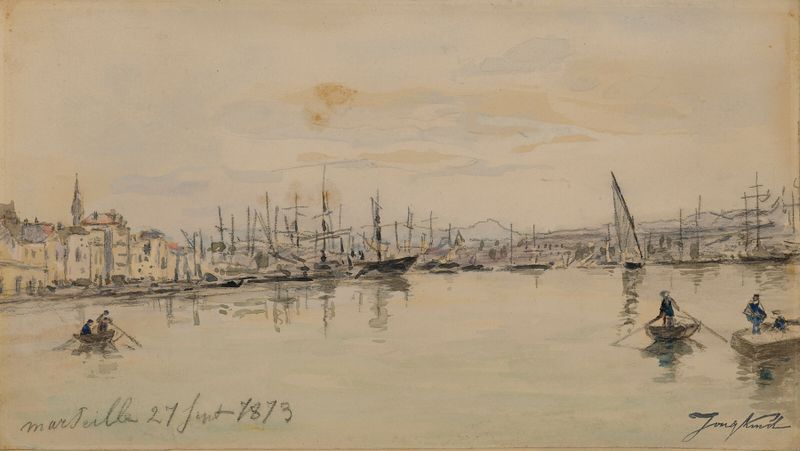
Le Port de Marseille
Johan Barthold Jongkind

Canal Saint-Martin
Johan Barthold Jongkind

Countryside near Brezins, between Grenoble and Vienne
Johan Barthold Jongkind

Notre-Dame vue du quai de la Tournelle
Johan Barthold Jongkind

Environs de Grenoble
Johan Barthold Jongkind

Clair de lune à Overschie (environs de Rotterdam)
Johan Barthold Jongkind

Port de Honfleur
Johan Barthold Jongkind
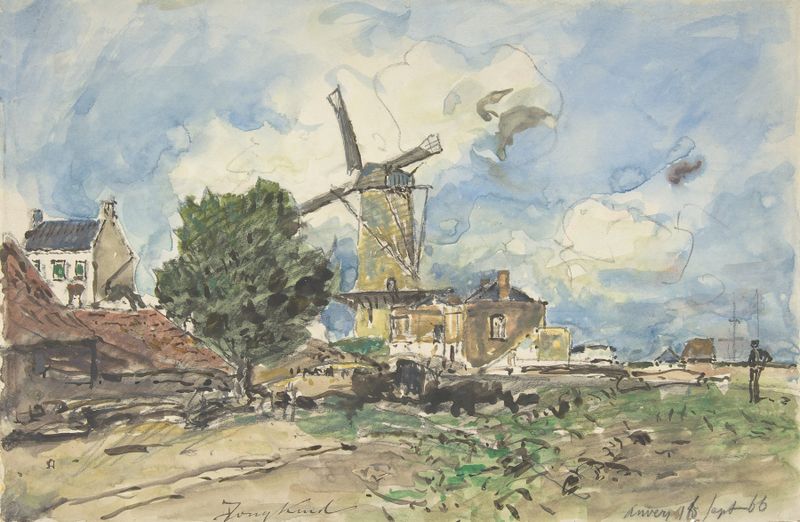
Wind Mill at Antwerp
Johan Barthold Jongkind

Le Havre
Johan Barthold Jongkind

The Church of Overschie
Johan Barthold Jongkind





