À Travers Les Arbres, Île De La Grande Jatte — History & Facts
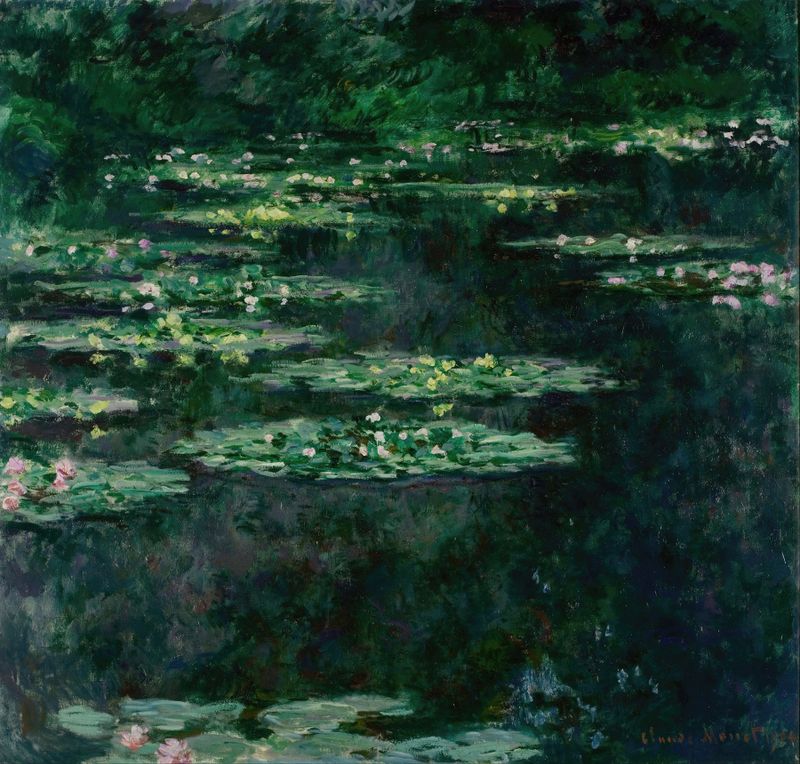
When did color learn to lie? The vibrant hues of a sun-dappled landscape can conceal more than they reveal, whispering secrets beneath their beauty. In À Travers Les Arbres, Île De La Grande Jatte, a tranquil scene unfolds, inviting the viewer to question the veracity of its serene facade. Focus on the left side, where dappled sunlight filters through the leaves, casting a mosaic of light and shadow on the grassy bank. The interplay of green tones—rich and vibrant—pulls you into the calm yet restless atmosphere, while the figures in the background appear almost like silhouettes, their soft outlines blending with the surrounding nature.
Monet’s loose brushwork contrasts sharply with the defined shapes of the trees, creating a sense of movement, as if the wind could stir the colors into life. Yet, beneath this idyllic exterior lies an emotional complexity. The vibrant greens may evoke a sense of peace, but they simultaneously mask an undercurrent of isolation, as the distant figures are shrouded in an ambiguous silence. The fear of being disconnected from nature and from each other permeates the scene, heightened by the juxtaposition of light and shadow that hints at unseen depths beneath the surface. In 1878, Claude Monet painted this work while living in Argenteuil, a suburb of Paris.
The Impressionist movement was gaining momentum, challenging traditional notions of representation in art. Monet’s approach during this period was marked by a deepened exploration of light and color, reflecting both personal struggles and a shifting artistic landscape that sought to capture fleeting moments of perception.