011 — History & Facts
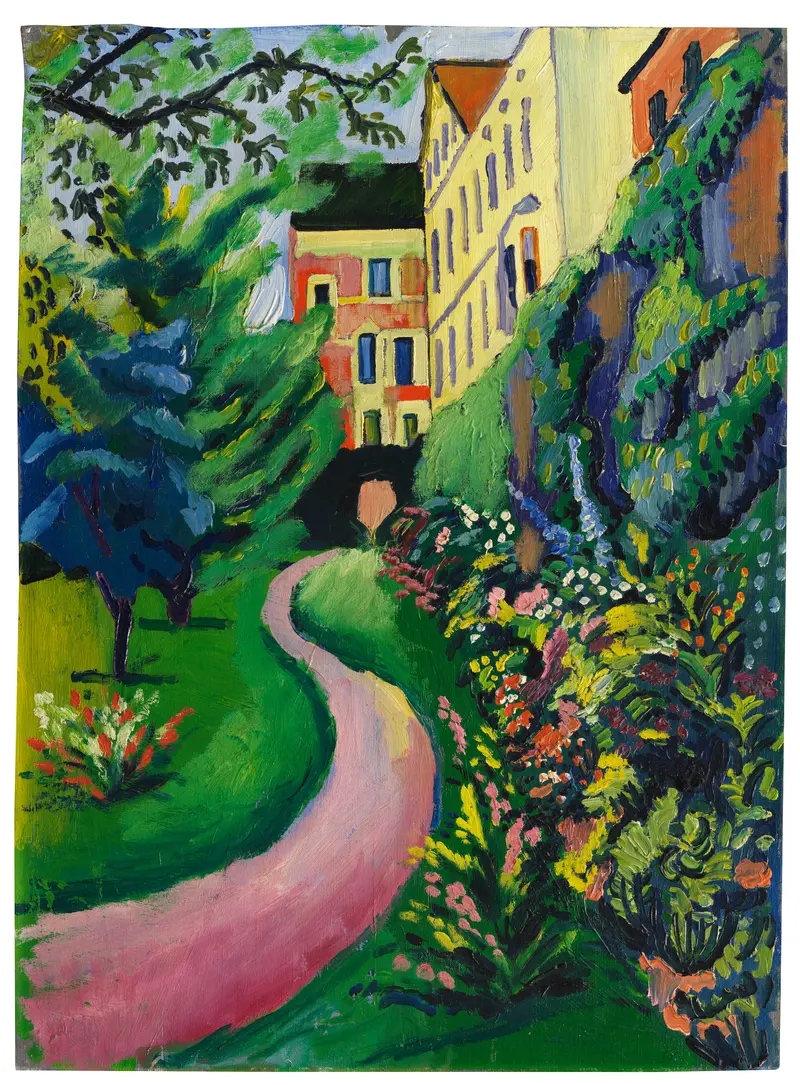
The first thing that catches the eye in 011 is the way the garden seems to pulse with color, every leaf and shadow outlined in bold, rhythmic brushstrokes. The scene draws you in through a lush green arch, where a woman bends over a flowerbed, her gesture both practical and tender, while a small child in a striped dress stands apart, poised on the edge of the sunlit path. The curved beds and clipped hedges create a sense of order, but the painter’s hand lets the forms ripple and sway, as if the garden itself were alive with movement.
Notice how the sunlight splashes across the grass and the facades of the houses, turning yellow window shades into flags of warmth and domesticity. Painted in 1911, this work belongs to a moment when artists like August Macke were breaking away from strict realism, searching instead for a language of color and form that could capture the vibrancy of everyday life. In Germany, the years before the First World War saw the rise of movements like Expressionism, where painters often chose scenes of urban parks, gardens, and family rituals to explore new ways of seeing. Little is recorded about the specific history of this painting, which comes to us through The Yorck Project’s vast digital archive of masterpieces.
Yet the spirit of its age is unmistakable: a world on the cusp of change, where the simple act of tending a garden becomes a celebration of color and the quiet drama of daily life. Let your gaze wander through the picture, and see how every brushstroke seems to invite you further in.
More Artworks by August Macke
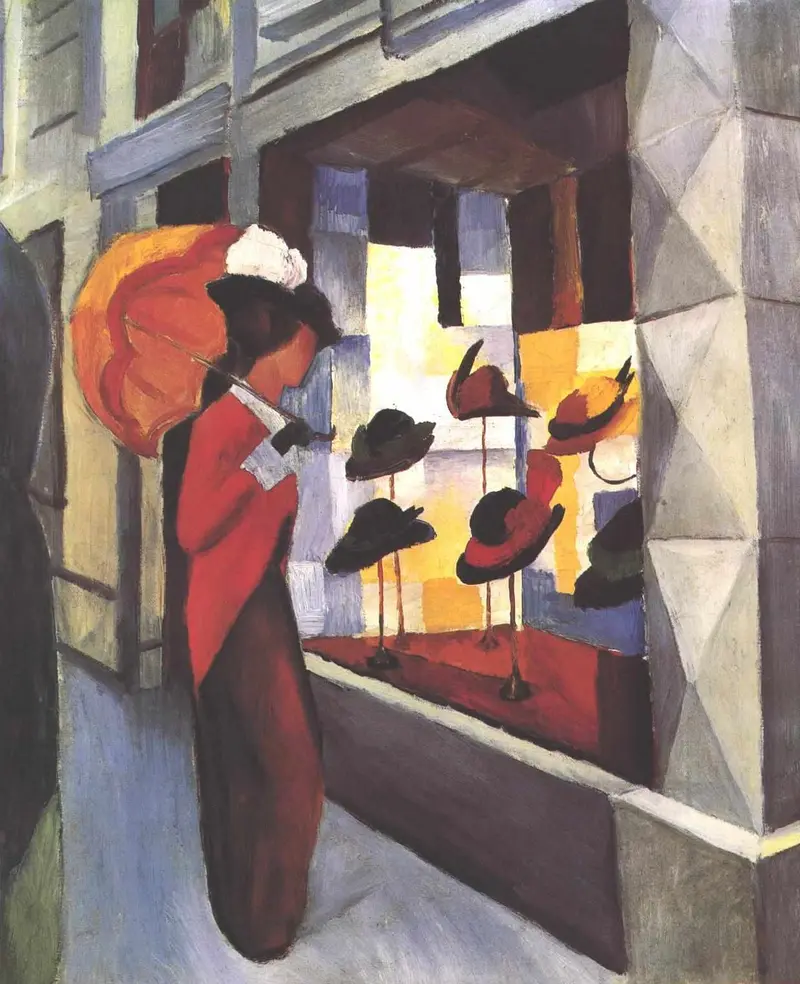
Woman with a Parasol in Front of a Hat Shop
August Macke

Street with Church in Kandern
August Macke
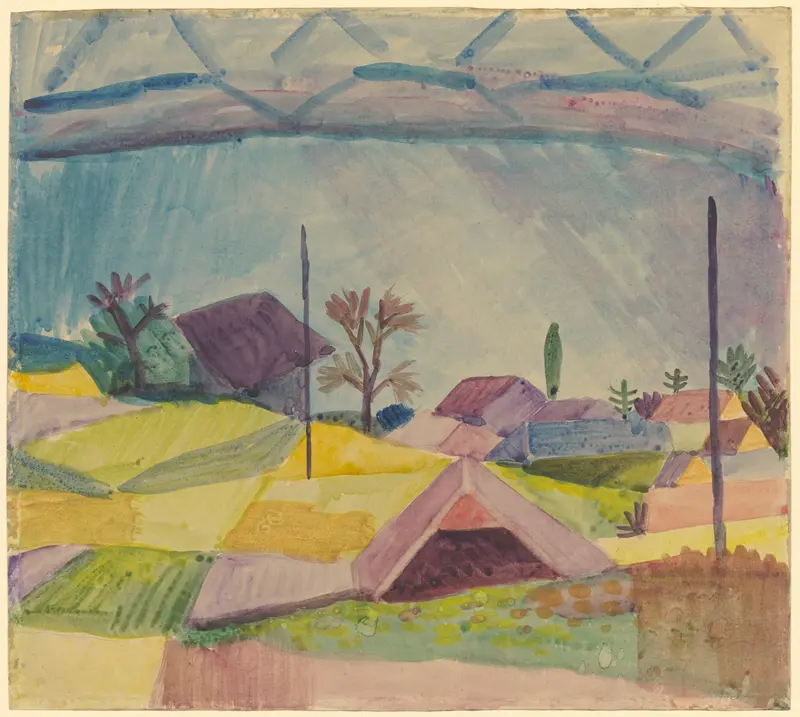
View of Hilterfingen
August Macke

Paar im Nachen
August Macke
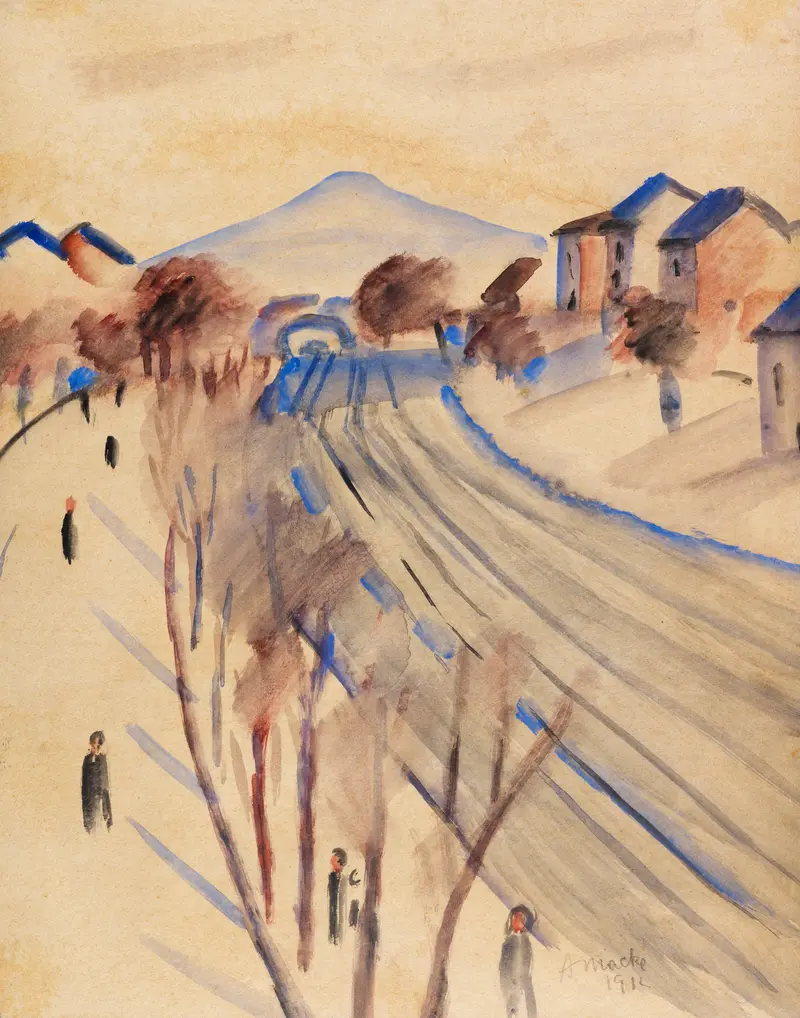
Ölberg mit Bahngleisen II
August Macke
Unser Garten mit blühenden Rabatten
August Macke
Angler am Fluss
August Macke
Path at the Rhine
August Macke
Frau mit Krug unter Bäumen
August Macke
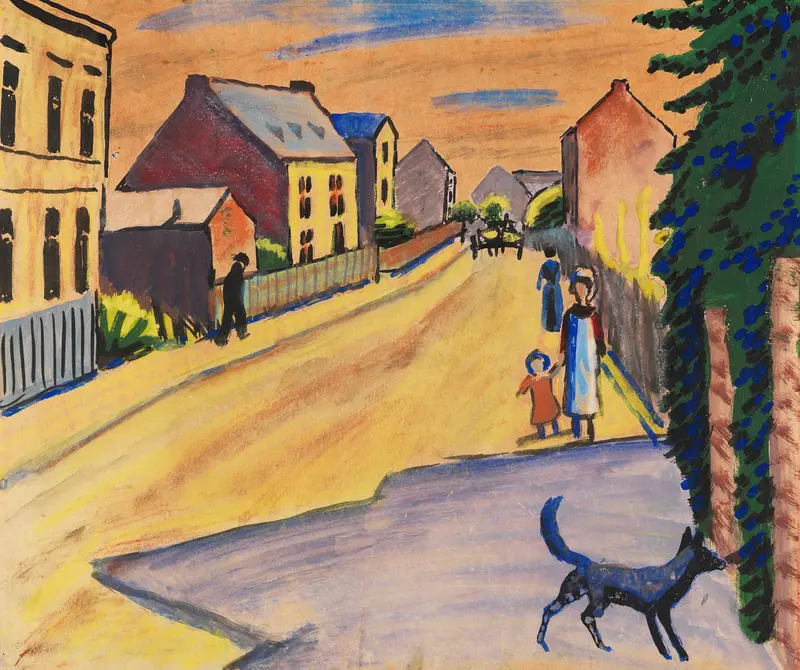
Sonnige Straße mit Hund
August Macke