015 — History & Facts
A world of color and geometry unfolds before the viewer, where the boundaries between people, animals, and landscape dissolve into a rhythmic play of shapes. The eye is drawn first to the gentle curve of a woman’s face, her profile outlined in soft pinks and yellows, as she leans toward a child dressed in blue. Behind the fence, antelope and deer gaze back with the same calm curiosity, while a cockatoo perches above, its white feathers glowing against a patchwork of green and blue.
The scene is alive with movement: men in bowler hats stroll in the background, their forms echoed by the upright trees and the verticals of the fence, while the palette—vivid, almost musical—creates a sense of harmony and wonder. This is not a naturalistic zoo, but a dreamlike garden where the rules of perspective and proportion give way to feeling. Painted in 1913, this work by August Macke belongs to a moment when artists across Europe were breaking with tradition to explore the expressive power of color and form. The early twentieth century saw the rise of movements like Expressionism and Der Blaue Reiter, where painters sought to capture not the outward appearance of things, but their inner life.
Macke’s vision, shaped by his encounters with French Fauvism and the innovations of his contemporaries, often found its fullest voice in scenes of leisure and nature—subjects that promised escape, innocence, and the possibility of a new way of seeing. History has kept few traces of this particular painting’s journey, but its presence in The Yorck Project’s collection, dated to 1913, places it at the heart of a restless, searching age. Look again at the painting’s joyful disorder, and you may sense both the optimism and the uncertainty of its time.
More Artworks by August Macke
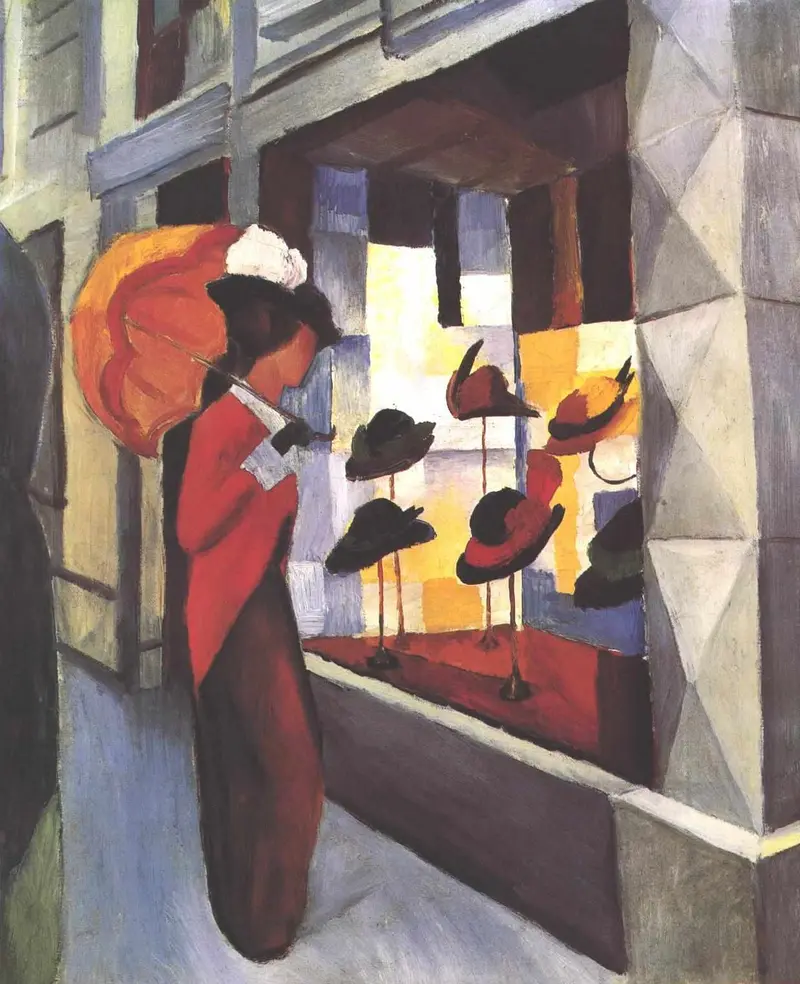
Woman with a Parasol in Front of a Hat Shop
August Macke

Street with Church in Kandern
August Macke
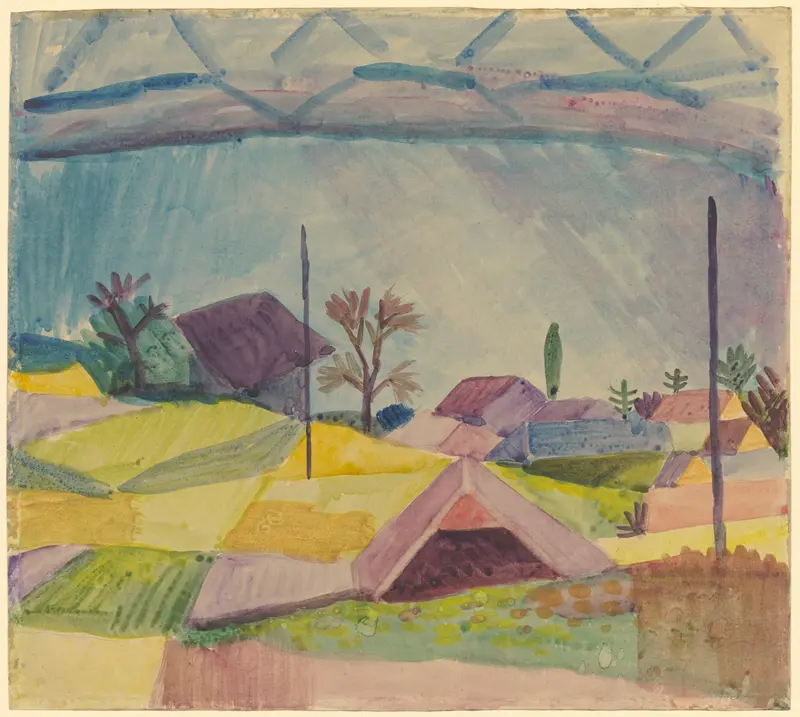
View of Hilterfingen
August Macke

Paar im Nachen
August Macke
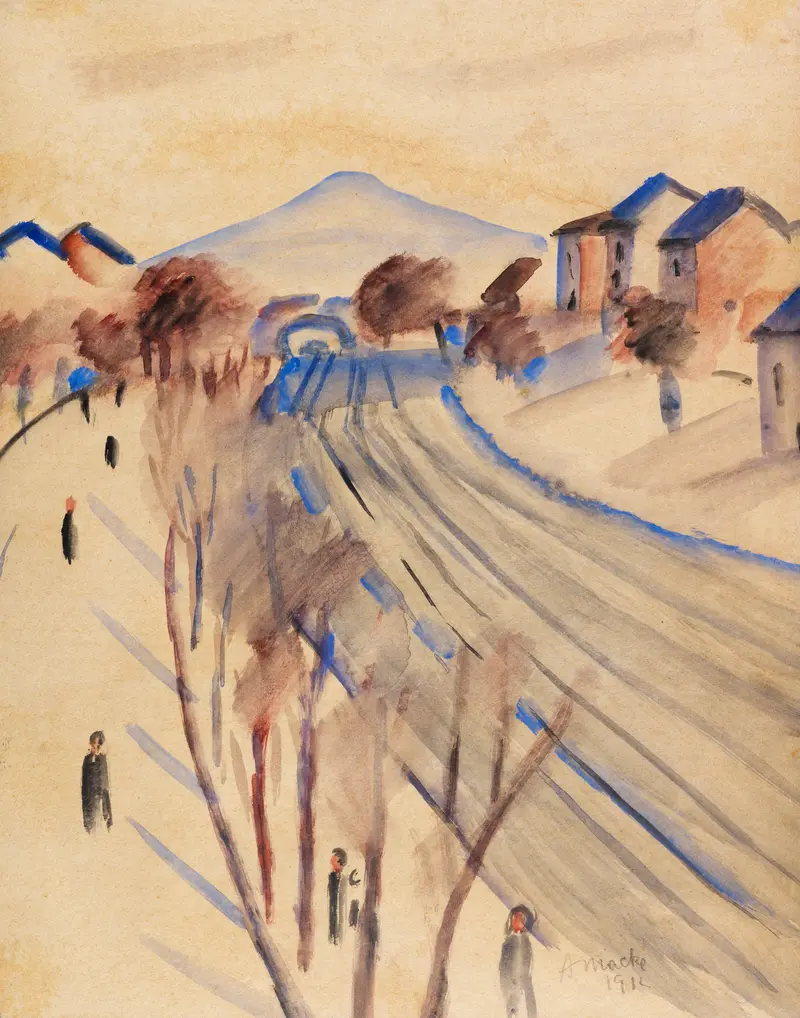
Ölberg mit Bahngleisen II
August Macke
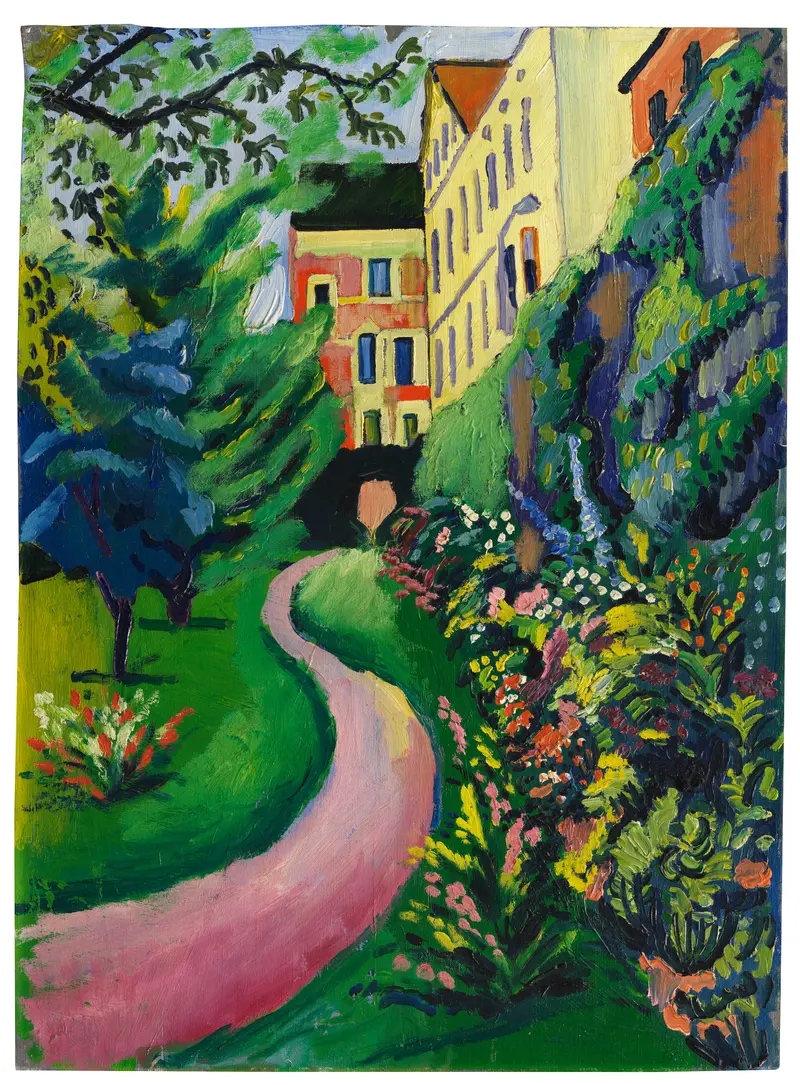
Unser Garten mit blühenden Rabatten
August Macke
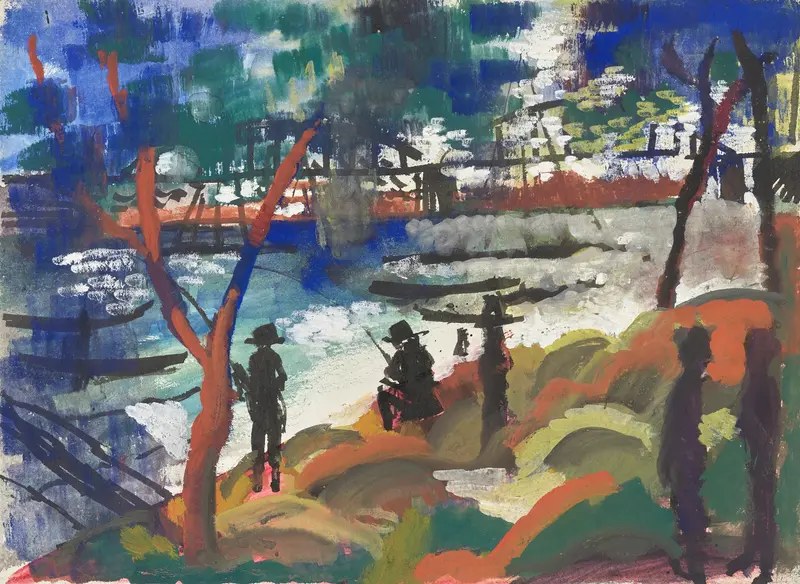
Angler am Fluss
August Macke
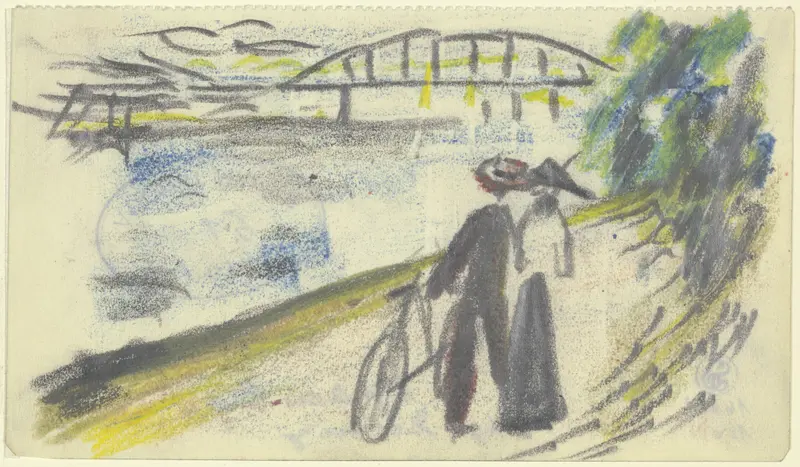
Path at the Rhine
August Macke
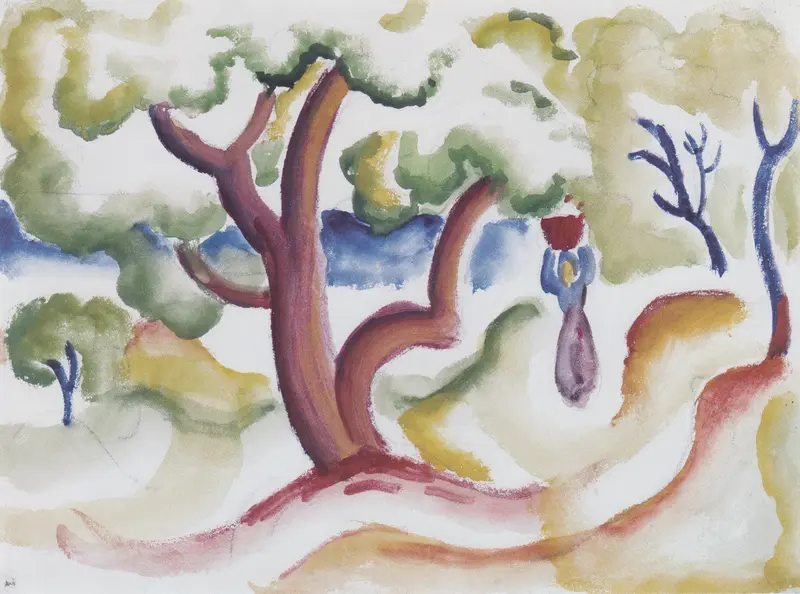
Frau mit Krug unter Bäumen
August Macke
Sonnige Straße mit Hund
August Macke