049 — History & Facts
A single figure, small and intent, sits on the sunlit ground, drawing the viewer’s attention not by grand gesture but by quiet absorption. The world around this person is a patchwork of color—dappled yellows and sharp reds, the shadows of trees rendered in loose, almost musical brushstrokes. The latticework structure to the right, painted in crisp blue, anchors the scene, while the garden’s wildness seems to press in from every side.
Light falls in unexpected places, guiding the eye in a gentle spiral from the figure, across the pond flecked with yellow, and back up through the wind-bent trees. In this moment, the garden is less a place than a feeling—fleeting, private, and alive with possibility. Painted in 1914, as Europe teetered on the edge of upheaval, this work by August Macke belongs to a world that was rapidly changing. The loose, luminous handling of color and form is characteristic of the Expressionist movement, which sought to capture not just appearances but the pulse of inner life.
Such scenes were rarely grand commissions; rather, they were often painted for friends, family, or simply for the artist’s own exploration. The source of this particular image, The Yorck Project’s digital collection, reminds us how many works from this era survive not as icons but as glimpses—fragments of a vanished everyday. Look again at the figure by the water, and see if you can feel the hush of a summer afternoon before history turned the page.
More Artworks by August Macke
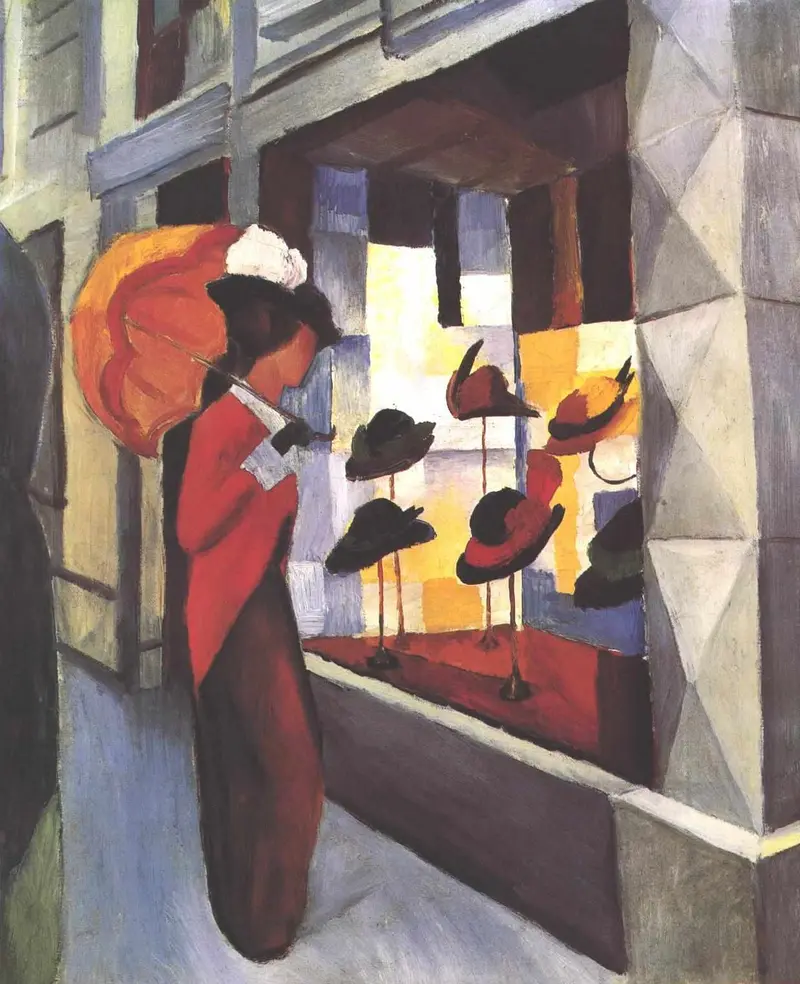
Woman with a Parasol in Front of a Hat Shop
August Macke

Street with Church in Kandern
August Macke
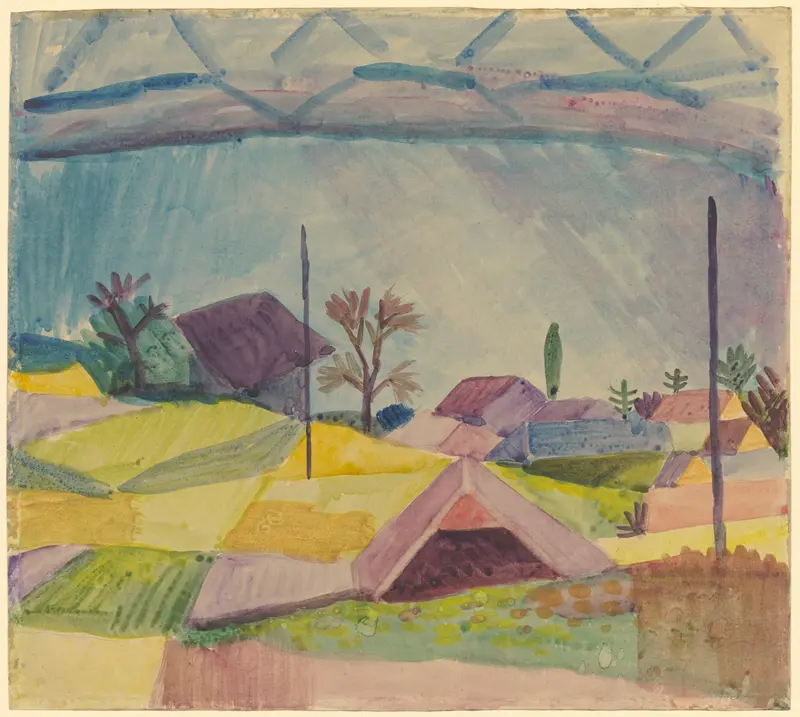
View of Hilterfingen
August Macke

Paar im Nachen
August Macke
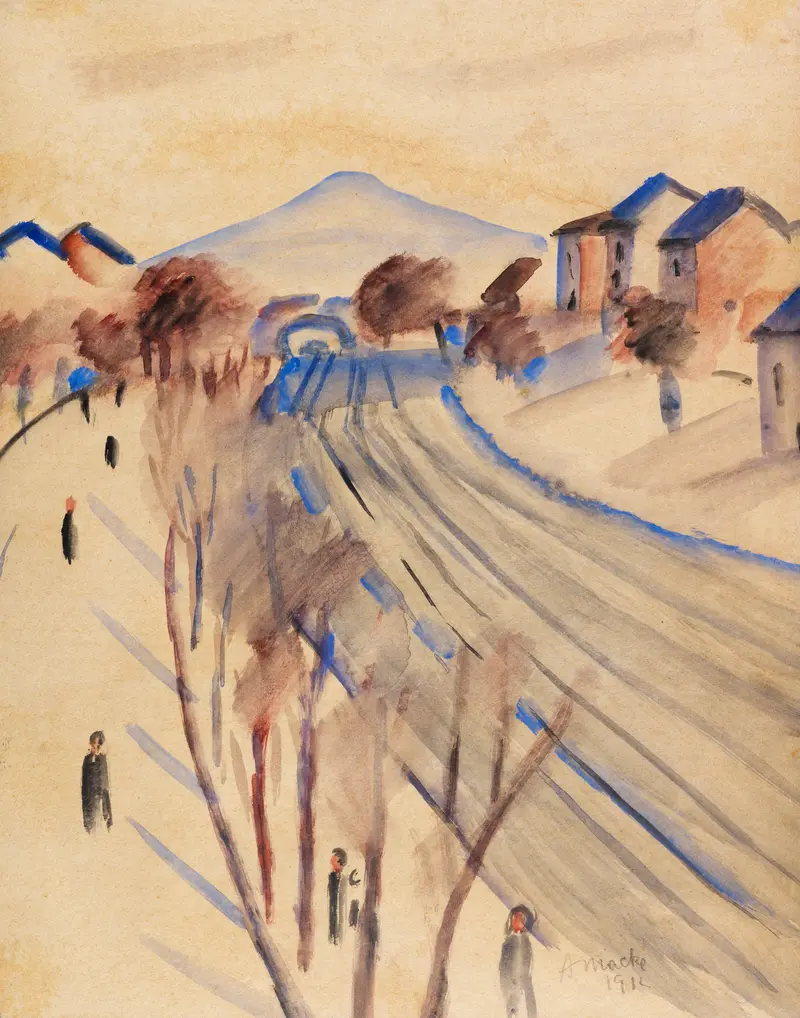
Ölberg mit Bahngleisen II
August Macke
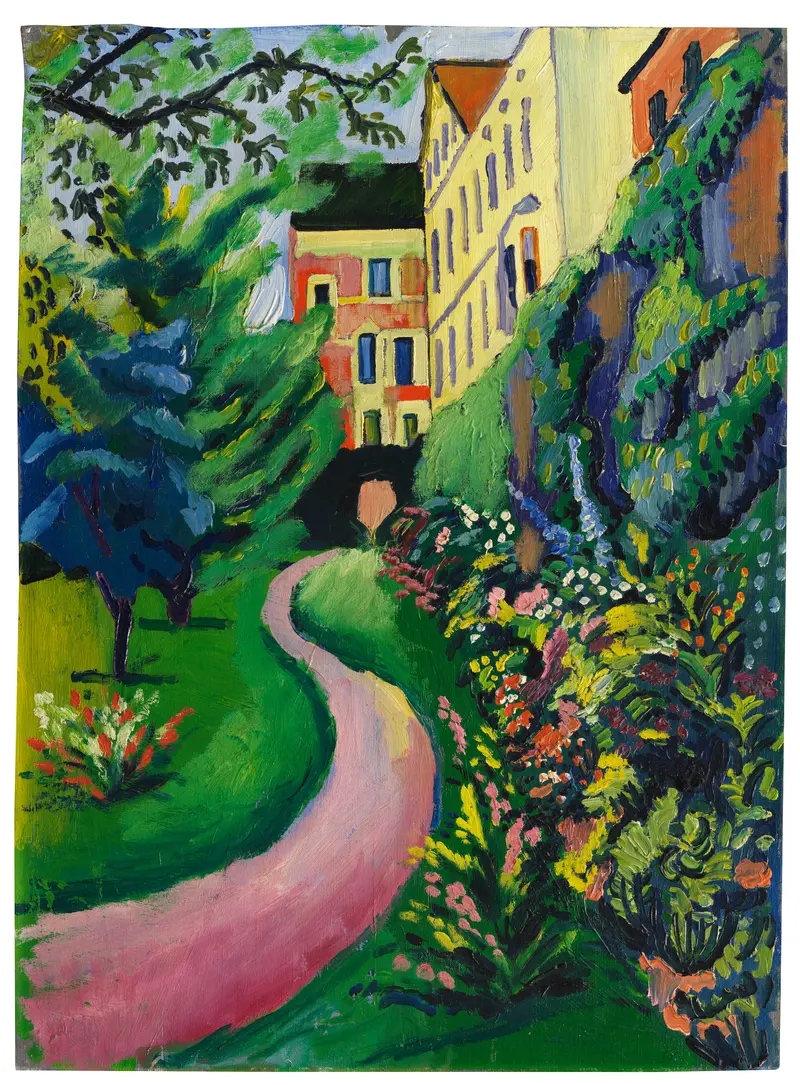
Unser Garten mit blühenden Rabatten
August Macke
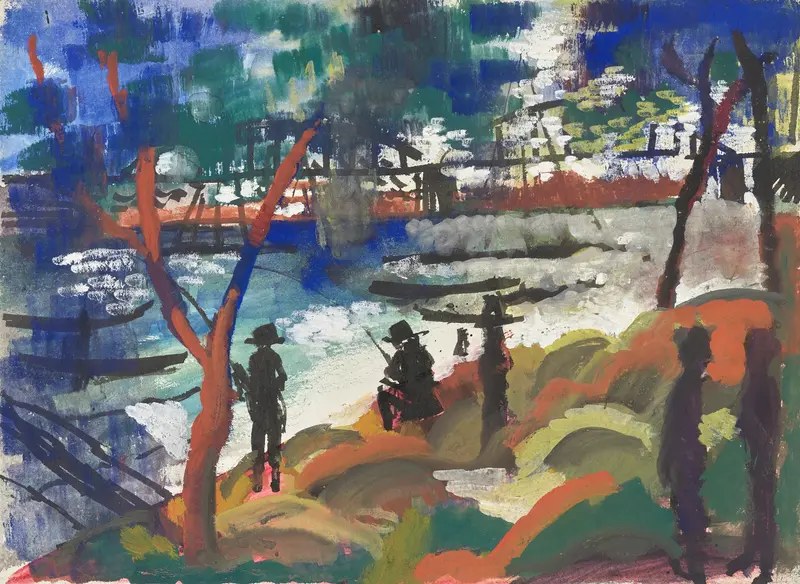
Angler am Fluss
August Macke
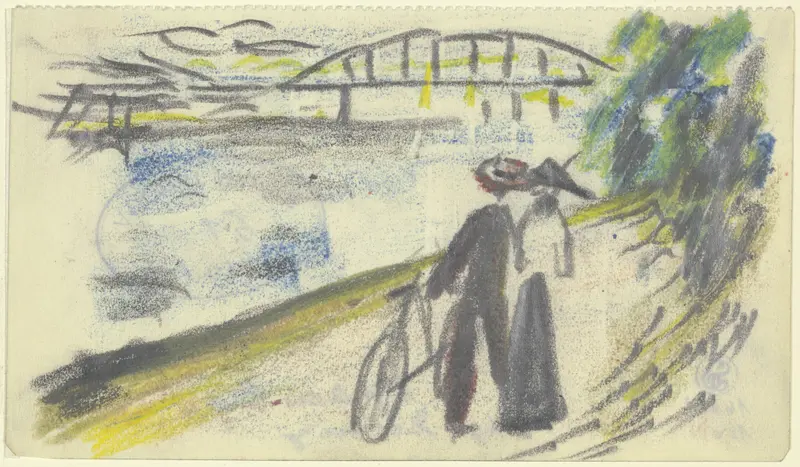
Path at the Rhine
August Macke
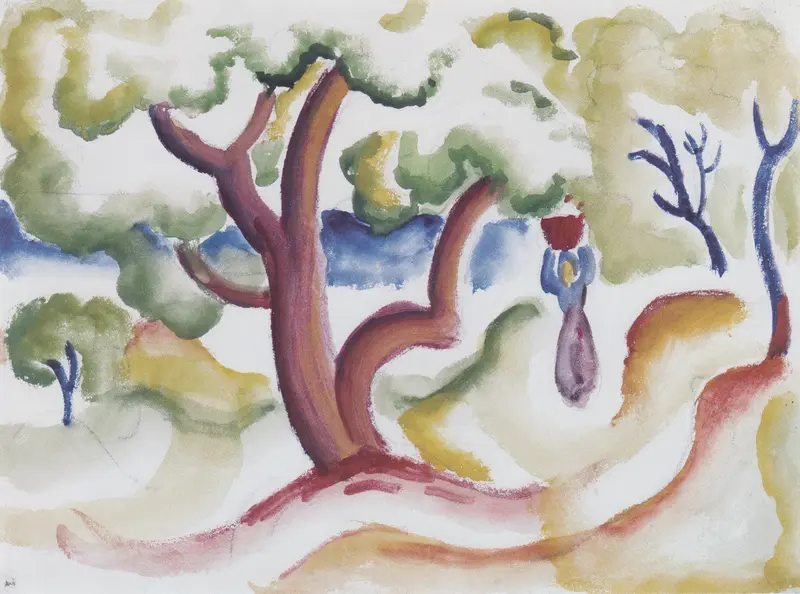
Frau mit Krug unter Bäumen
August Macke
Sonnige Straße mit Hund
August Macke