
A big cutter approaching the turning mark with the crowded club steamer beyond — History & Facts
What first catches the eye is the taut drama between wind, water, and human ambition: a sleek cutter surges forward, its sails straining with purpose, while a crowded club steamer brims with spectators, flags snapping above the eager crowd. The artist, Arthur Wellington Fowles, draws you into the race’s turning point, guiding your gaze from the foaming waves that churn beneath the rowboat in the foreground, to the poised elegance of the yacht, and finally to the distant haze of the shoreline. Every detail is a clue—the crisp geometry of the sails, the purposeful figures on deck, the flutter of pennants—each signaling the tension and choreography of competitive sailing.
Light glances off the white canvas, sharpening the yacht’s silhouette against a sky brushed with soft clouds, while the steamer’s dark hull anchors the scene in a bustle of anticipation. Painted in 1888, this work belongs to a world where yachting was both sport and spectacle, especially along the Isle of Wight, a favored haunt of Queen Victoria and her court. Marine paintings like this were often commissioned by yacht owners, club members, or local patrons keen to celebrate the excitement and prestige of regattas. Arthur Wellington Fowles, a lifelong resident of Ryde, poured his affection for the sea and his hometown into these lively chronicles, capturing not just the vessels but the social theater that surrounded them.
History has kept few traces of this particular cutter or the identities of those on board, but the painting itself invites us to linger, to feel the salt air and the pulse of competition that once filled these waters.
More Artworks by Arthur Wellington Fowles

The pilot cutter Fox and a quarantine hulk off Binstead
Arthur Wellington Fowles
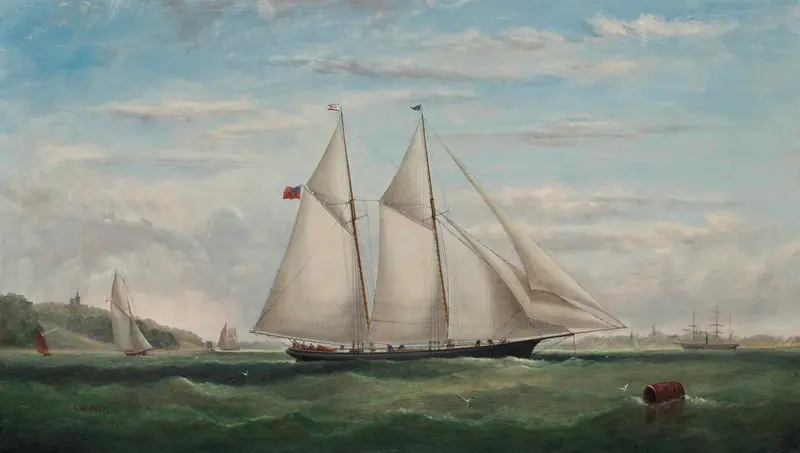
A schooner yacht of the New York Yacht Club racing off Ryde, Isle of Wight
Arthur Wellington Fowles
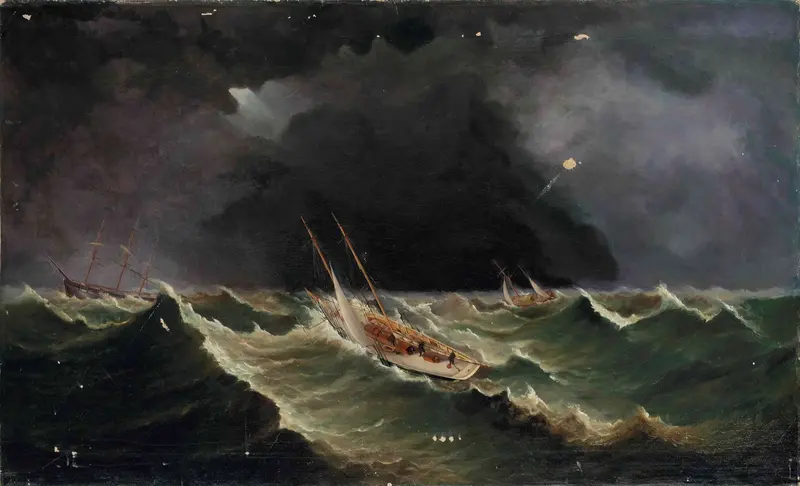
The Royal Victoria Yacht Club's schooner Caroline, hove to, in a gale off Ryde, 20 May
Arthur Wellington Fowles
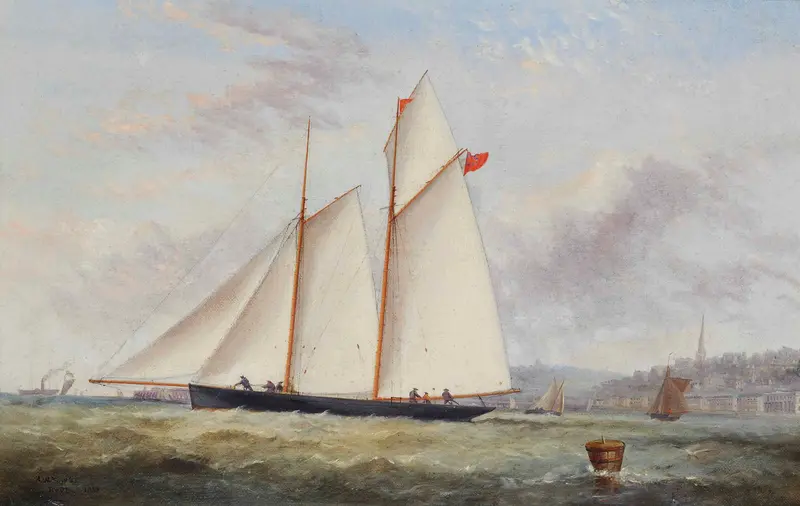
A racing schooner heading out into the tide off Ryde
Arthur Wellington Fowles
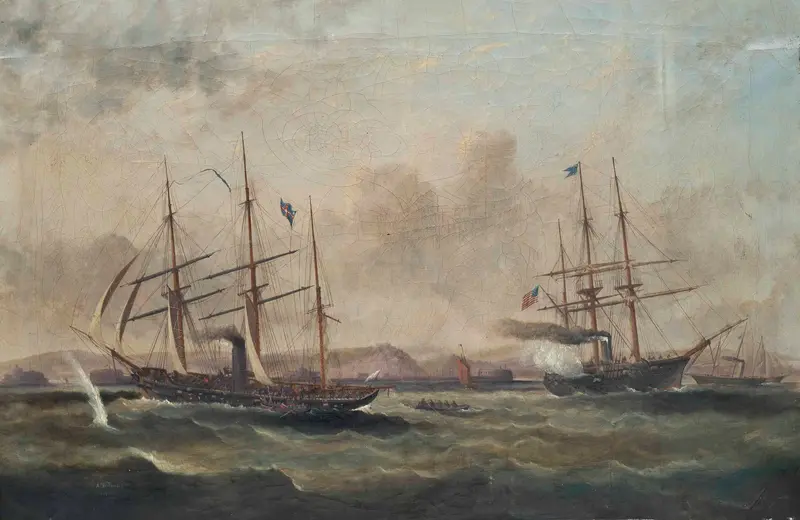
The celebrated engagement between the confederate raider C.S.S. Alabama and U.S.S. Kearsage, 19th June
Arthur Wellington Fowles
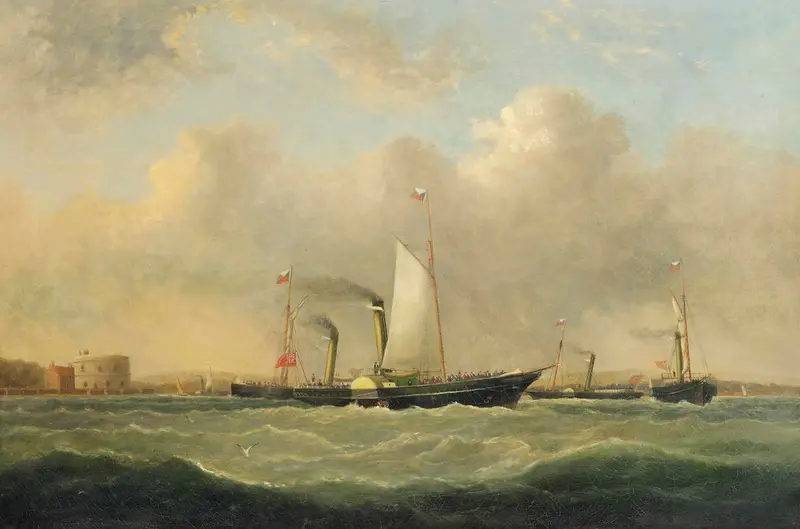
Southampton-Cowes ferries off Calshot Castle
Arthur Wellington Fowles
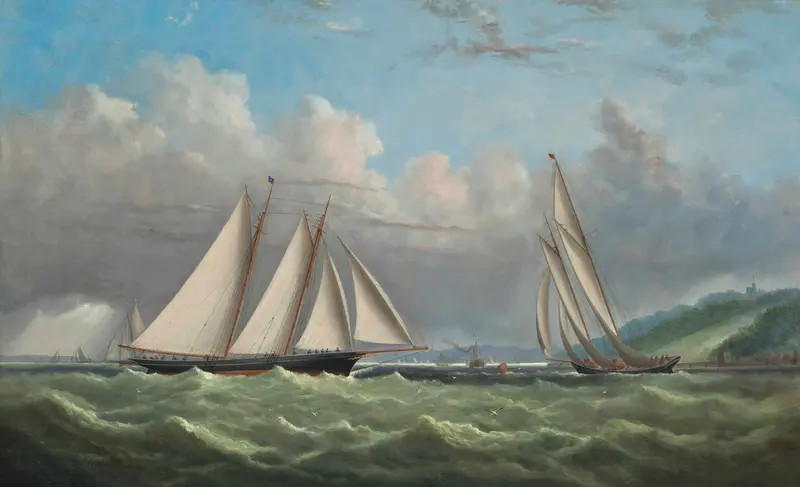
Racing schooners rounding the turning mark in Osborne Bay with Norris Castle above and Ryde beyond: The Prince of Wales's Hildegarde rounding the mark in second place
Arthur Wellington Fowles
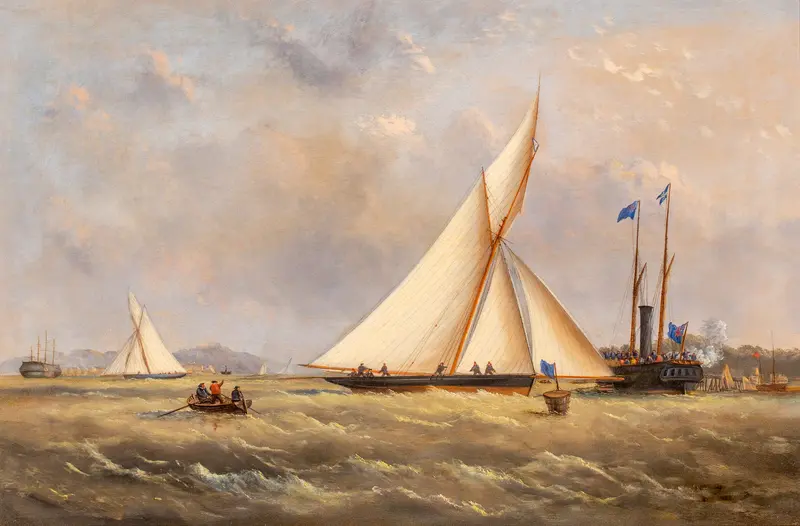
Cutter SPHINX Wins the first Royal Albert Cup
Arthur Wellington Fowles

The Yacht Cambria Racing Off Ryde – Isle Of Wight
Arthur Wellington Fowles





