The Royal Victoria Yacht Club's schooner Caroline, hove to, in a gale off Ryde, 20 May — History & Facts
What seizes you first is the sheer scale of the sea — a heaving, green-black force that dwarfs every human ambition afloat upon it. In The Royal Victoria Yacht Club's schooner Caroline, hove to, in a gale off Ryde, 20 May by Arthur Wellington Fowles, the schooner is caught mid-struggle, her sails reefed and her hull angled sharply against the surging waves. The painter draws your eye to the contrast between the luminous foam and the almost impenetrable darkness of the storm, where a single shaft of light breaks through the clouds, spotlighting the pitched drama below.
Crew members cling to the deck, their gestures taut with urgency, while distant ships tilt perilously, their masts barely vertical. Every brushstroke in the water’s crest seems to echo the tension between human craft and the raw, unpredictable power of nature. This is a world where the yacht is not a symbol of leisure, but of daring and resilience. Marine paintings of the mid-nineteenth century, especially in Britain, were often commissioned by proud owners or yacht clubs eager to commemorate feats of seamanship or the prestige of their vessels.
The Royal Victoria Yacht Club, founded in 1845, was at the heart of a golden age of yachting, when the Solent and the waters off Ryde became a stage for both competition and spectacle. Painted in 1863, this work stands as a testament to that era’s fascination with the sea’s dangers as much as its pleasures. History has kept few traces of this particular voyage, but the painting invites you to witness a moment when man, ship, and storm are locked in a contest that feels both immediate and eternal — a story told in wind, water, and the stubborn lines of a schooner refusing to yield.
More Artworks by Arthur Wellington Fowles

The pilot cutter Fox and a quarantine hulk off Binstead
Arthur Wellington Fowles
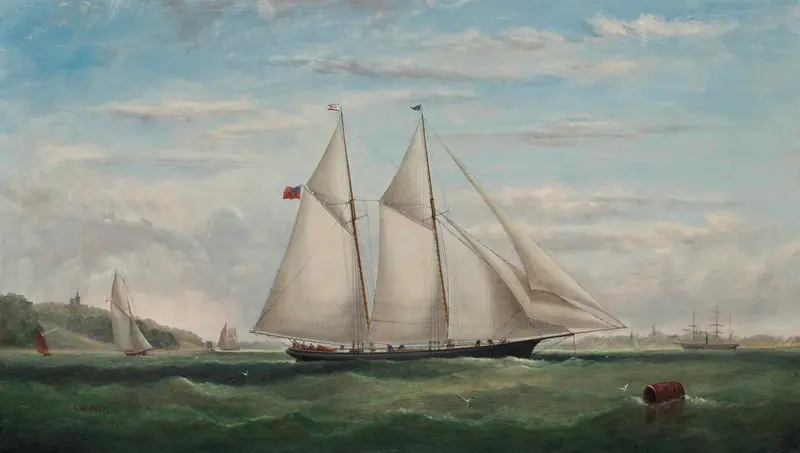
A schooner yacht of the New York Yacht Club racing off Ryde, Isle of Wight
Arthur Wellington Fowles
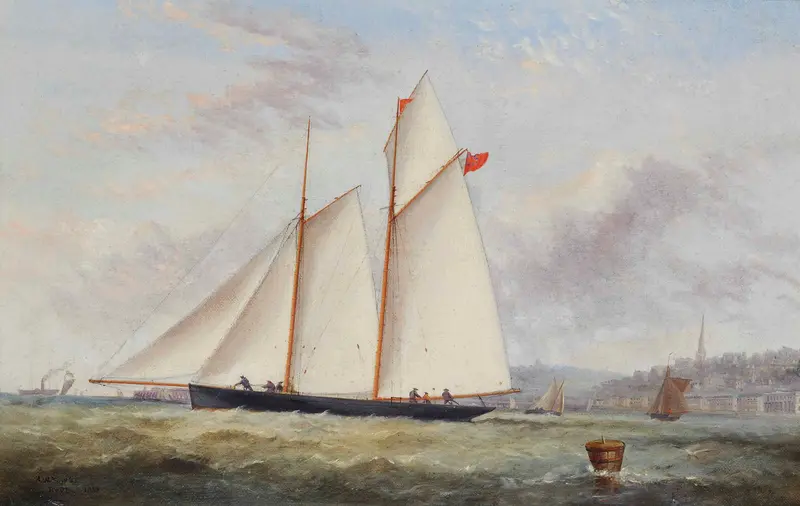
A racing schooner heading out into the tide off Ryde
Arthur Wellington Fowles
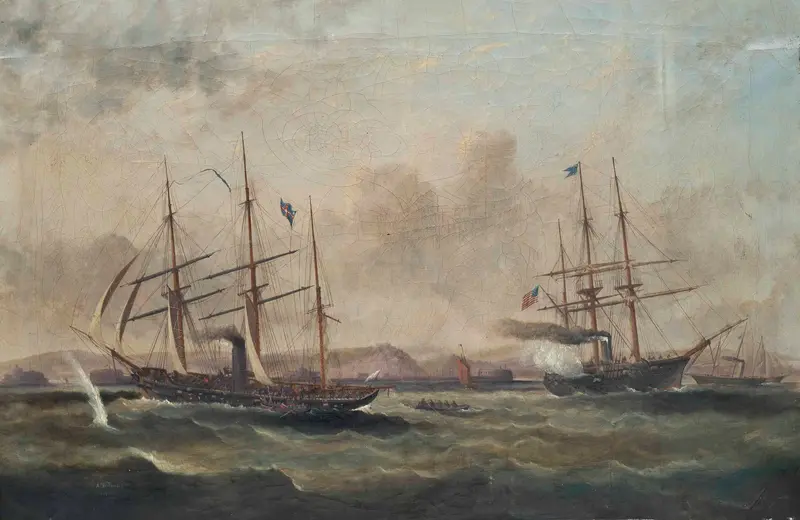
The celebrated engagement between the confederate raider C.S.S. Alabama and U.S.S. Kearsage, 19th June
Arthur Wellington Fowles
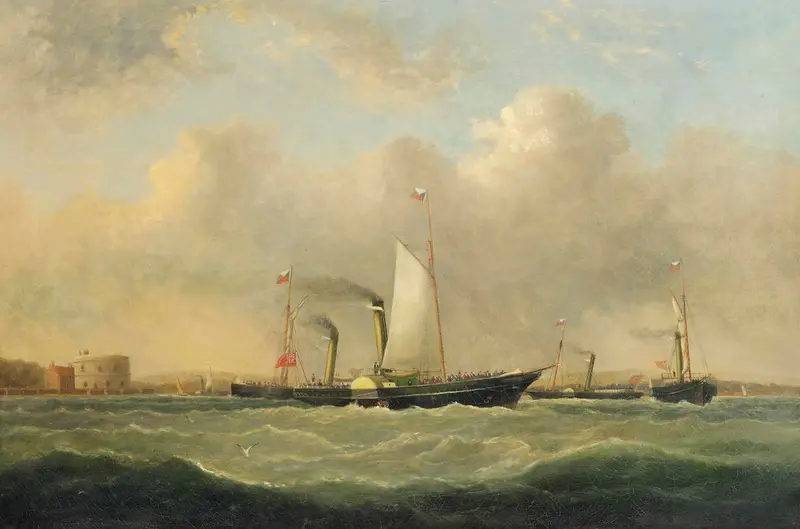
Southampton-Cowes ferries off Calshot Castle
Arthur Wellington Fowles
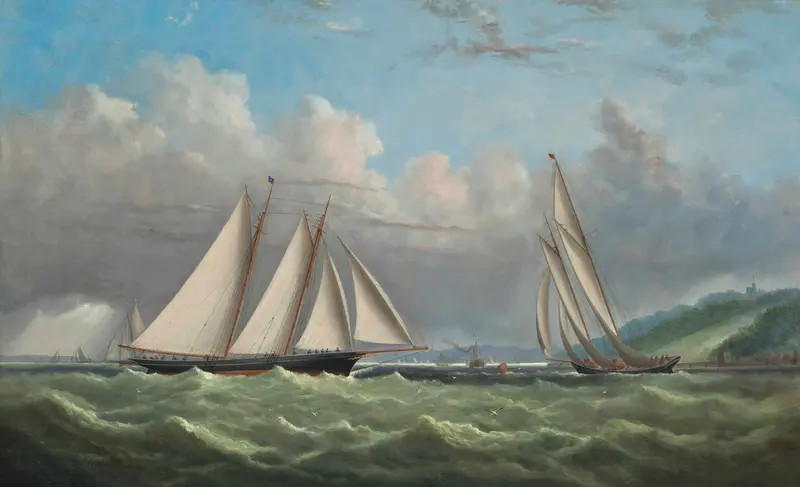
Racing schooners rounding the turning mark in Osborne Bay with Norris Castle above and Ryde beyond: The Prince of Wales's Hildegarde rounding the mark in second place
Arthur Wellington Fowles
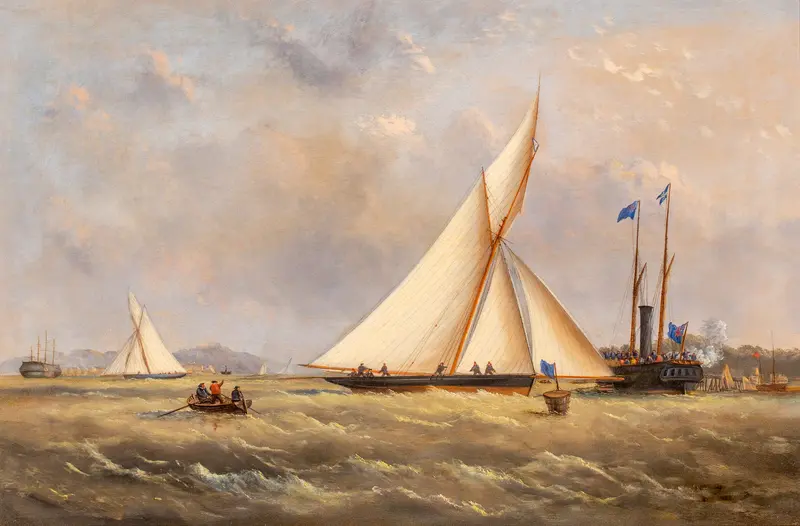
Cutter SPHINX Wins the first Royal Albert Cup
Arthur Wellington Fowles
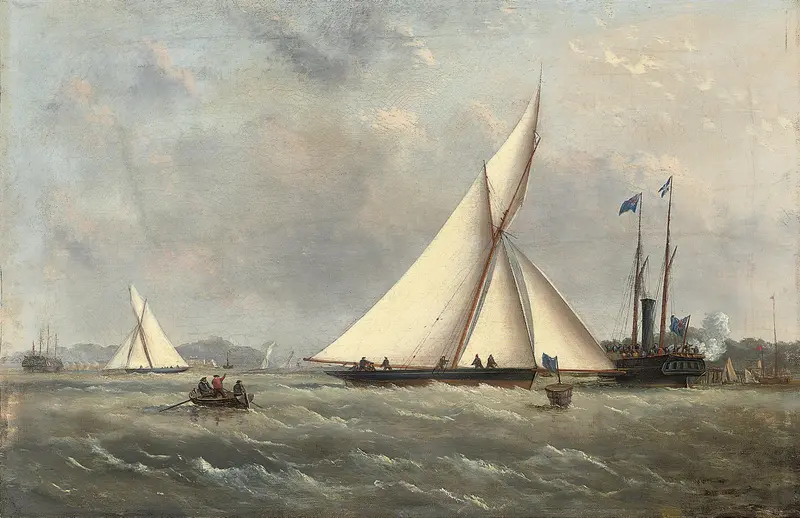
A big cutter approaching the turning mark with the crowded club steamer beyond
Arthur Wellington Fowles

The Yacht Cambria Racing Off Ryde – Isle Of Wight
Arthur Wellington Fowles