
A Capriccio View Of The Hofvijver, The Hague — History & Facts
Where does light end, and longing begin? In A Capriccio View Of The Hofvijver, The Hague, the boundary blurs, leaving viewers to ponder the delicate interplay of nature and architecture. Focus on the shimmering surface of the Hofvijver, where reflections ripple under the gentle caress of sunlight. The water, painted with vibrant blues and greens, invites your gaze deeper into the scene. Notice how the palace rises majestically in the background, its intricate details framed by the delicate interplay of shadows and light.
The artist’s brushwork captures the ethereal quality of the atmosphere, creating a dreamlike quality that almost feels tangible. Yet beneath this tranquility lies a tension between the natural and the constructed. The trees, lush and full of life, seem to lean protectively over the water, contrasting with the rigid symmetry of the architecture. This juxtaposition evokes a sense of longing for connection between humanity and the environment, as if the viewer is caught in a moment of reverie.
The play of light serves not just as illumination but as a metaphor for the fleeting nature of beauty and existence. Bartholomeus Johannes van Hove painted this scene in 1837, during a period marked by a romantic fascination with landscapes and architectural harmony. Residing in The Hague, he was deeply influenced by the burgeoning appreciation for scenic beauty in urban settings. This artwork reflects a moment in which the artist sought to merge his love for nature with the elegance of human creation, capturing a fleeting glimpse of serenity amidst the complexities of life.
More Artworks by Bartholomeus Johannes van Hove
Browse all →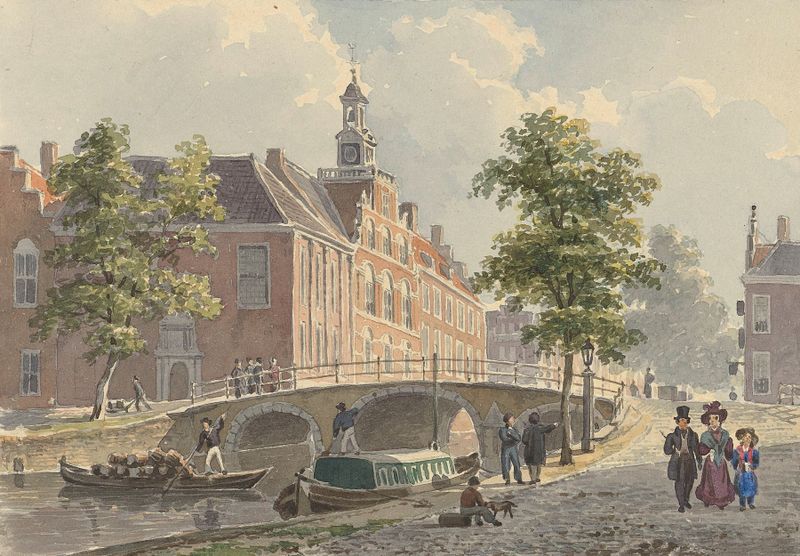
Het Spui te ‘s-Gravenhage, gezien naar het zuiden
Bartholomeus Johannes van Hove
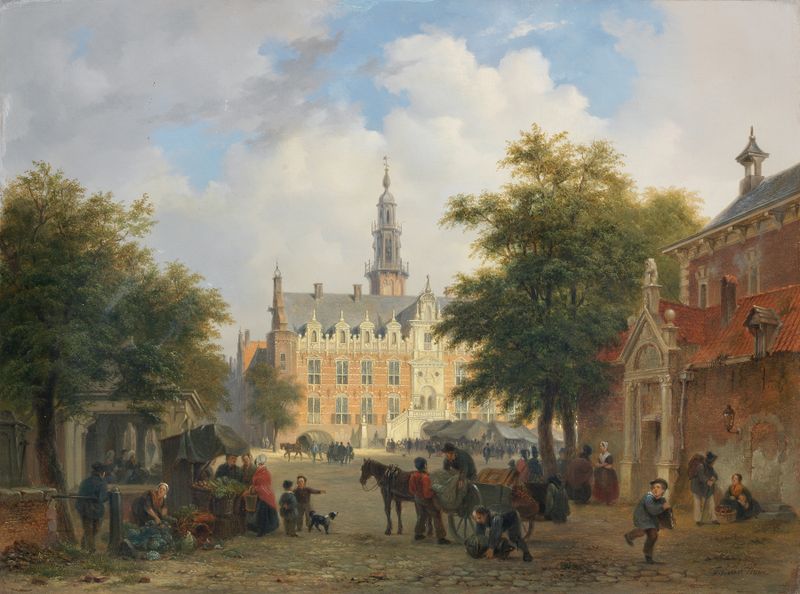
Street scene, Amsterdam
Bartholomeus Johannes van Hove
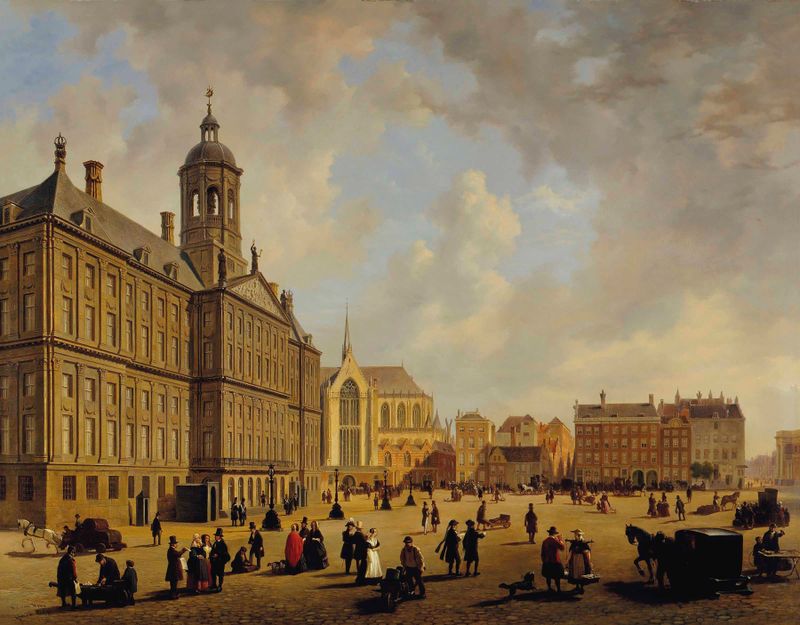
A bustling day in front of the City hall on the Dam Square, the Nieuwe Kerk in the distance, Amsterdam
Bartholomeus Johannes van Hove

Sommerliche Stadtansicht
Bartholomeus Johannes van Hove

Church Interior
Bartholomeus Johannes van Hove
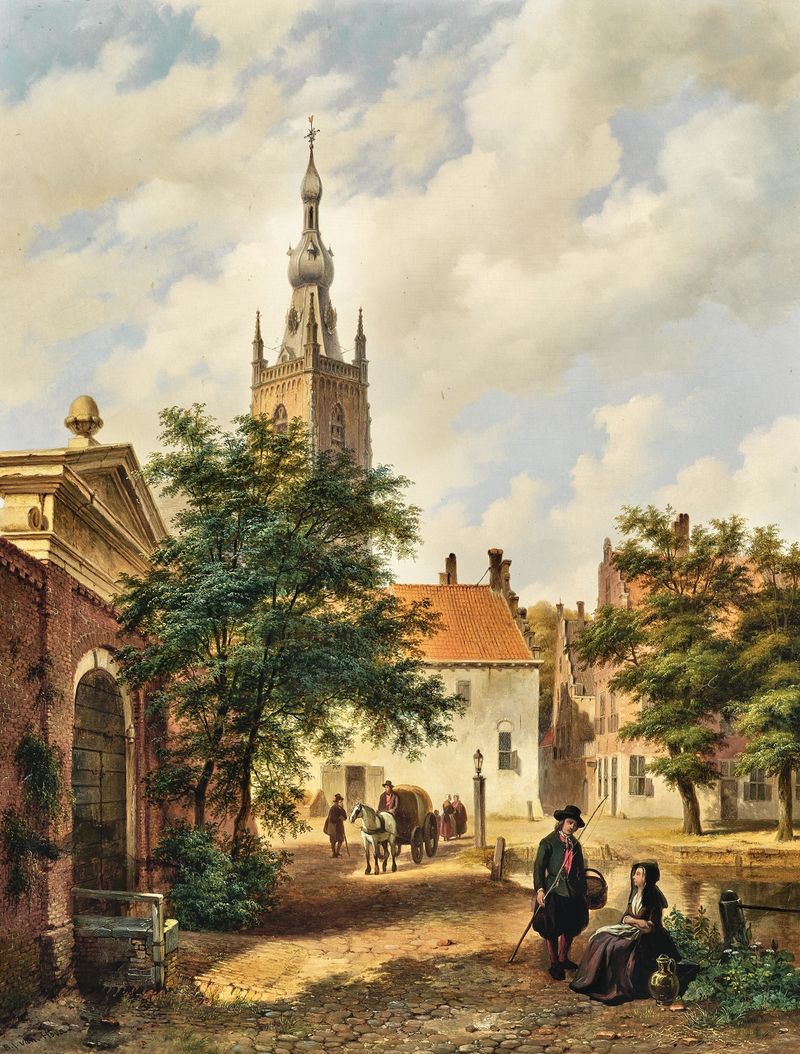
A View of a Village with a Church
Bartholomeus Johannes van Hove

Winterliche Stadtansicht
Bartholomeus Johannes van Hove
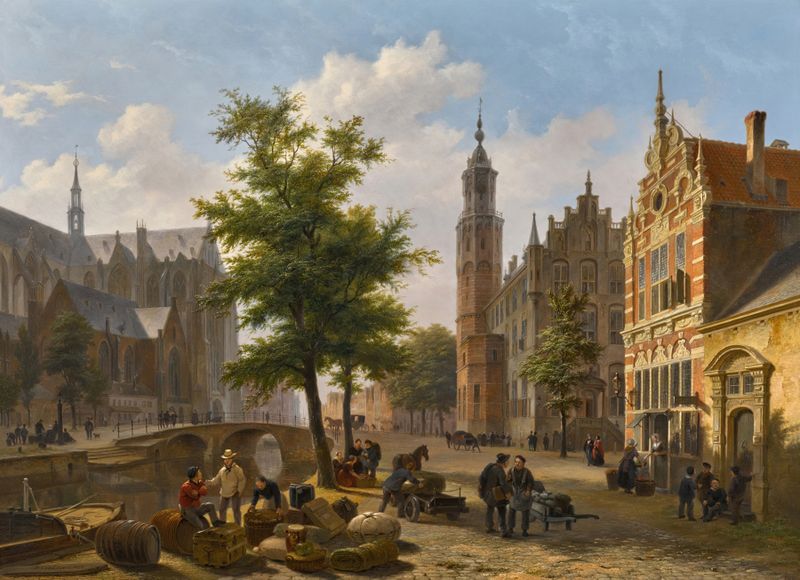
A Busy Market Place in a Dutch Town
Bartholomeus Johannes van Hove

View of a Dutch town
Bartholomeus Johannes van Hove
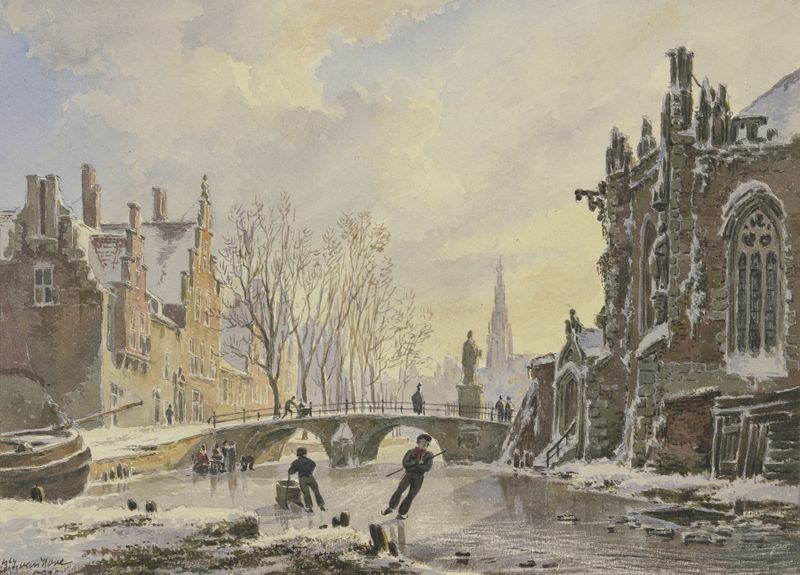
Schlittschuhläufer auf einer Gracht in Amsterdam
Bartholomeus Johannes van Hove





