
Schlittschuhläufer auf einer Gracht in Amsterdam — History & Facts
Can paint confess what words never could? In Schlittschuhläufer auf einer Gracht in Amsterdam, a fleeting moment of innocence dances on the ice, evoking a world untouched by time. Look to the left at the lively figures gliding effortlessly across the frozen canal. Their bright clothing contrasts beautifully with the muted gray of the winter sky, bringing warmth to the cold scene. Notice how the light reflects off the ice, creating a shimmering pathway that draws the eye deeper into the composition.
The artist's meticulous brushwork captures not just the figures but their joyful spirit, inviting you to feel the chill of the air and the thrill of the skate. Beneath the surface of this cheerful spectacle lies a poignant exploration of transience. The ice, so inviting and full of life, serves as a metaphor for innocence, suggesting that such moments are fleeting and fragile. The distant shadows of the buildings loom, perhaps hinting at the realities of life that await beyond the merriment, reminding us of the inevitable passage of time.
The simple act of skating becomes an emblem of joy and vulnerability, a juxtaposition of freedom against the backdrop of a bustling city. In 1832, Bartholomeus Johannes van Hove painted this scene in Amsterdam during a period of economic hardship and societal change. The canals were a focal point for both leisure and industry, reflecting the complexity of urban life. At this time, the artist was establishing himself in the Dutch Romantic movement, capturing the beauty of everyday moments while infusing them with emotional depth that resonated with his contemporaries.
More Artworks by Bartholomeus Johannes van Hove
Browse all →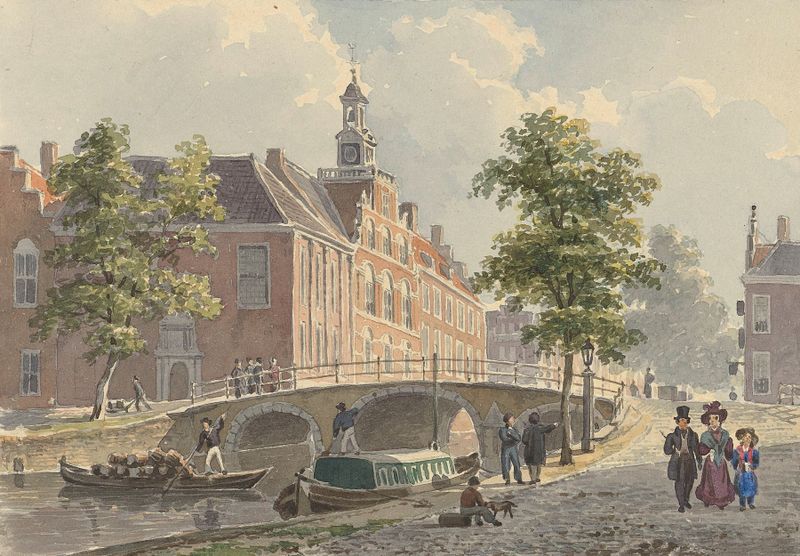
Het Spui te ‘s-Gravenhage, gezien naar het zuiden
Bartholomeus Johannes van Hove
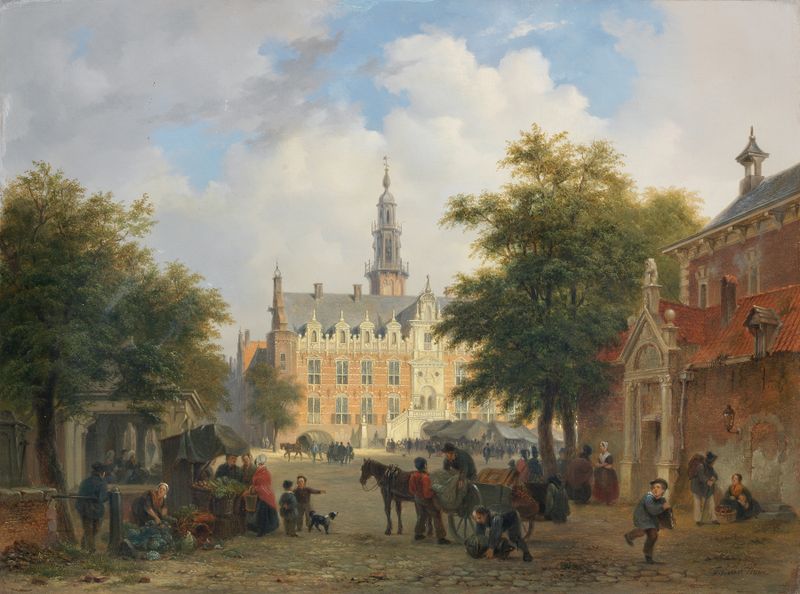
Street scene, Amsterdam
Bartholomeus Johannes van Hove

A Capriccio View Of The Hofvijver, The Hague
Bartholomeus Johannes van Hove
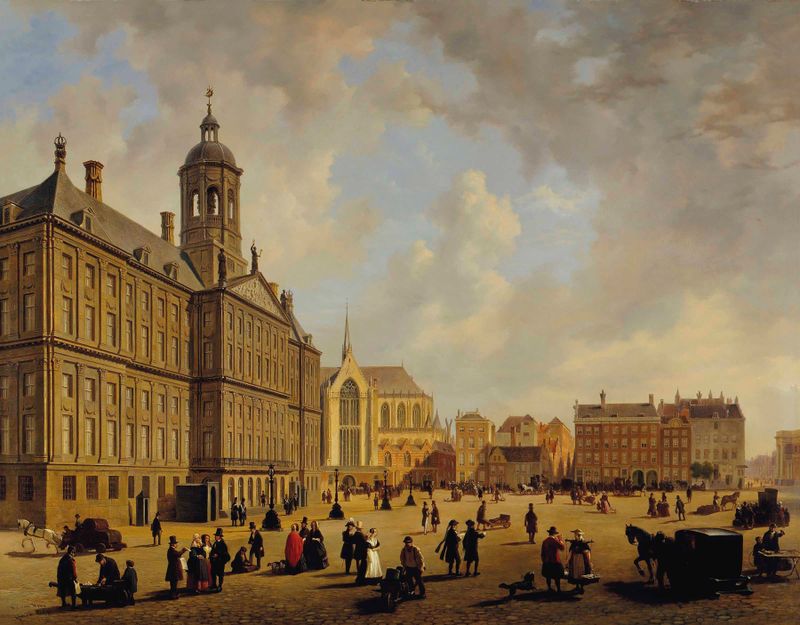
A bustling day in front of the City hall on the Dam Square, the Nieuwe Kerk in the distance, Amsterdam
Bartholomeus Johannes van Hove

Sommerliche Stadtansicht
Bartholomeus Johannes van Hove

Church Interior
Bartholomeus Johannes van Hove
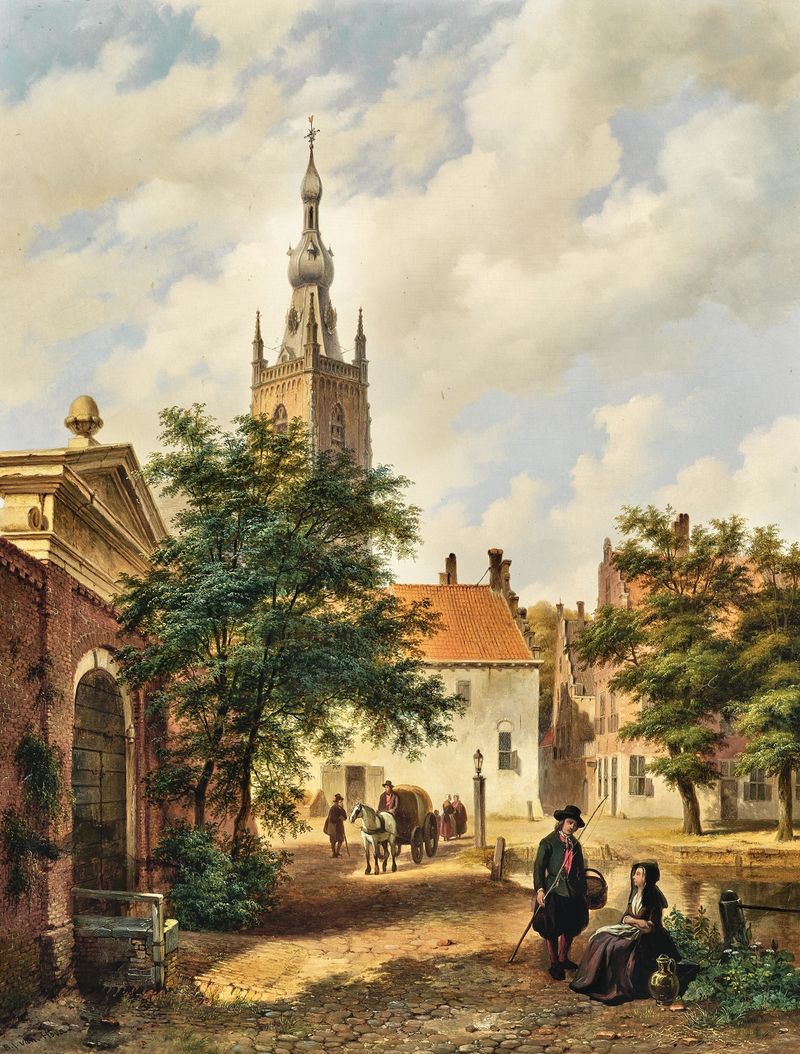
A View of a Village with a Church
Bartholomeus Johannes van Hove

Winterliche Stadtansicht
Bartholomeus Johannes van Hove
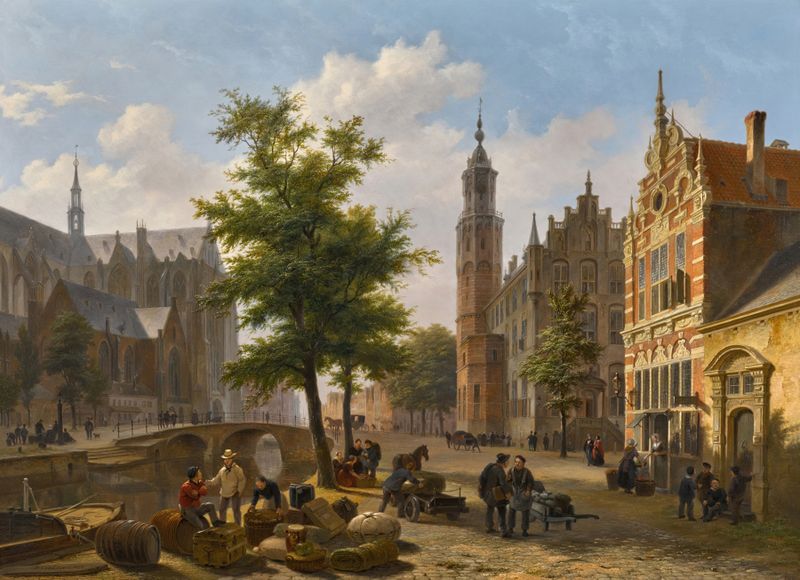
A Busy Market Place in a Dutch Town
Bartholomeus Johannes van Hove

View of a Dutch town
Bartholomeus Johannes van Hove





