
Winterliche Stadtansicht — History & Facts
What secret hides in the quiet of the canvas? Within the depths of Winterliche Stadtansicht, a fragile world unfurls where the dance of snowflakes meets the stillness of an urban landscape. Look to the foreground at the soft, muted tones of the snow-covered rooftops, where delicate strokes of white and pale blue interlace, creating a serene yet somber atmosphere. Notice how the light is captured in the warm glow spilling from the windows, contrasting sharply with the cold, icy blues of the winter sky. Each building stands like a silent sentinel, embodying both the beauty and isolation of the season as they recede into the distant horizon. As you delve deeper, feel the emotional tension between the warmth of human life inside those homes and the stark coldness of the outside world.
The ghostly figures in the street, bundled against the chill, evoke a sense of fragility, as if they are but fleeting memories against the relentless backdrop of winter. This contrast beckons contemplation—how resilience thrives amidst vulnerability, an enduring theme woven through the fabric of urban existence. Van Hove painted this scene in 1840, during a period when the Netherlands was grappling with the aftermath of political upheaval. In this era, artists were beginning to explore realism and the emotional weight of everyday life.
The choice to depict a winter cityscape reflects not only a personal ambivalence towards the chill of the season but also a broader artistic movement that sought to capture both the sublime and the mundane in the changing world around them.
More Artworks by Bartholomeus Johannes van Hove
Browse all →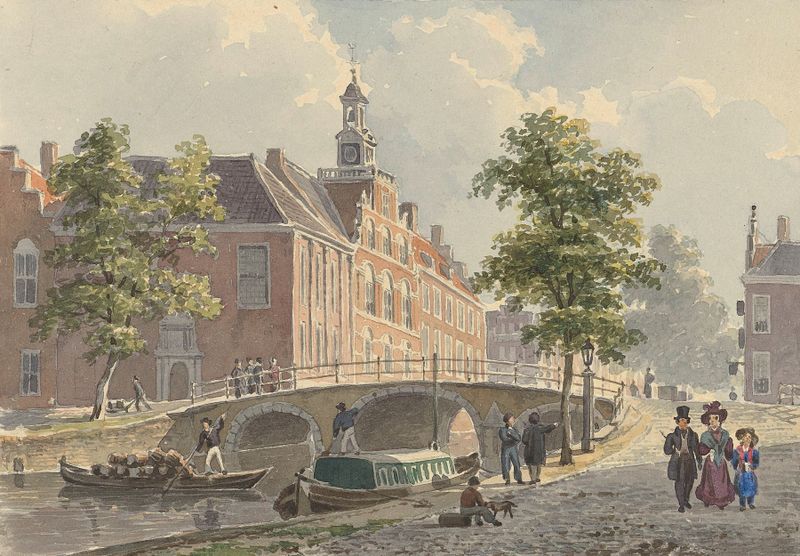
Het Spui te ‘s-Gravenhage, gezien naar het zuiden
Bartholomeus Johannes van Hove
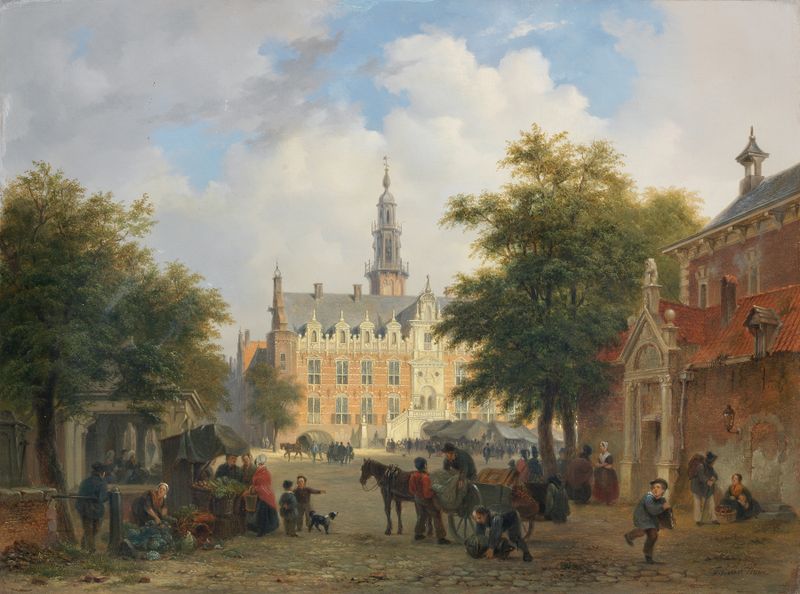
Street scene, Amsterdam
Bartholomeus Johannes van Hove

A Capriccio View Of The Hofvijver, The Hague
Bartholomeus Johannes van Hove
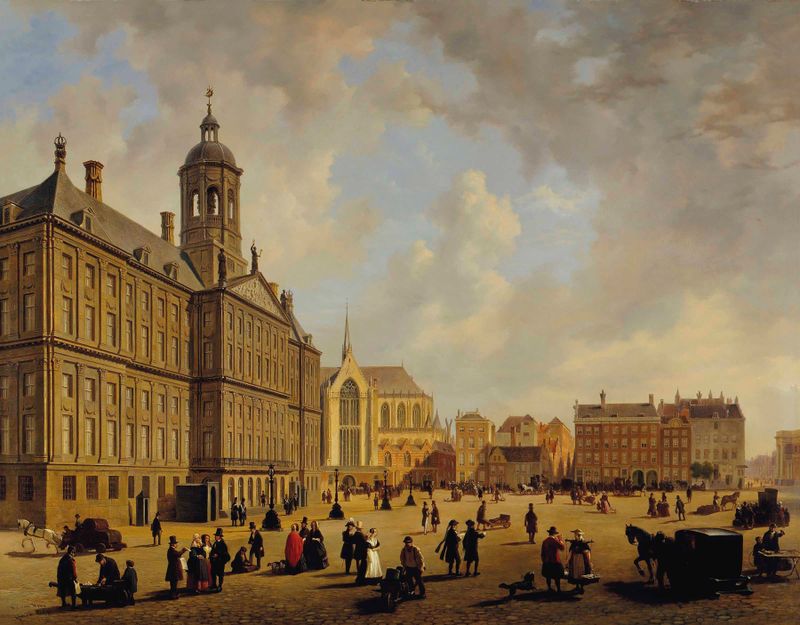
A bustling day in front of the City hall on the Dam Square, the Nieuwe Kerk in the distance, Amsterdam
Bartholomeus Johannes van Hove

Sommerliche Stadtansicht
Bartholomeus Johannes van Hove

Church Interior
Bartholomeus Johannes van Hove
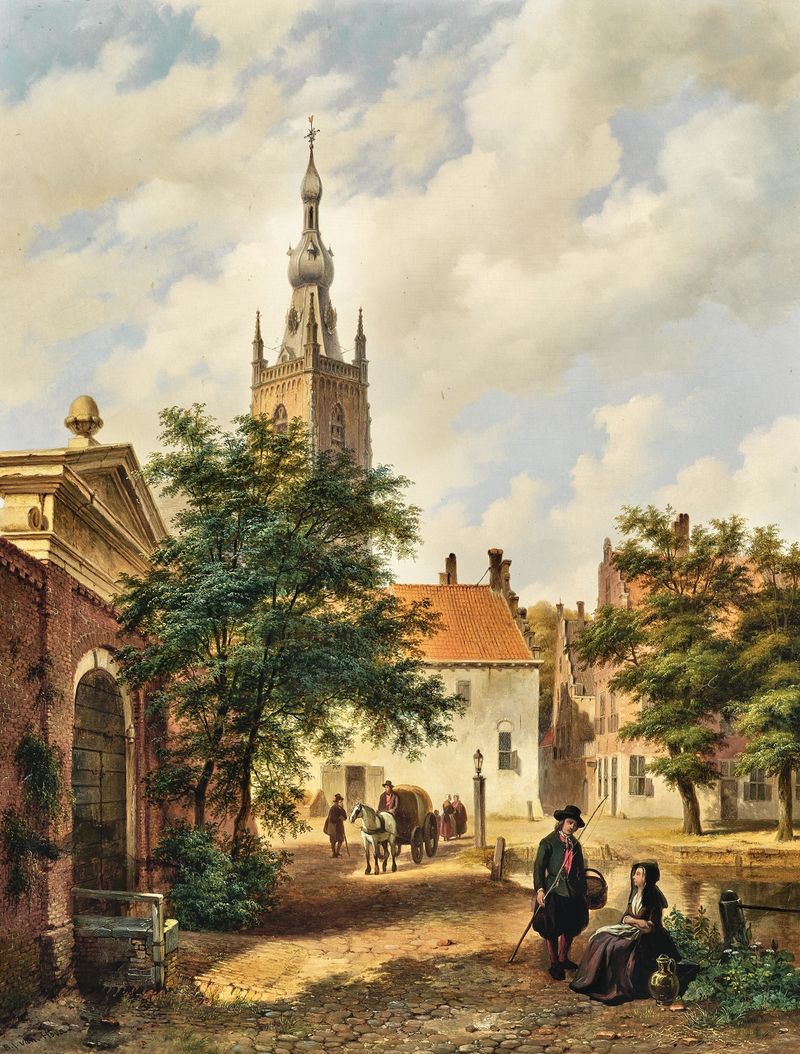
A View of a Village with a Church
Bartholomeus Johannes van Hove
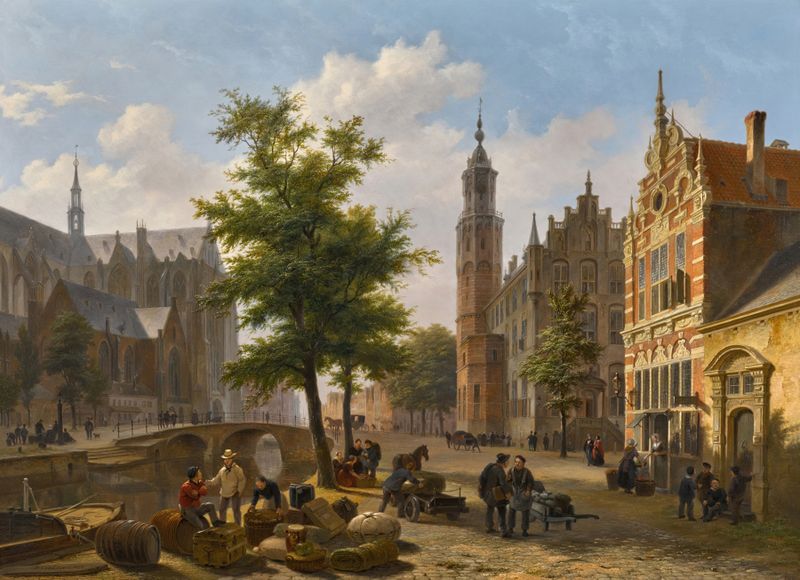
A Busy Market Place in a Dutch Town
Bartholomeus Johannes van Hove

View of a Dutch town
Bartholomeus Johannes van Hove
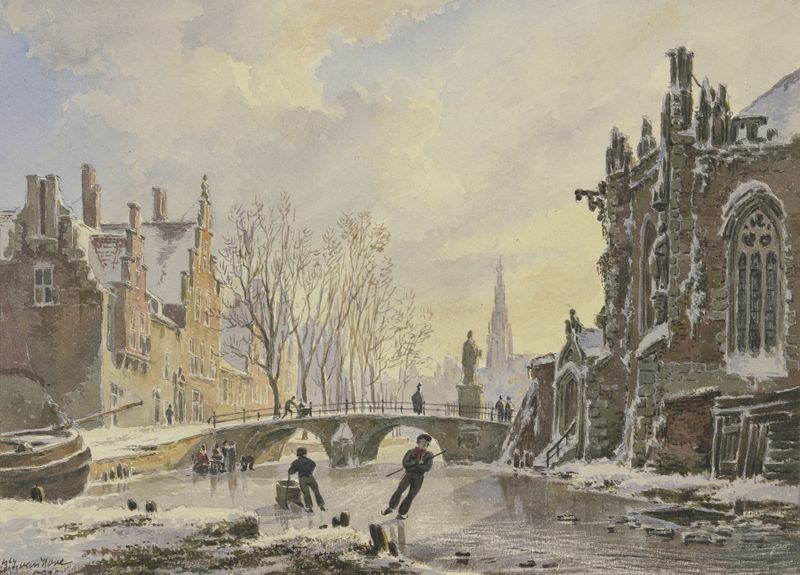
Schlittschuhläufer auf einer Gracht in Amsterdam
Bartholomeus Johannes van Hove





