Church Interior — History & Facts
The weight of unspoken truths hangs heavily in the air, echoing through the hallowed hall of a church where shadows meet the light. Each pew holds stories of devotion and doubt, while the towering arches stand as guardians of whispered prayers. In this stillness, the viewer senses the tumult of a world on the brink of revolution beyond these sacred walls. Look to the left, where soft light streams in through stained glass, casting vibrant hues onto the worn stone floor.
Notice how the artist meticulously captures the interplay of light and shadow, creating a palpable tension between the divine and the human. The warm earth tones of the wooden pews contrast with the cool blues and reds of the glass, pulling the eye through the composition and invoking a sense of wonder amidst the solemnity. As you explore further, take in the tiny details: the delicate carvings on the pews, the flickering candlelight struggling against the encroaching dusk. Each element reflects the emotional undercurrents of faith, uncertainty, and hope, suggesting the quiet turmoil of a society yearning for change.
The juxtaposition of the serene space and the chaos outside amplifies the conflict between tradition and progress, urging the viewer to contemplate their own beliefs. In 1844, the artist found himself in a rapidly changing Europe, where political and social upheaval was reshaping communities. Working in the Netherlands, he was influenced by the Romantic movement that emphasized emotion and nature, even as the Industrial Revolution began to redefine the landscape. This painting, with its contemplative atmosphere, captures a moment of stillness amid the impending storm of societal transformation.
More Artworks by Bartholomeus Johannes van Hove
Browse all →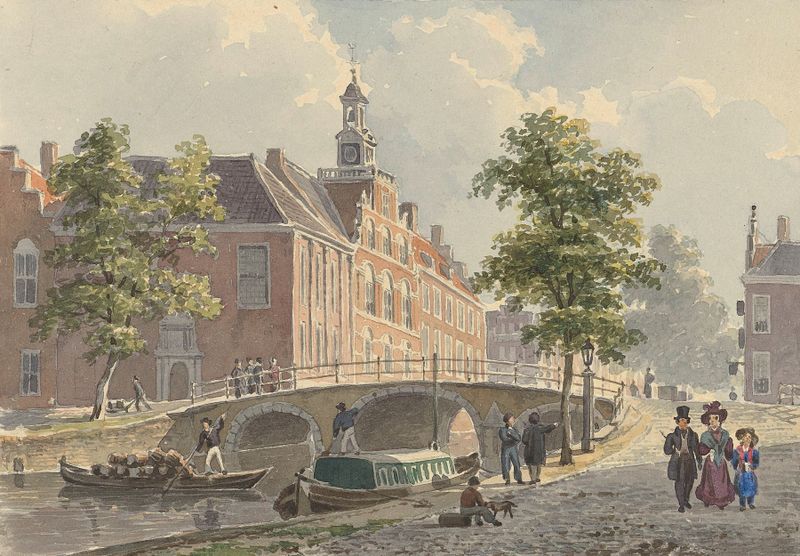
Het Spui te ‘s-Gravenhage, gezien naar het zuiden
Bartholomeus Johannes van Hove
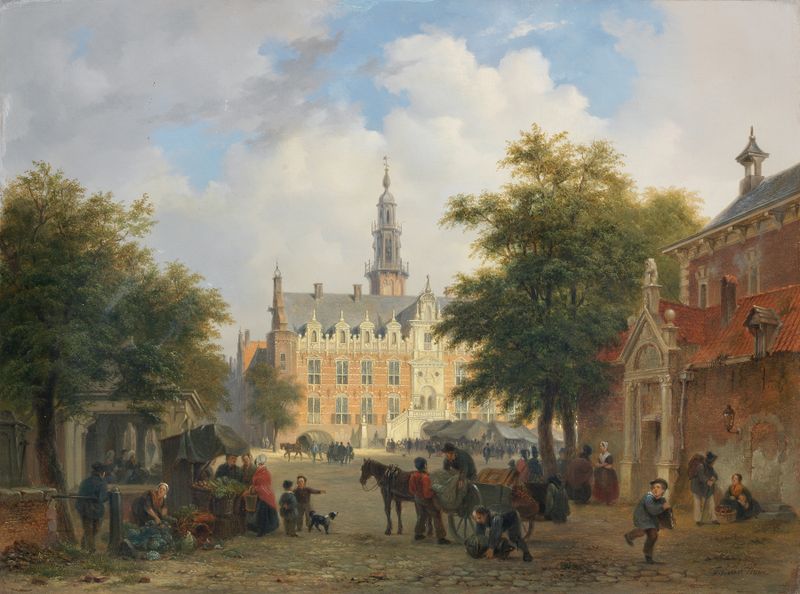
Street scene, Amsterdam
Bartholomeus Johannes van Hove

A Capriccio View Of The Hofvijver, The Hague
Bartholomeus Johannes van Hove
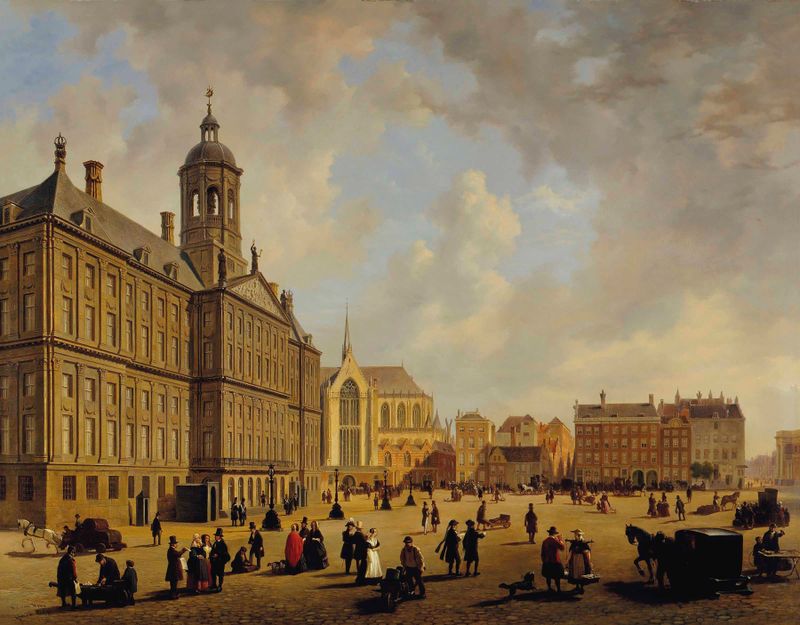
A bustling day in front of the City hall on the Dam Square, the Nieuwe Kerk in the distance, Amsterdam
Bartholomeus Johannes van Hove

Sommerliche Stadtansicht
Bartholomeus Johannes van Hove
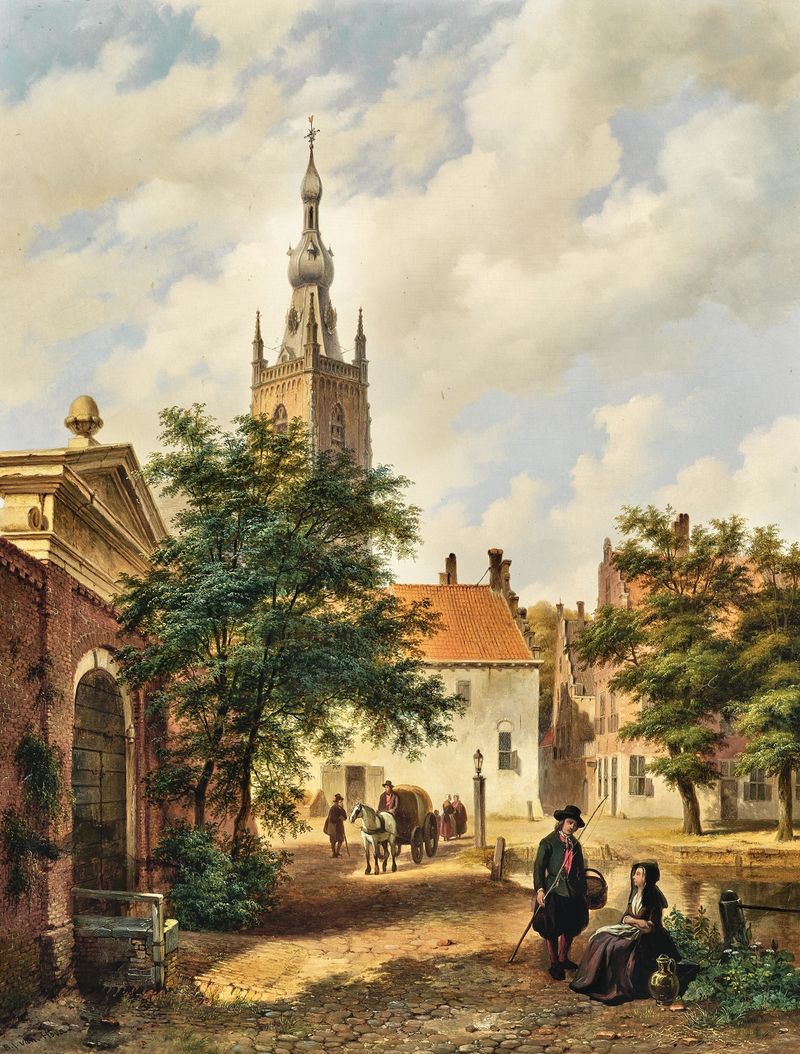
A View of a Village with a Church
Bartholomeus Johannes van Hove

Winterliche Stadtansicht
Bartholomeus Johannes van Hove
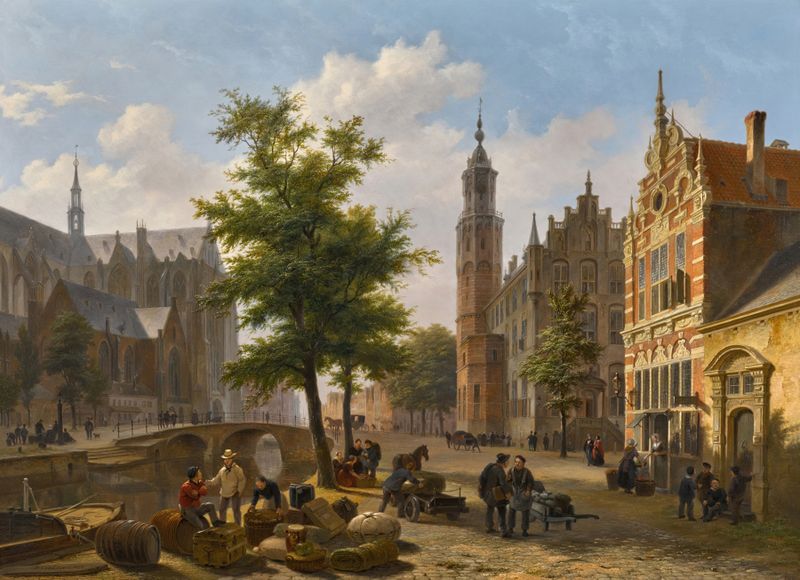
A Busy Market Place in a Dutch Town
Bartholomeus Johannes van Hove

View of a Dutch town
Bartholomeus Johannes van Hove
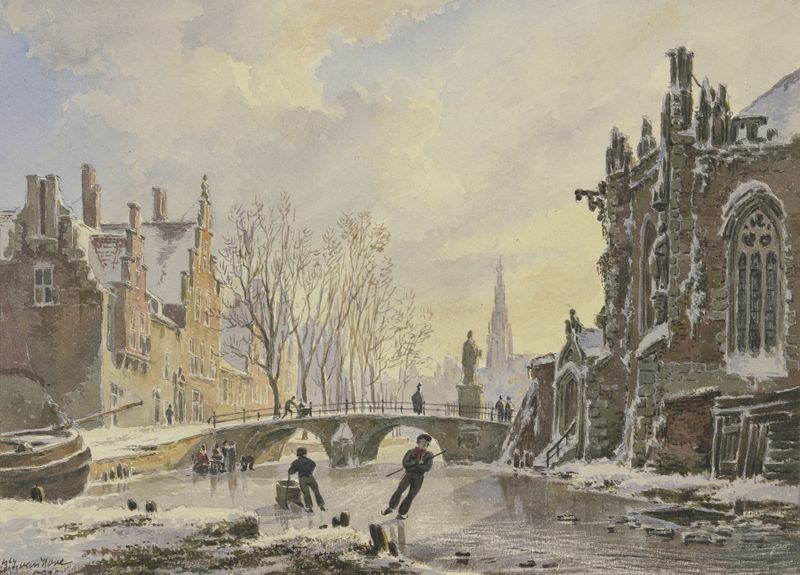
Schlittschuhläufer auf einer Gracht in Amsterdam
Bartholomeus Johannes van Hove