
Het Spui te ‘s-Gravenhage, gezien naar het zuiden — History & Facts
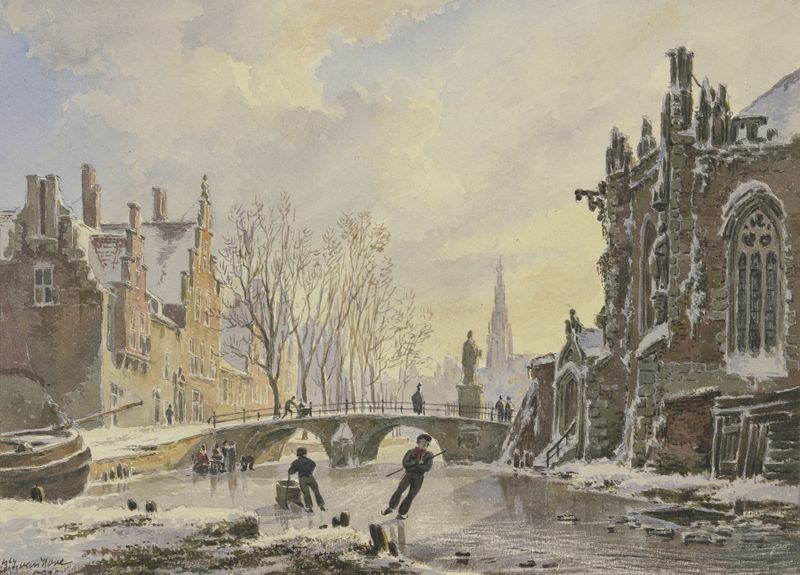
Who listens when art speaks of silence? In the stillness of Het Spui te ‘s-Gravenhage, gezien naar het zuiden, a quiet revolution unfolds, urging us to pause and reflect on the transformative power of urban life. Focus on the center, where the procession of trees frames a tranquil street, inviting your gaze deeper into the composition. Notice how the soft, muted greens and browns contrast with the delicate blues of the sky, creating a harmonious balance that feels at once alive and serene. The gentle brushstrokes evoke a sense of movement, as if the landscape breathes with the whispers of the past while capturing the architecture that stands resolute. Yet, beneath this calm exterior lies an undercurrent of emotional tension.
The empty street suggests a world poised on the brink of change, hinting at the social upheavals of the era. The juxtaposition of nature and man-made structures speaks to the struggle between progress and preservation, allowing viewers to ponder what remains unspoken in the hearts of those who once traversed these paths. Each detail, from the dappled light filtering through the leaves to the shadows that linger, evokes a sense of nostalgia mixed with anticipation. Bartholomeus Johannes van Hove painted this scene during a time of significant social and political shifts in Europe, spanning from the late 18th to the 19th century.
Living in The Hague amidst these changes, he emerged as a prominent figure in the Dutch romantic movement, capturing the essence of his surroundings with a keen eye for detail and subtlety. His work reflects both the beauty and complexity of urban life during a period of quiet revolution, inviting contemplation and connection.
More Artworks by Bartholomeus Johannes van Hove
Browse all →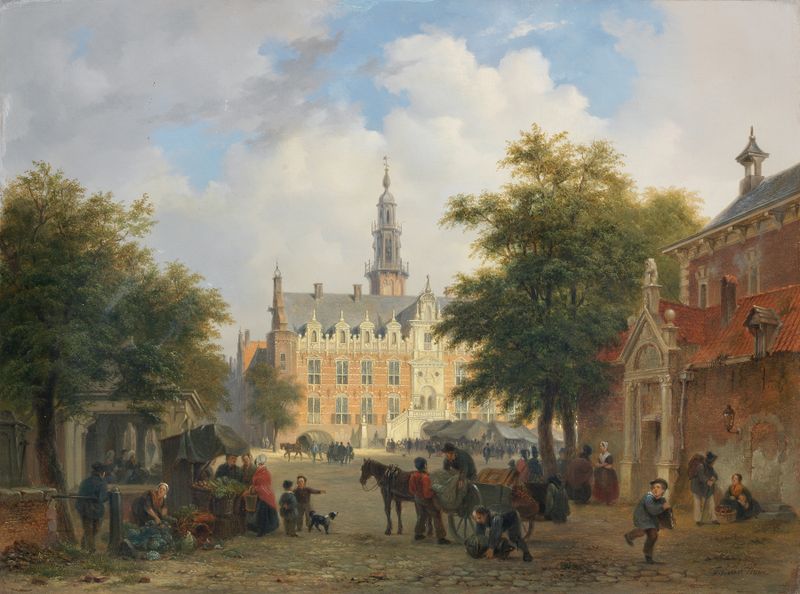
Street scene, Amsterdam
Bartholomeus Johannes van Hove

A Capriccio View Of The Hofvijver, The Hague
Bartholomeus Johannes van Hove
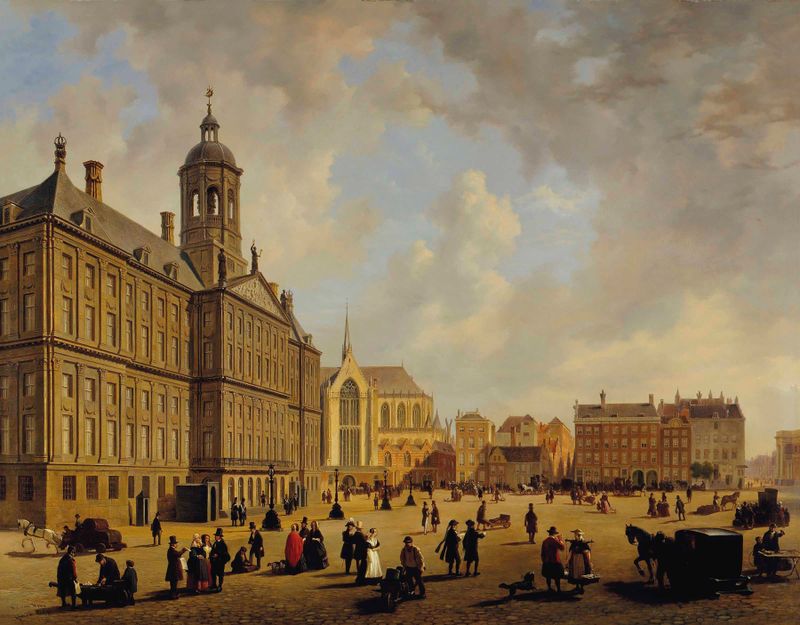
A bustling day in front of the City hall on the Dam Square, the Nieuwe Kerk in the distance, Amsterdam
Bartholomeus Johannes van Hove

Sommerliche Stadtansicht
Bartholomeus Johannes van Hove

Church Interior
Bartholomeus Johannes van Hove
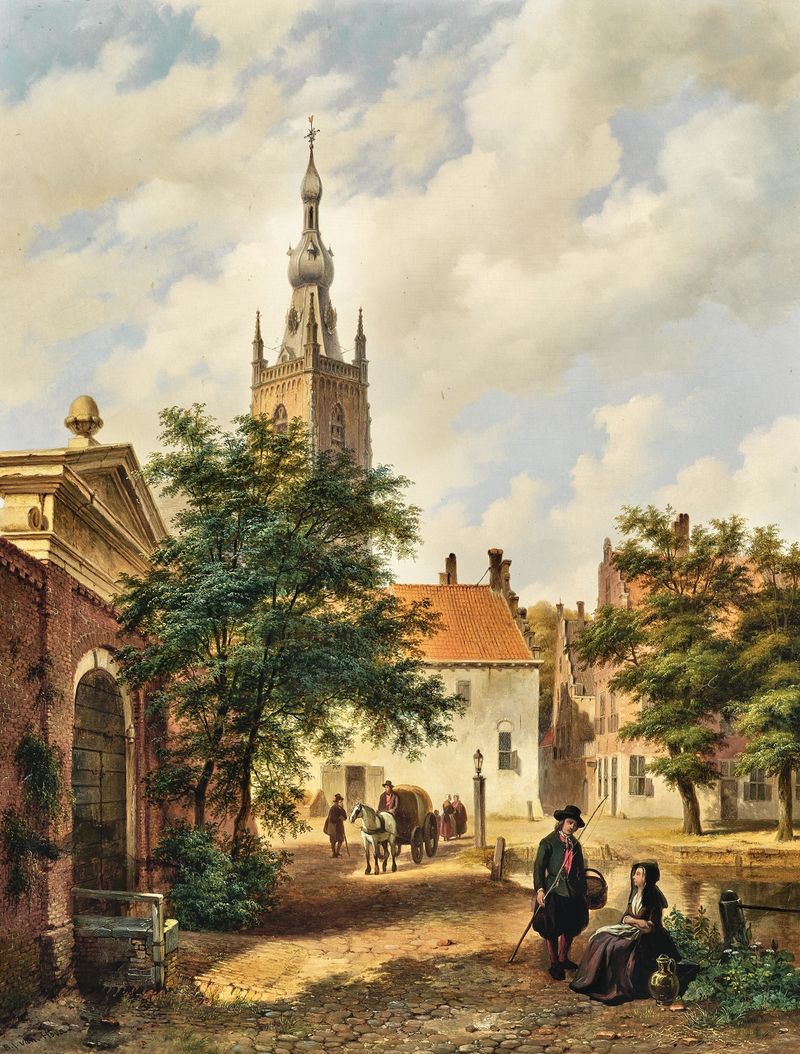
A View of a Village with a Church
Bartholomeus Johannes van Hove

Winterliche Stadtansicht
Bartholomeus Johannes van Hove
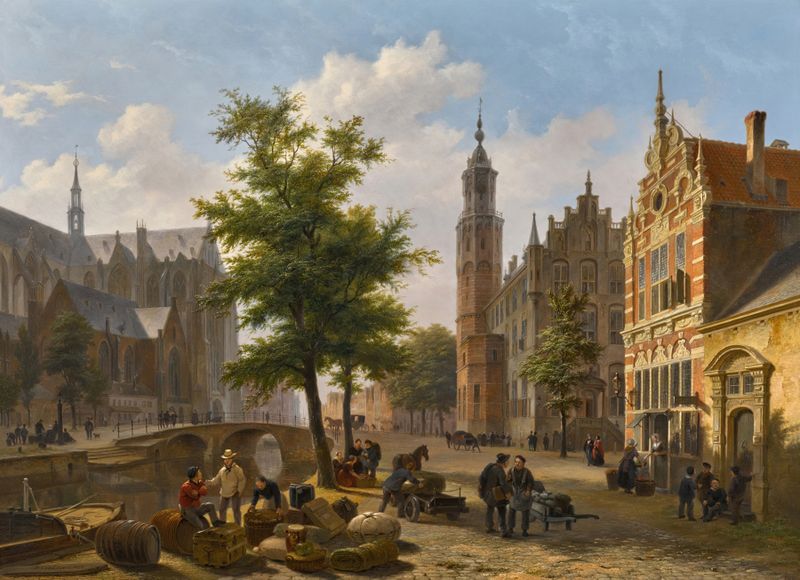
A Busy Market Place in a Dutch Town
Bartholomeus Johannes van Hove

View of a Dutch town
Bartholomeus Johannes van Hove
Schlittschuhläufer auf einer Gracht in Amsterdam
Bartholomeus Johannes van Hove





