
A Caravan in the Desert — History & Facts
In A Caravan in the Desert, the viewer is invited to witness the delicate illusion of movement and the fleeting nature of existence, captured in a moment where time seems to stand still. Look to the center of the canvas, where a caravan of camels, draped in vibrant textiles, winds its way across the undulating sand dunes. The warm, golden hues of the desert juxtapose with the cool shadows cast by the figures, creating a dance of light that draws the eye toward each dynamic gesture of the travelers. Notice how the artist employs soft brushstrokes to convey the shimmer of heat rising from the ground, while the clouds above appear almost dreamlike, inviting contemplation of the vastness beyond. Delve deeper into the composition and observe the subtle interplay between the caravan and the expansive desert landscape.
The figures, though small in scale, embody determination and resilience; they stand in stark contrast against the seemingly endless sands, symbolizing humanity's quest for purpose amid the isolation of nature. Each camel, laden with goods, represents both burden and necessity, hinting at the profound relationships between culture, trade, and survival. The illusion of movement becomes a metaphor for life’s journey, where the horizon teases with the promise of new horizons yet to be reached. In the 1860s, Berchère found inspiration in the landscapes of North Africa, reflecting a period that was burgeoning with Orientalist interest.
This artwork emerged during a time when the West was fascinated by the exotic allure of the East, filled with stories of adventure and discovery. Straddling the line between historical documentation and romantic interpretation, the artist sought to capture not just a scene but the very spirit of exploration that defined his era.
More Artworks by Narcisse Berchère
Browse all →
Outside The Walls Of A North African City
Narcisse Berchère
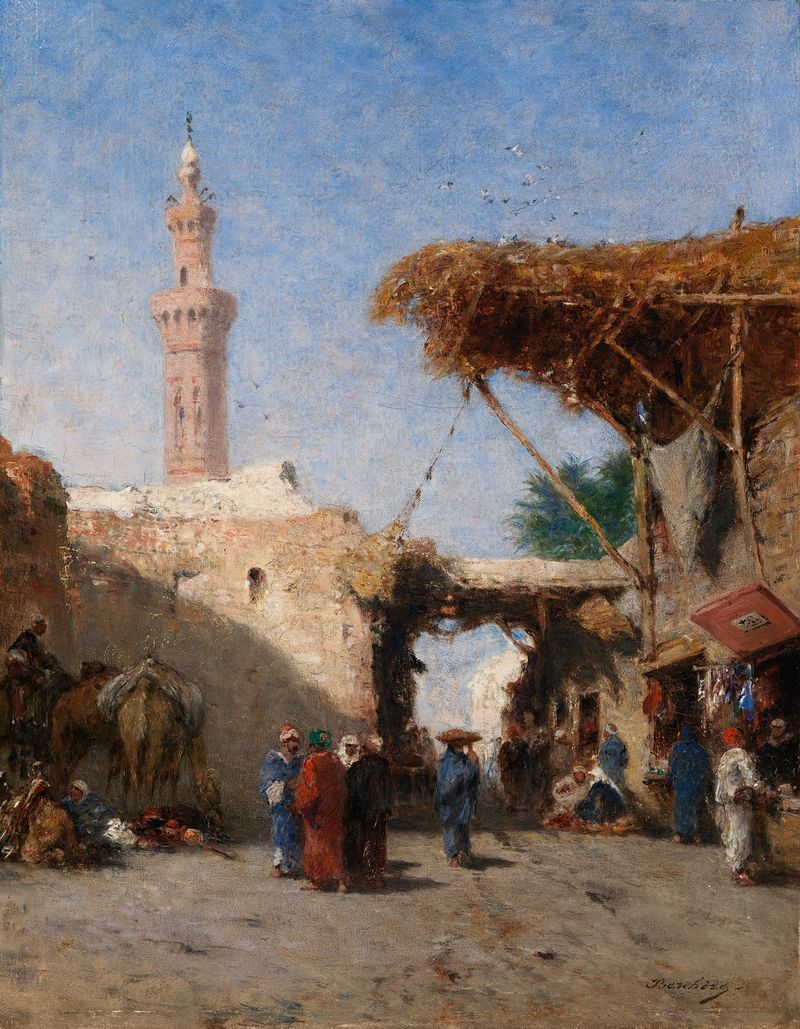
Eastern Scene with Minaret
Narcisse Berchère
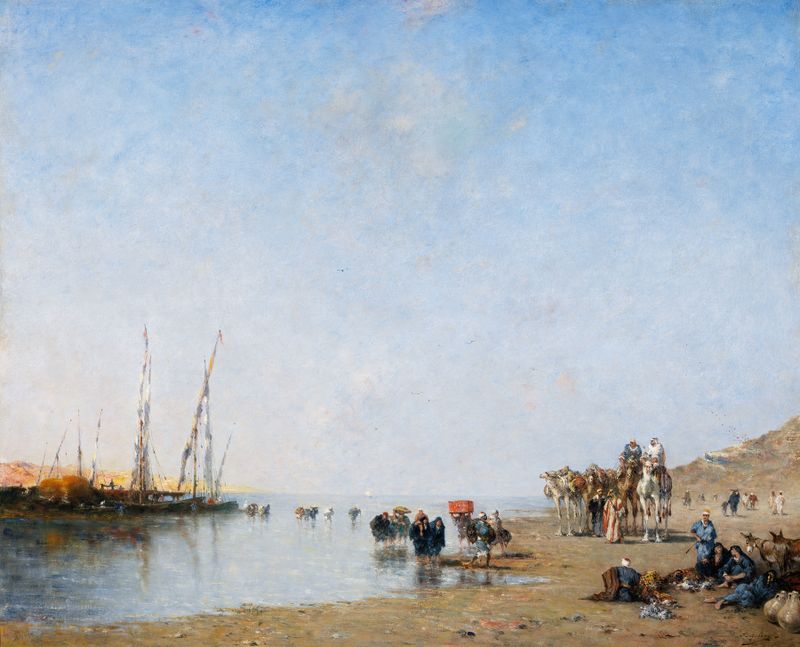
An Arab Caravan Resting near the Shore
Narcisse Berchère

Arab Village
Narcisse Berchère
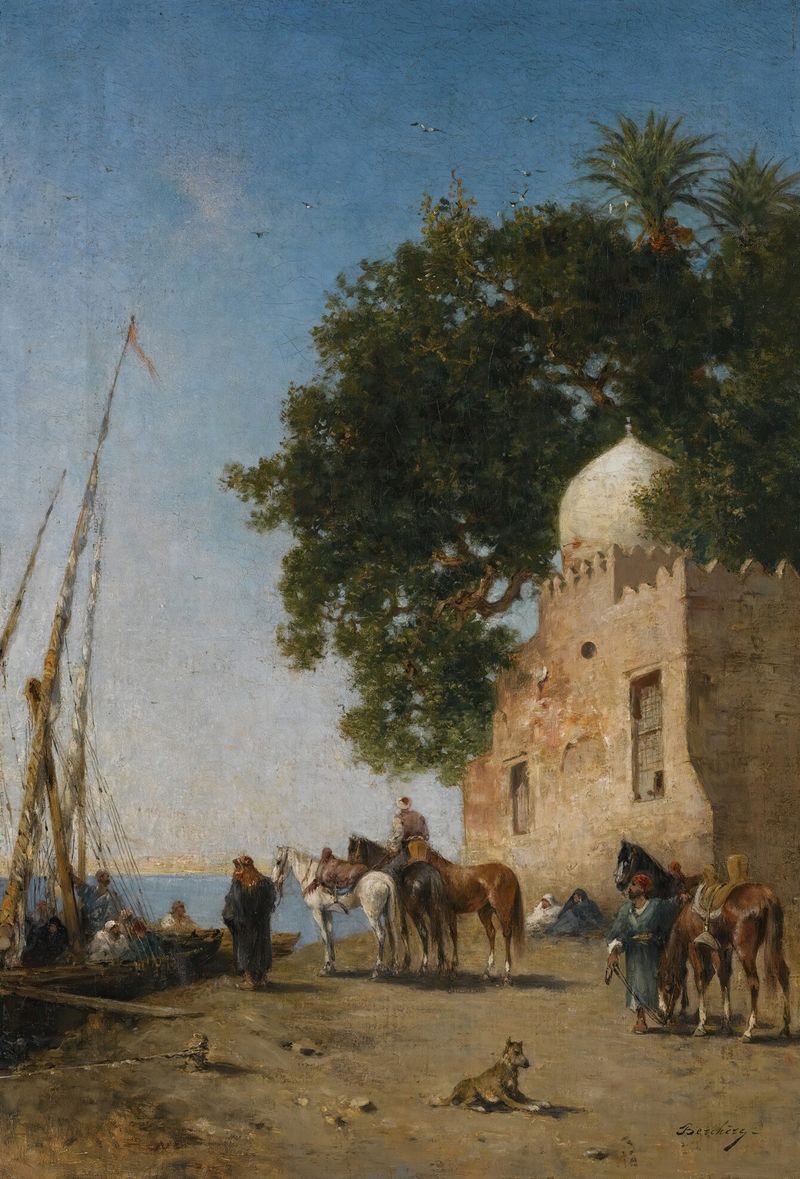
Beni Souef, Egypt
Narcisse Berchère
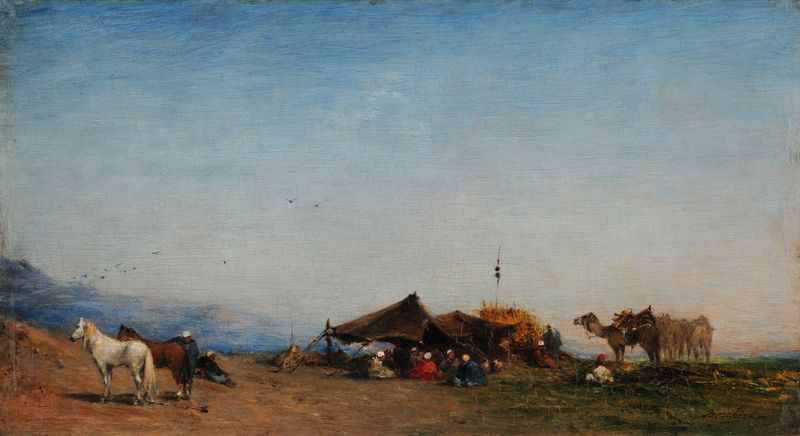
Campement arabe
Narcisse Berchère
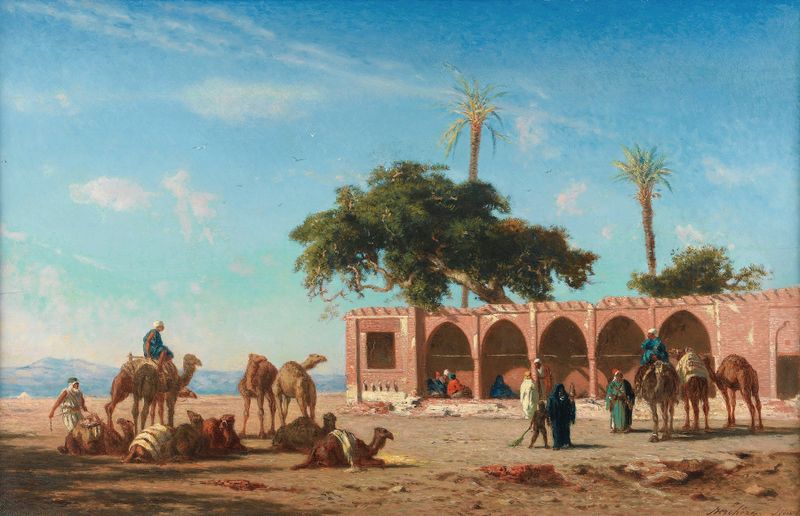
The Caravan Resting In Siout, Egypt
Narcisse Berchère

On the Nile
Narcisse Berchère
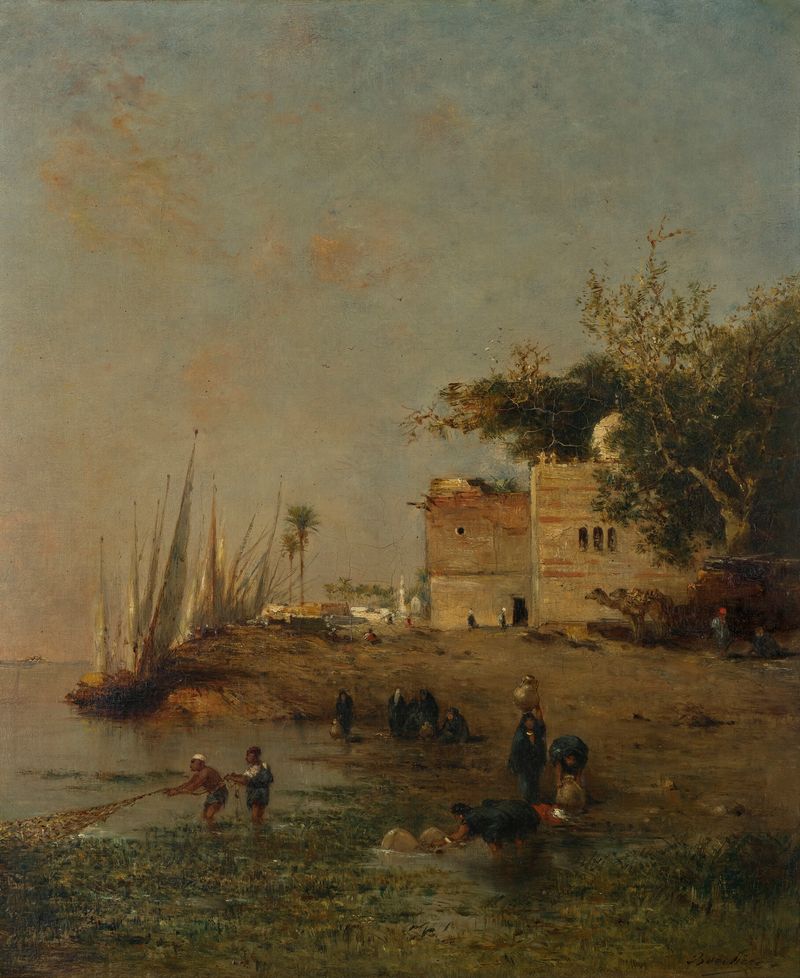
Les pêcheurs sur le Nil
Narcisse Berchère
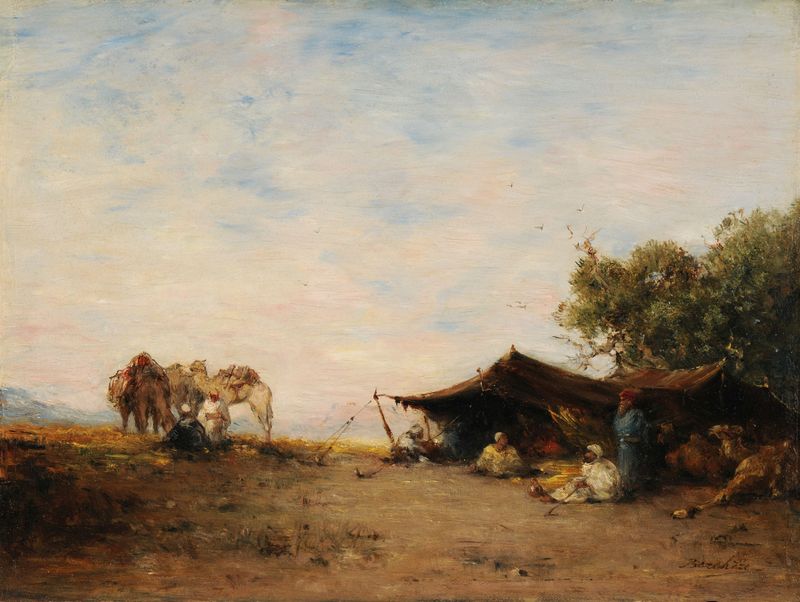
Un gourbi
Narcisse Berchère





