
Arab Village — History & Facts
In the quietude of Narcisse Berchère's Arab Village, an unspoken melancholy hangs in the air, inviting contemplation of the human experience beneath its surface charm. Look to the left at the intricately detailed architecture, where the sun-drenched walls reflect a warm glow, suggesting both the beauty of the landscape and the weight of history. Notice the delicate brushstrokes that convey the textures of adobe and the contrasting shadows that creep into the corners, hinting at stories unshared. The composition draws the eye through the village, where figures blend seamlessly into their surroundings, embodying a sense of belonging yet isolation. Within this tranquil setting, the subtle emotional tension arises from the juxtaposition of vibrant life against a backdrop of enduring hardship.
The villagers may appear engaged in daily activities, but their expressions suggest a deeper narrative of longing and resilience. The muted palette hints at a world where brightness is tempered by the struggles that lie beneath the surface, evoking empathy in the viewer as they ponder the fragile balance of joy and sorrow. Berchère painted this work during an era when Orientalism flourished in the art world, likely influenced by his travels in North Africa. Although the exact date remains uncertain, the piece reflects a fascination with the romanticized view of the East, a prevalent theme of the mid-19th century.
The artist's life was marked by exploration and an artistic urge to capture the essence of diverse cultures, a pursuit that resonates deeply in his portrayal of this village scene.
More Artworks by Narcisse Berchère
Browse all →
Outside The Walls Of A North African City
Narcisse Berchère

A Caravan in the Desert
Narcisse Berchère
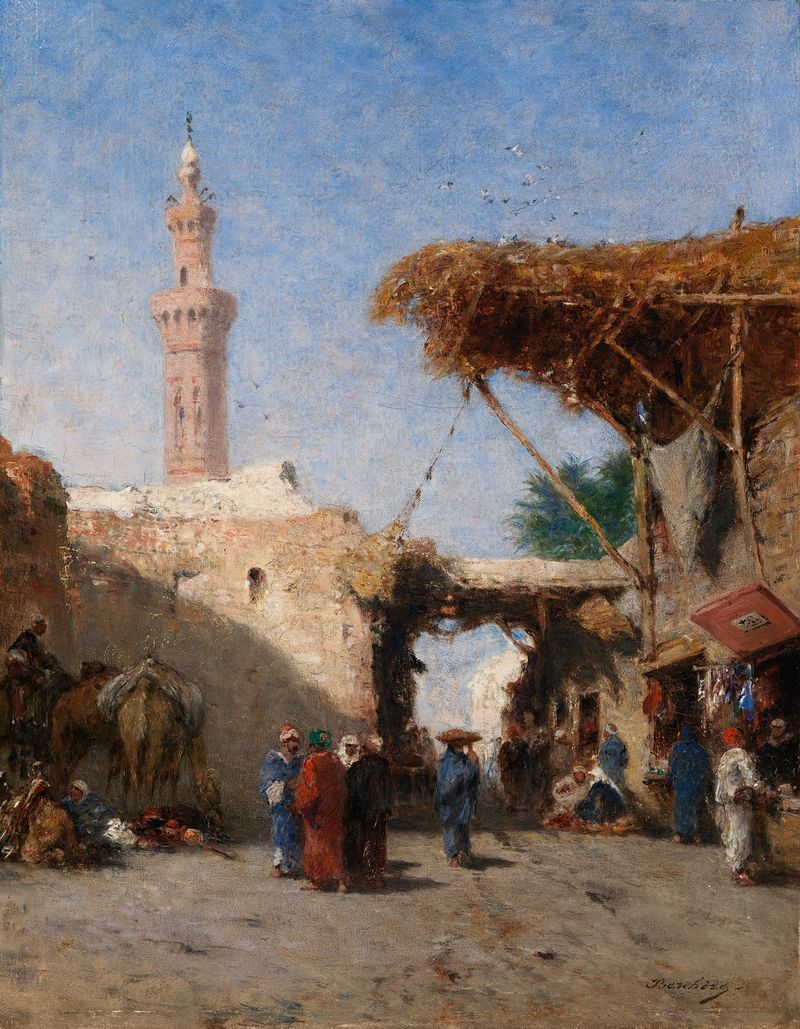
Eastern Scene with Minaret
Narcisse Berchère
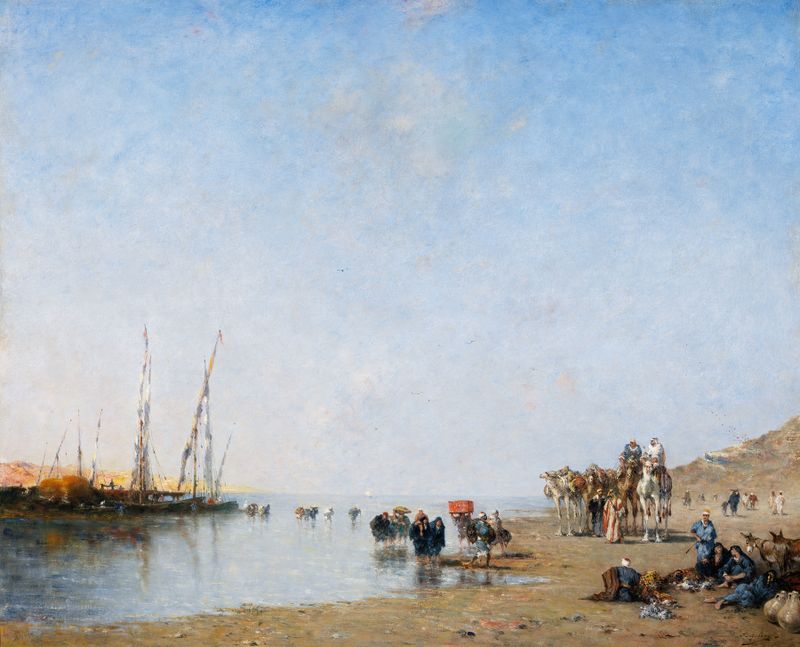
An Arab Caravan Resting near the Shore
Narcisse Berchère
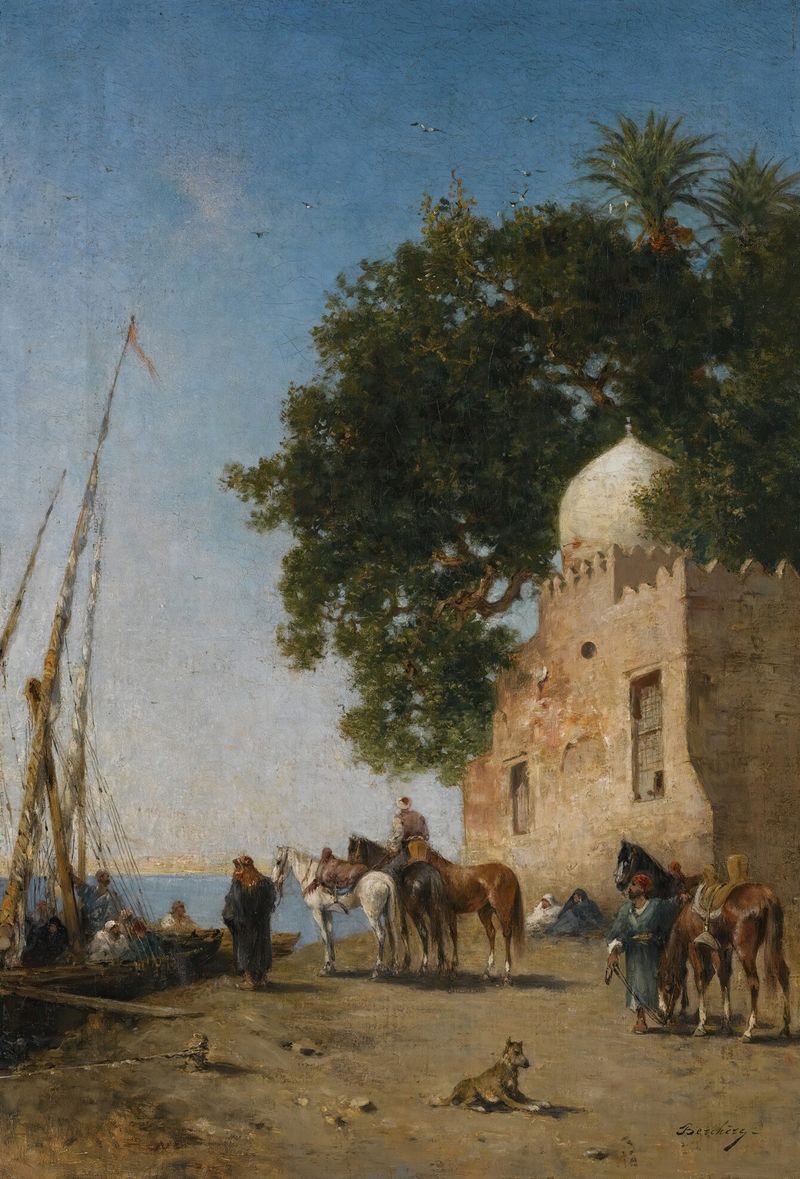
Beni Souef, Egypt
Narcisse Berchère
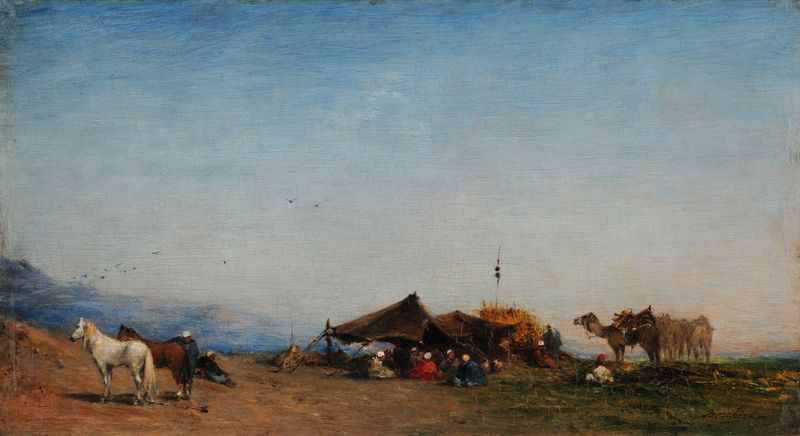
Campement arabe
Narcisse Berchère
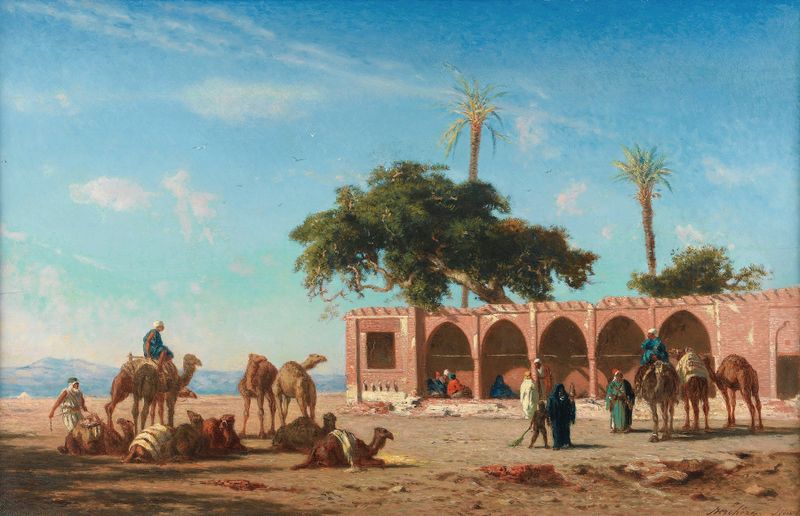
The Caravan Resting In Siout, Egypt
Narcisse Berchère

On the Nile
Narcisse Berchère
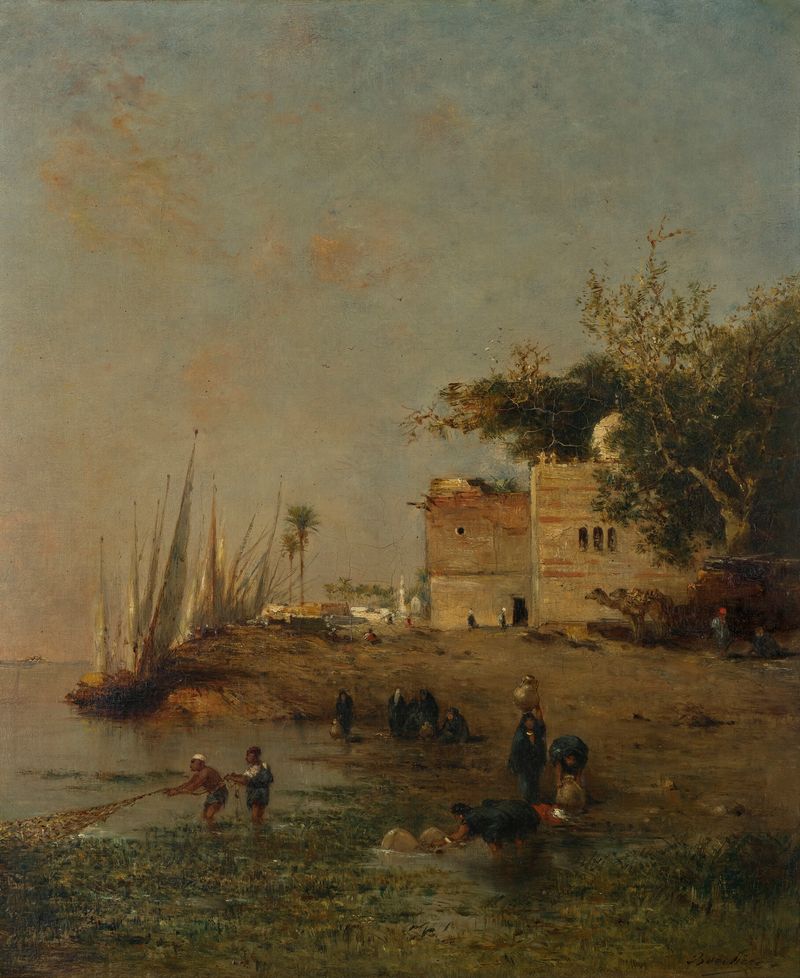
Les pêcheurs sur le Nil
Narcisse Berchère
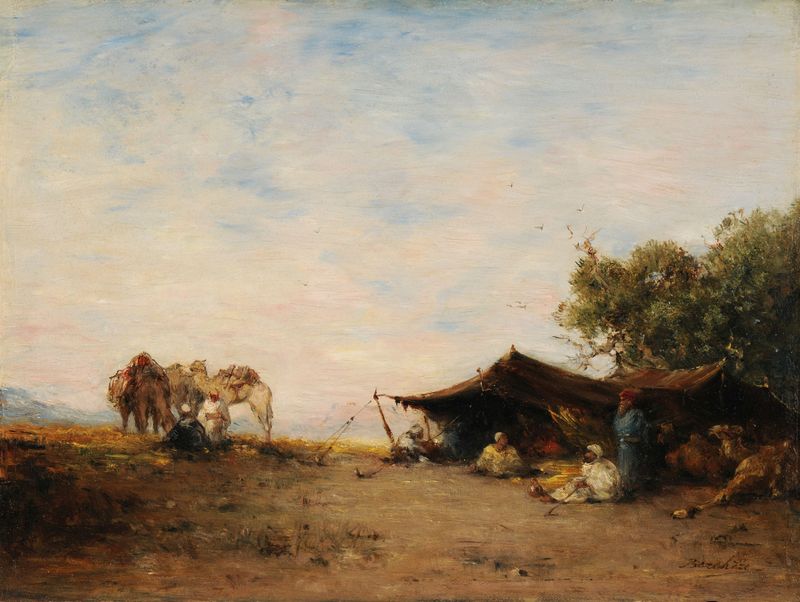
Un gourbi
Narcisse Berchère





