
Beni Souef, Egypt — History & Facts
In the stillness of this place, shadows whisper of violence long past, echoing stories of lives intertwined within its walls. This haunting tranquility invites an exploration of both beauty and buried chaos, challenging us to confront the weight of history. Look to the center of the canvas, where the muted colors create a stirring contrast against the vibrant, sun-drenched sky. The dusty earth tones ground the piece, while the vivid blues and yellows suggest an underlying vibrancy that hints at both life and strife.
The brushwork is deliberate yet fluid, capturing the essence of a landscape caught in a moment of stillness, yet vibrating with an unvoiced tension. Notice how the distant horizon blurs into a haze, as if to obscure the truths that lie just beyond the visible. Delve deeper into this scene, and you’ll uncover the interplay of light and shadow that hints at the duality of existence. The stark contrast between the serene foreground and the ominous, looming clouds speaks to the unpredictable nature of life in a place marked by conflict.
Each element—the barren trees, the desolate earth, the hint of structures—suggests a discordant narrative, where the beauty of nature exists alongside remnants of turmoil, making the viewer question what history has unfolded in this seemingly peaceful setting. Created during an uncertain time in the mid-19th century, the artist painted this piece while navigating the complex dynamics of Romanticism. Berchère was influenced by the exoticism of North African landscapes, which captivated European audiences. His work reflects both personal exploration and a broader artistic dialogue that grappled with the impacts of colonialism and cultural confrontation during that period.
More Artworks by Narcisse Berchère
Browse all →
Outside The Walls Of A North African City
Narcisse Berchère

A Caravan in the Desert
Narcisse Berchère
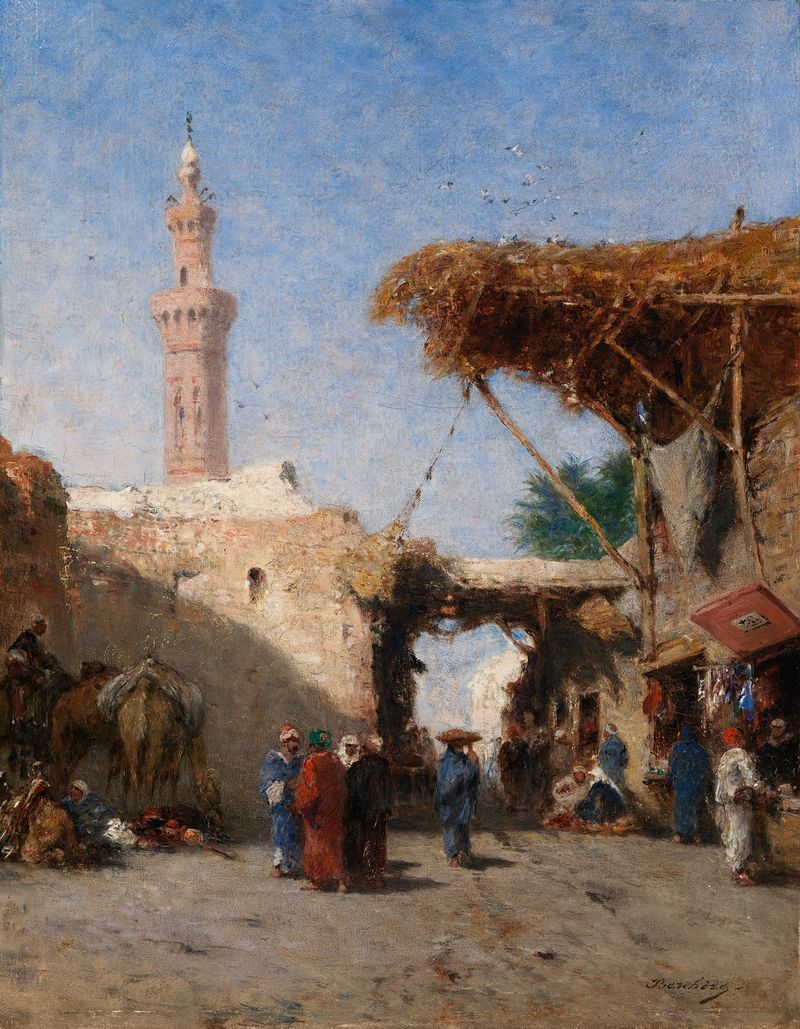
Eastern Scene with Minaret
Narcisse Berchère
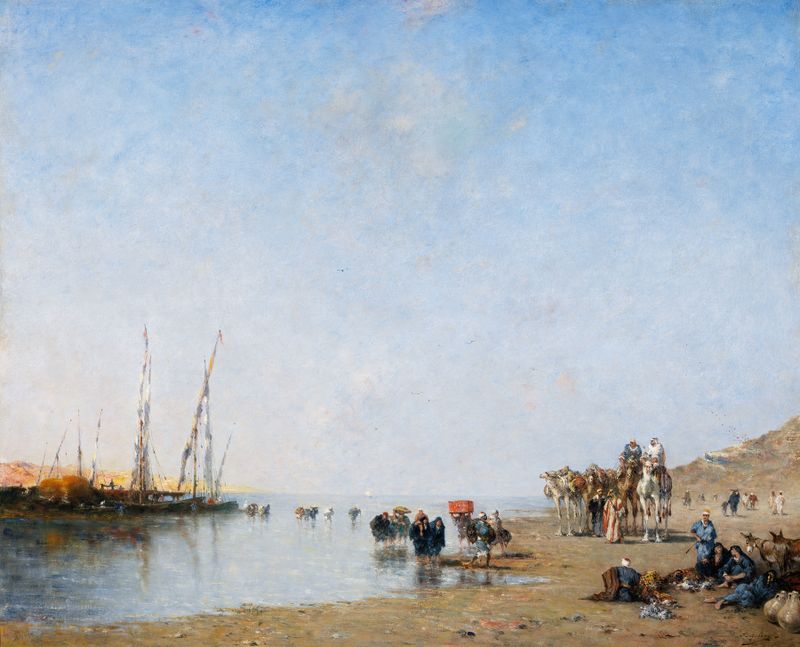
An Arab Caravan Resting near the Shore
Narcisse Berchère

Arab Village
Narcisse Berchère
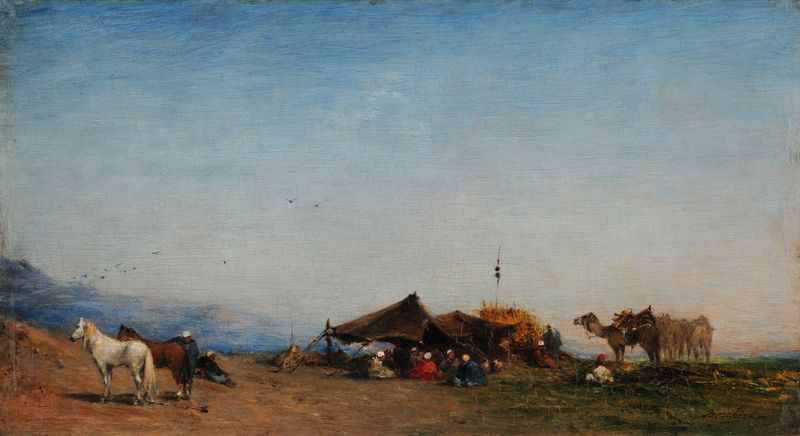
Campement arabe
Narcisse Berchère
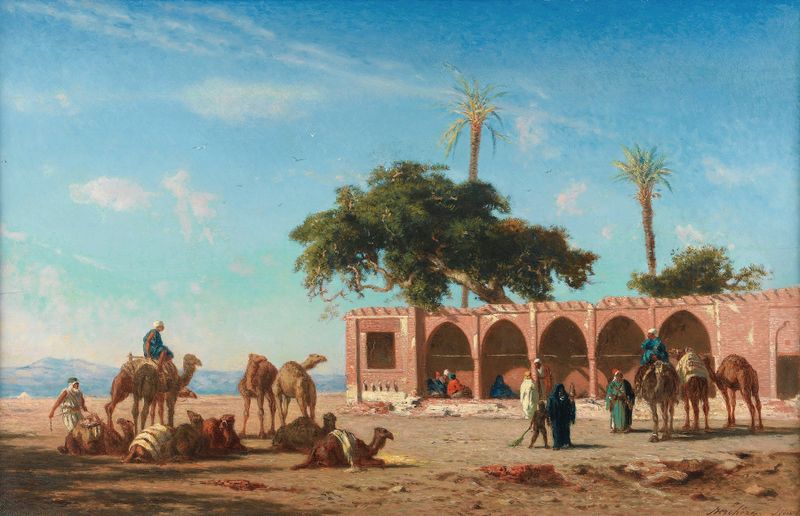
The Caravan Resting In Siout, Egypt
Narcisse Berchère

On the Nile
Narcisse Berchère
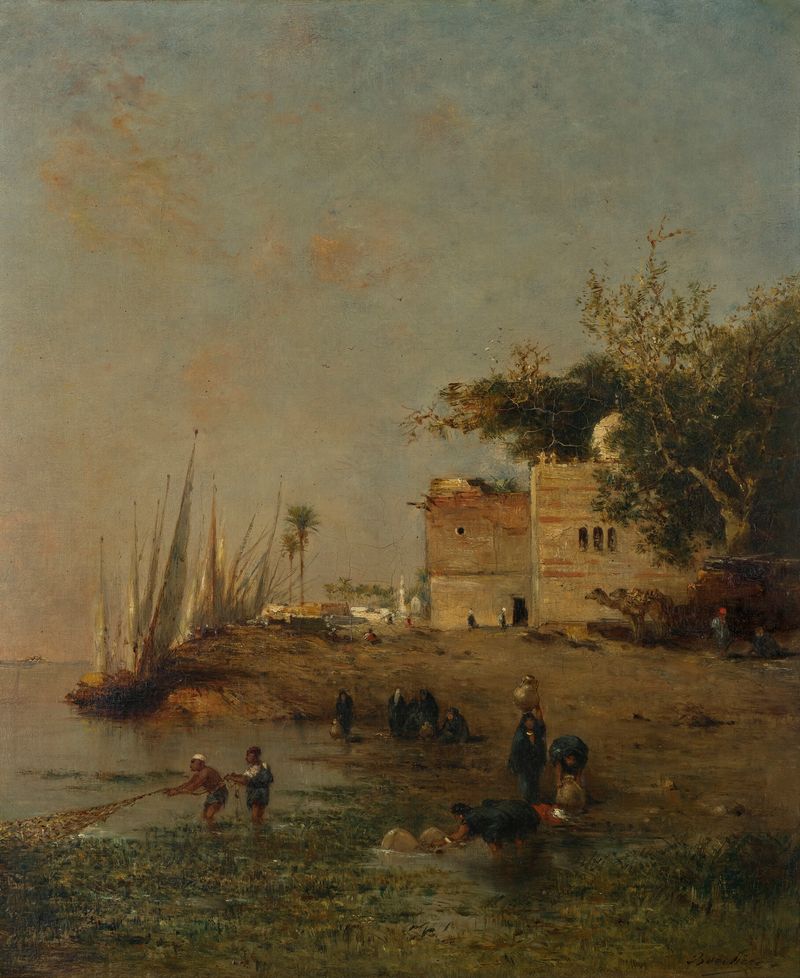
Les pêcheurs sur le Nil
Narcisse Berchère
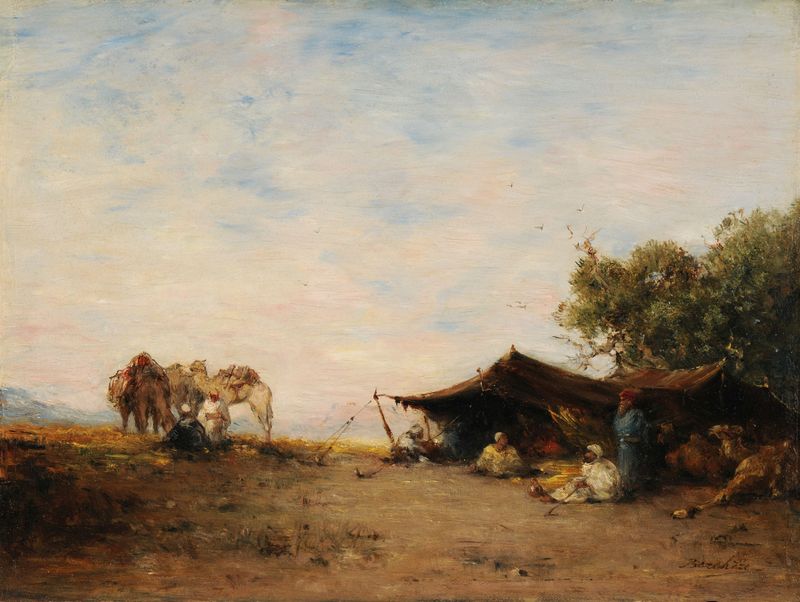
Un gourbi
Narcisse Berchère





