
An Arab Caravan Resting near the Shore — History & Facts
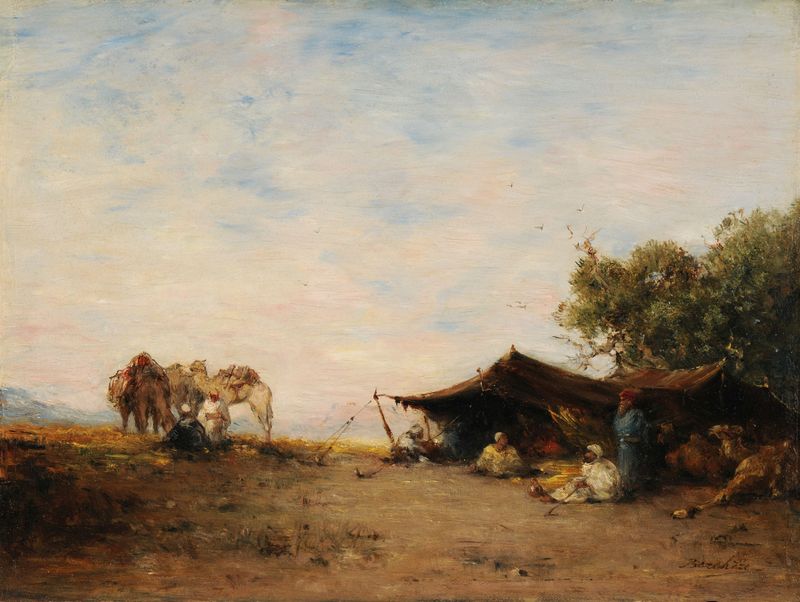
Did the painter know this moment would outlive them? The soft glow of light spills across the canvas, casting a timeless warmth upon the scene, inviting us to pause and reflect on all that it encapsulates. Focus first on the luminous sunlight as it bathes the caravan, illuminating the figures and their camels gathered near the tranquil shore. The delicate brushstrokes create a rich palette of earthy tones, from the deep browns of the animals to the sandy hues of the beach. Notice how the gentle ripples of the water mirror the serene sky, blending seamlessly as if time itself has paused for this fleeting encounter.
It’s a moment of connection between land, water, and humanity, written in every stroke. Blend the juxtaposition of stillness and movement: the weary travelers resting while their camels graze nearby. The caravan appears at peace, yet each figure seems lost in thought, hinting at the deeper journeys they endure beyond the physical. The shading plays a crucial role, outlining the contours of their forms, suggesting weariness and resilience, while the shoreline symbolizes a threshold of new beginnings or unknown challenges. In the mid-1860s, while painting An Arab Caravan Resting near the Shore, Berchère was immersed in a Europe captivated by the exotic allure of the East.
This period saw the rise of Orientalism, with artists seeking to evoke the mystique of foreign lands. Berchère was based in Paris, a hub of artistic innovation, and this piece reflects not just a personal exploration of light and landscape but also a broader trend of romanticizing the diverse cultures of the world.
More Artworks by Narcisse Berchère
Browse all →
Outside The Walls Of A North African City
Narcisse Berchère

A Caravan in the Desert
Narcisse Berchère
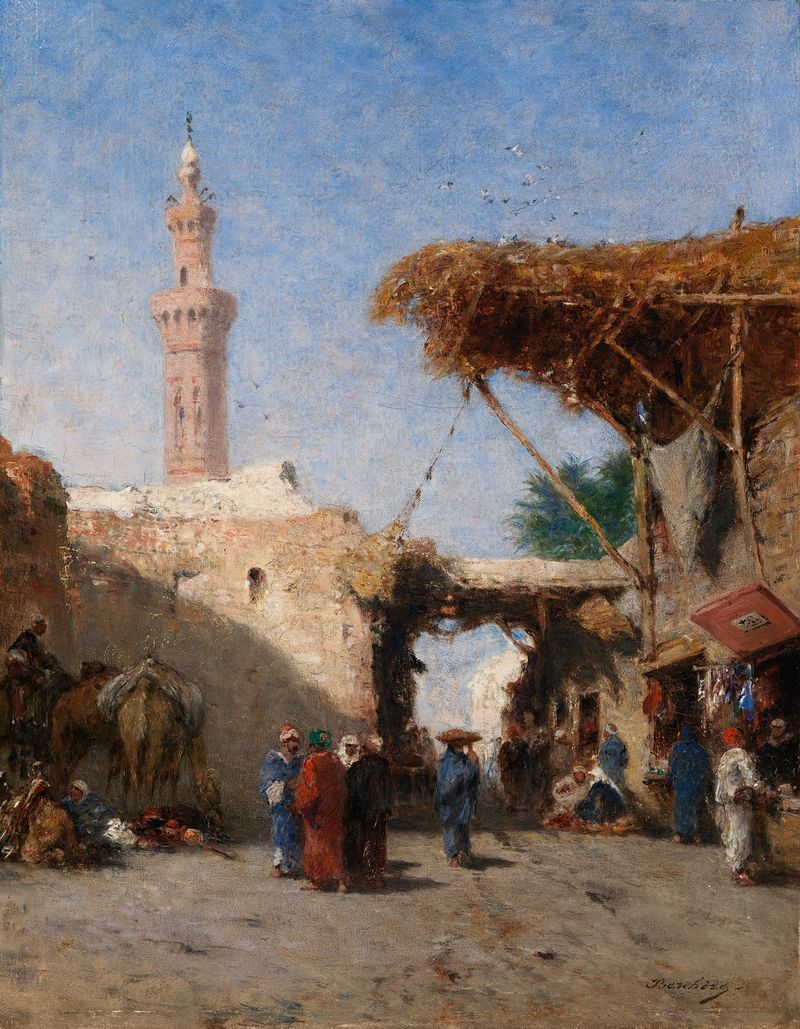
Eastern Scene with Minaret
Narcisse Berchère

Arab Village
Narcisse Berchère
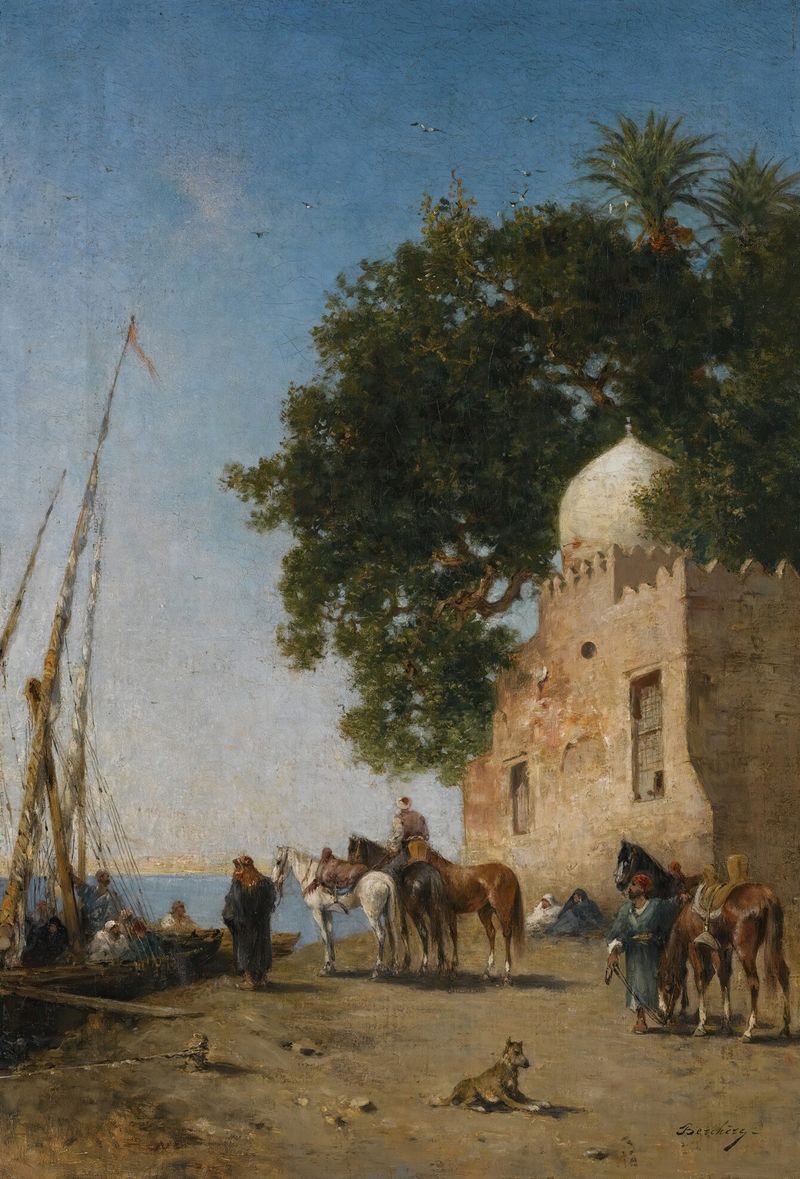
Beni Souef, Egypt
Narcisse Berchère
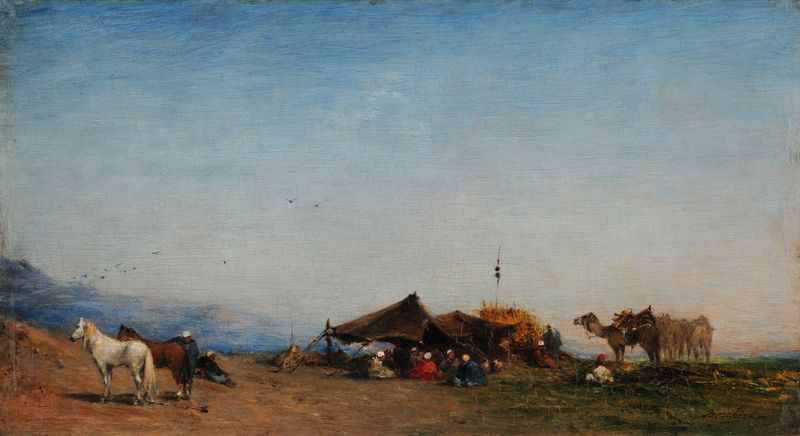
Campement arabe
Narcisse Berchère
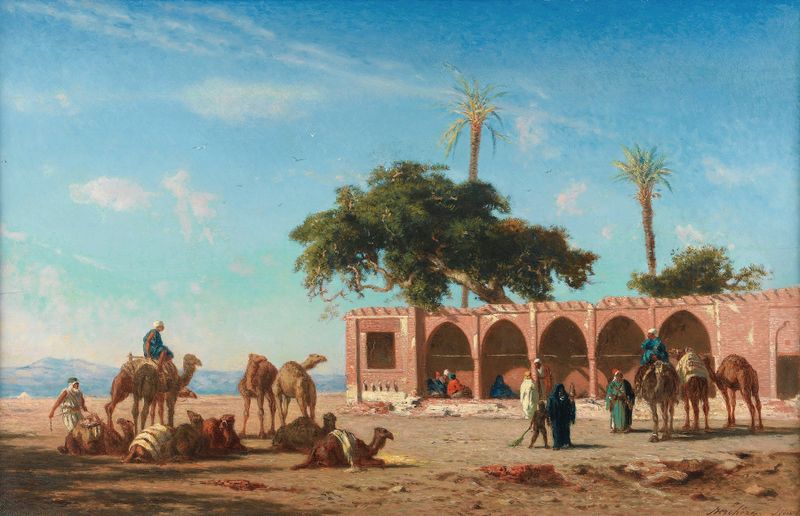
The Caravan Resting In Siout, Egypt
Narcisse Berchère

On the Nile
Narcisse Berchère
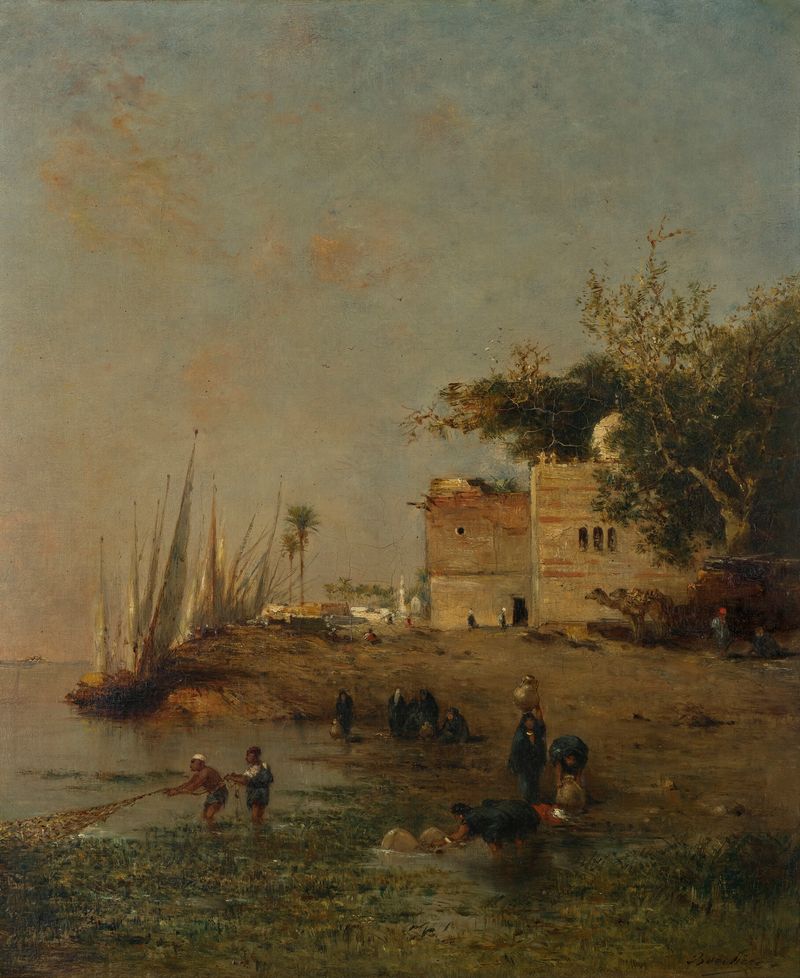
Les pêcheurs sur le Nil
Narcisse Berchère
Un gourbi
Narcisse Berchère





