
On the Nile — History & Facts
Can paint confess what words never could? In On the Nile, innocence unfurls like the river’s gentle embrace, beckoning us to explore a world both serene and mysterious. Look to the left at the luminous figures lounging by the water’s edge. Their relaxed postures contrast starkly with the striking golds and deep blues of the Nile, inviting your gaze to flow across the canvas. Notice how the sunlight dances upon the water, creating a shimmering pathway that guides your eye to the lush, exotic foliage that encircles the scene.
The delicate brushwork captures not only the physical beauty but also the emotional warmth of this idyllic retreat, drawing you deeper into a moment suspended in time. Deeper insights emerge in the juxtaposition between the calmness of the Nile and the underlying currents of history and culture it represents. The figures, seemingly untouched by the world beyond, suggest a fragile innocence that may soon be disrupted. The lushness of the landscape represents abundance, yet it serves as a reminder of the vast contrasts in society, hinting at both prosperity and the complexities of imperialism that were swirling around this period. Narcisse Berchère painted this work during a time of significant change in art and society.
In 1869, he was exploring themes of exoticism and romanticism, often drawing inspiration from his travels. At this time, the art world was witnessing the rise of impressionism and the aftermath of the industrial revolution, events that would soon reshape artistic expression. On the Nile encapsulates a moment in history where innocence and beauty coexist, offering a serene escape as the world around it evolved rapidly.
More Artworks by Narcisse Berchère
Browse all →
Outside The Walls Of A North African City
Narcisse Berchère

A Caravan in the Desert
Narcisse Berchère
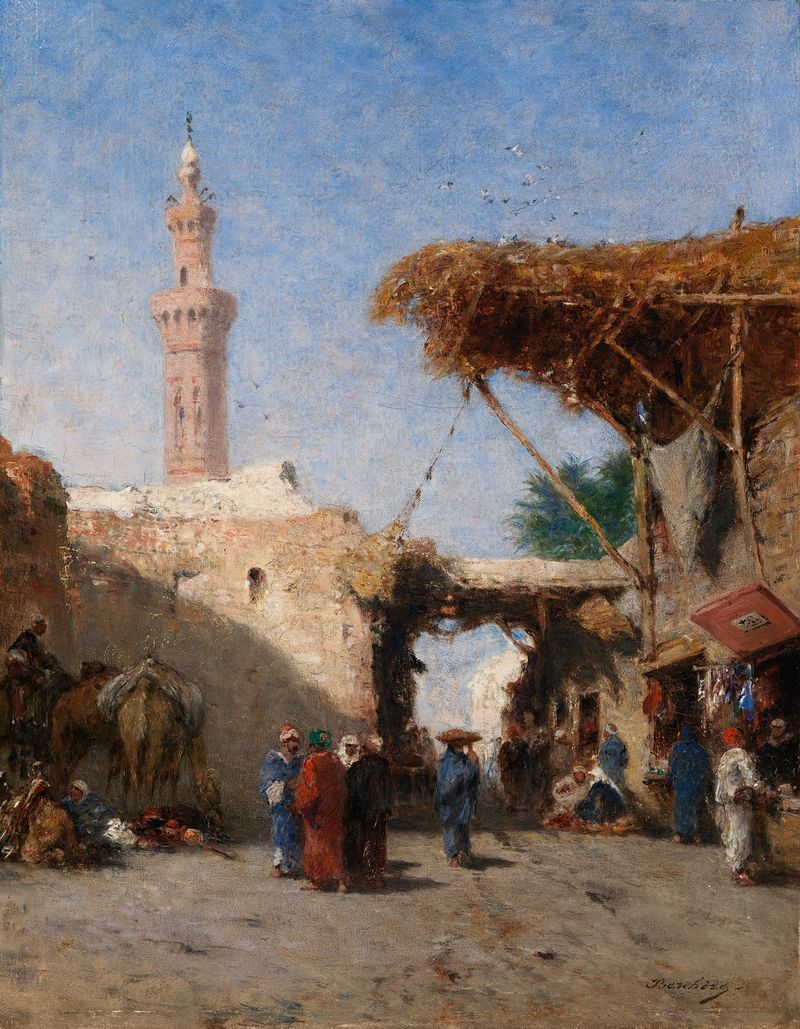
Eastern Scene with Minaret
Narcisse Berchère
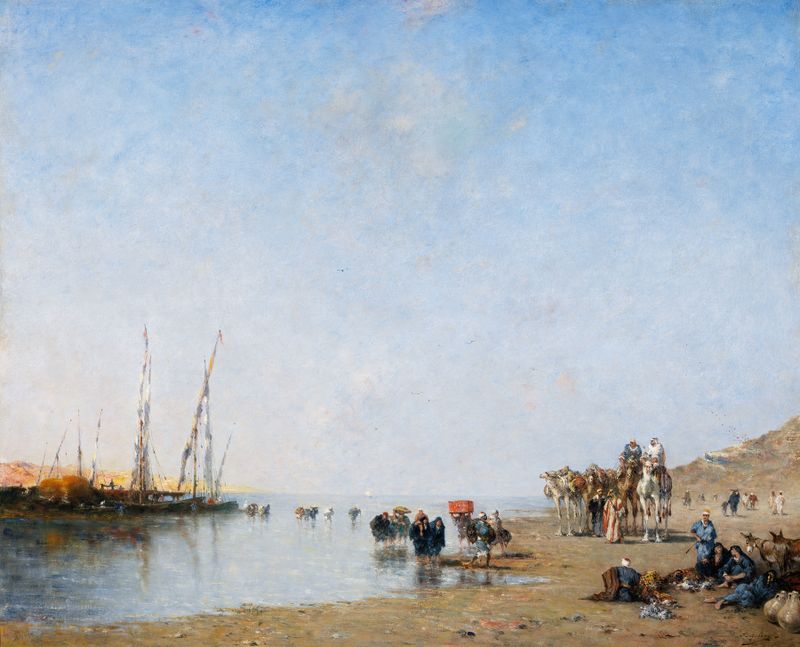
An Arab Caravan Resting near the Shore
Narcisse Berchère

Arab Village
Narcisse Berchère
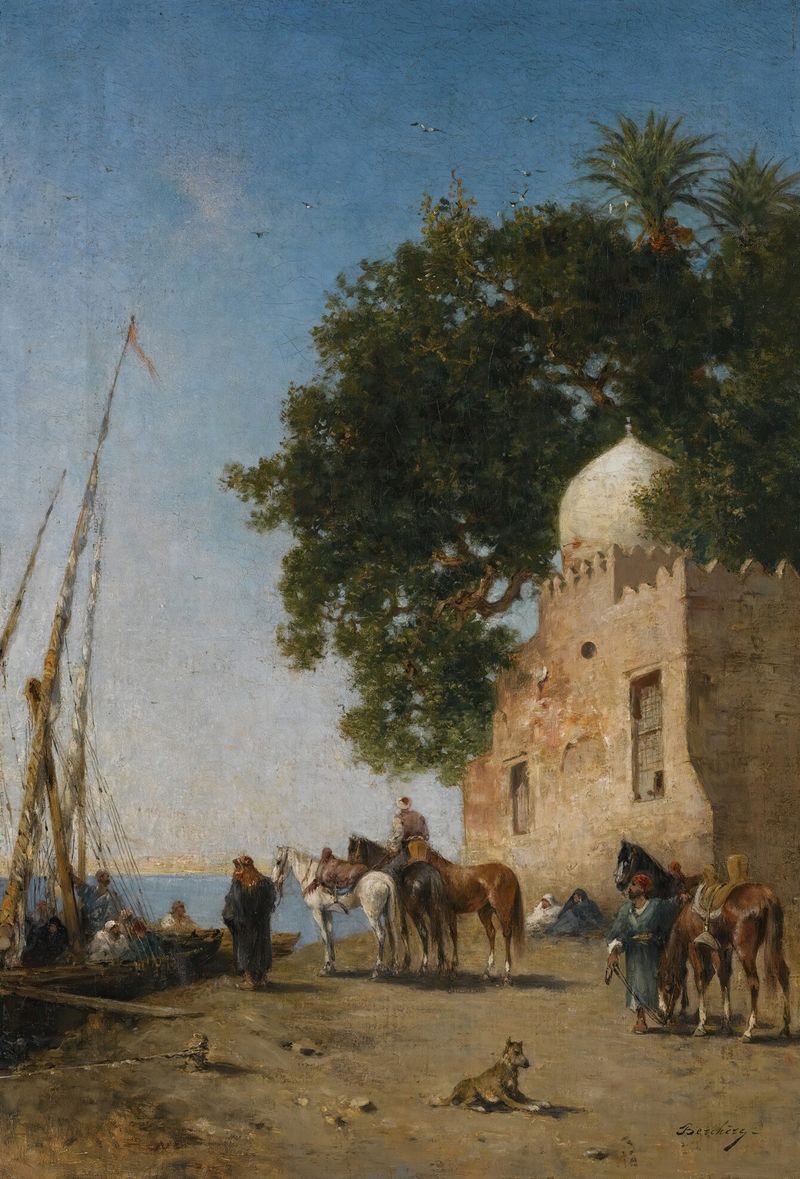
Beni Souef, Egypt
Narcisse Berchère
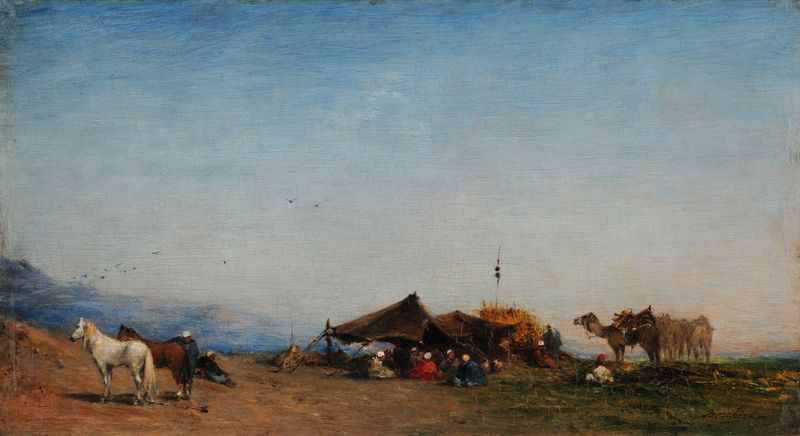
Campement arabe
Narcisse Berchère
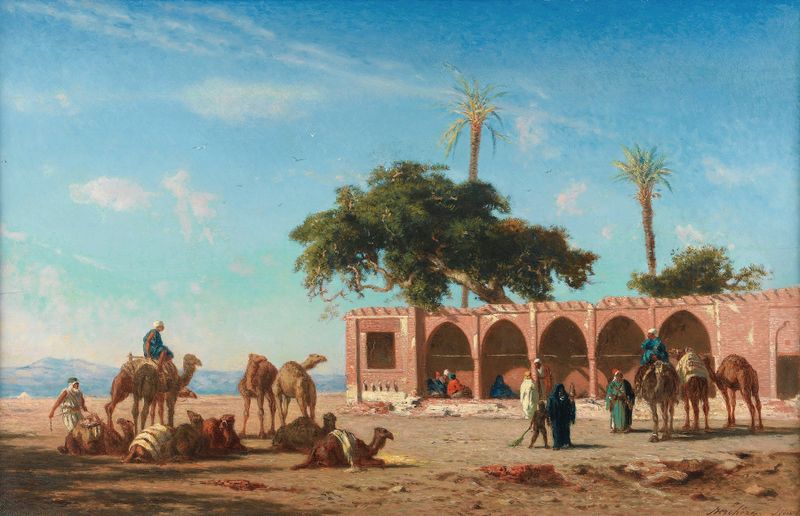
The Caravan Resting In Siout, Egypt
Narcisse Berchère
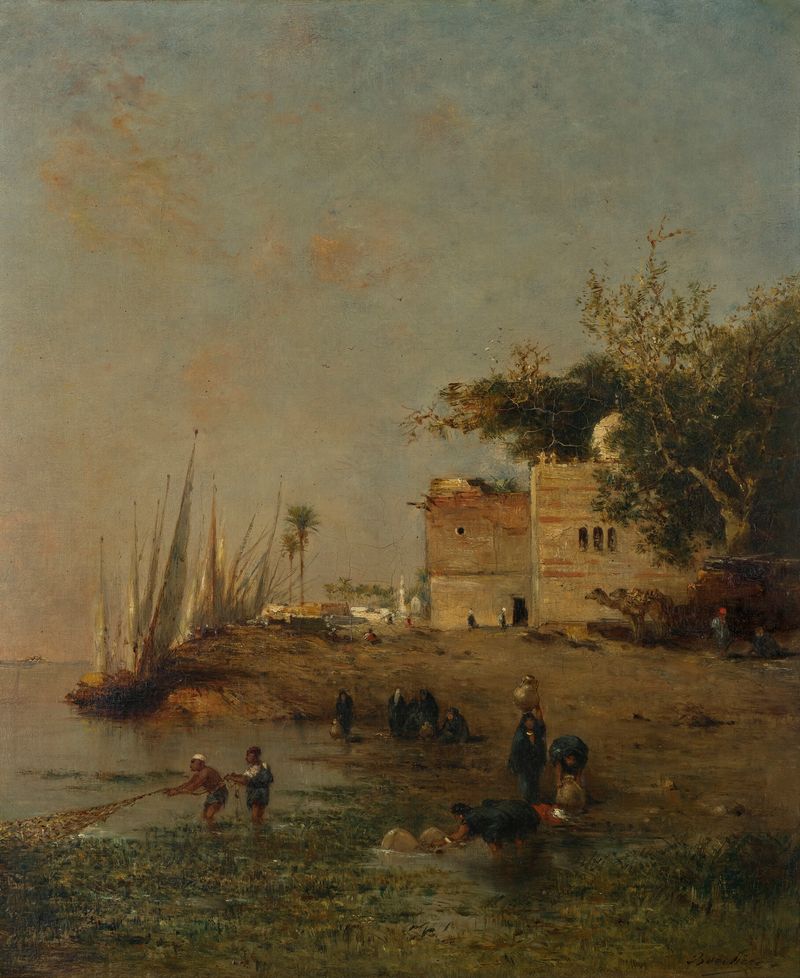
Les pêcheurs sur le Nil
Narcisse Berchère
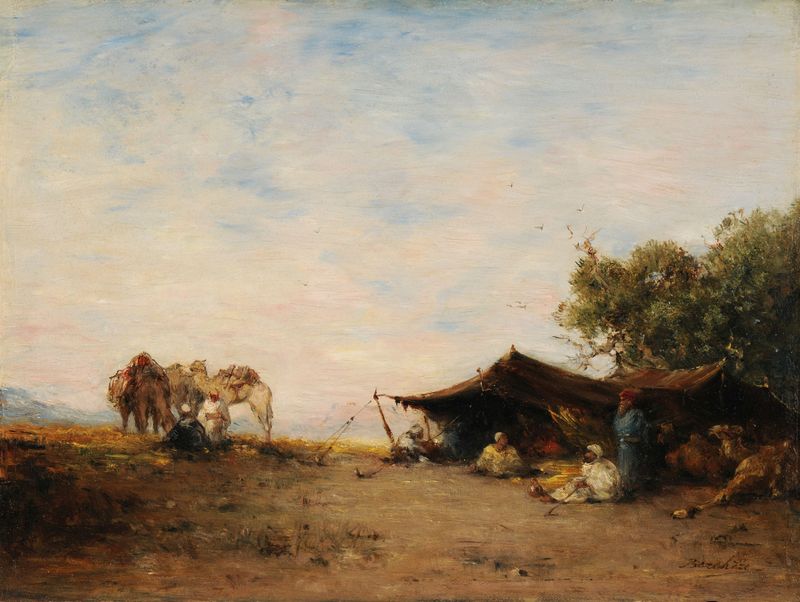
Un gourbi
Narcisse Berchère





