A cattle market on the outskirts of a walled town, with figures and animals crossing a bridge — History & Facts
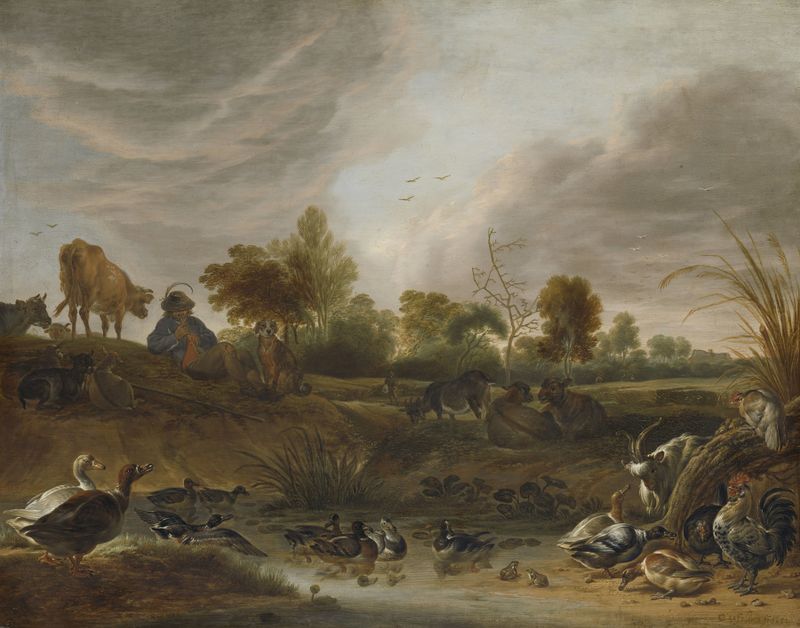
In a single moment, we witness the convergence of life, labor, and the passage of time, all captured within a rustic tableau. Each figure, each beast, holds a story, an echo of the world that surrounds them and the history that pervades their existence. Look to the left, where the cloaked figures make their way across a weathered bridge, their postures suggesting a blend of purpose and weariness. Notice the play of light as it dances upon the animals, illuminating their hide and bringing a sense of vitality.
The muted earth tones of the landscape create a somber yet harmonious backdrop, framing the bustling activity with a quiet reverence. Each brushstroke, deliberate and precise, invites you to explore the texture of the scene, while the gentle curves of the bridge lead your gaze deeper into the heart of the market. Within this composition lies a tension between the serenity of daily life and the inherent chaos of commerce. The juxtaposition of the sturdy figures against the frailty of the animals speaks to the complexities of human interaction with nature.
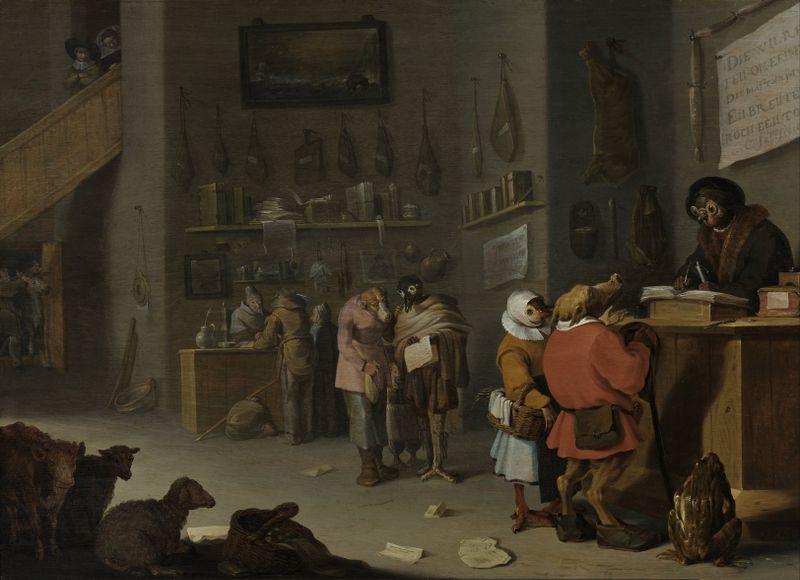
Observe the expressions on the faces of the vendors and buyers—a mix of anticipation and weariness—as they navigate the demands of their livelihoods, weaving a subtle narrative of connection and estrangement. During the time he created this piece, Cornelis Saftleven was immersed in the artistic currents of the Dutch Golden Age, a period characterized by its rich focus on everyday life. This painting, likely produced in the mid-17th century, reflects the burgeoning market culture of the time, as agriculture and commerce flourished in the provinces. Saftleven’s work captures not only a bustling moment but also the deeper societal shifts taking place around him, anchoring his legacy as an observer of the human condition.