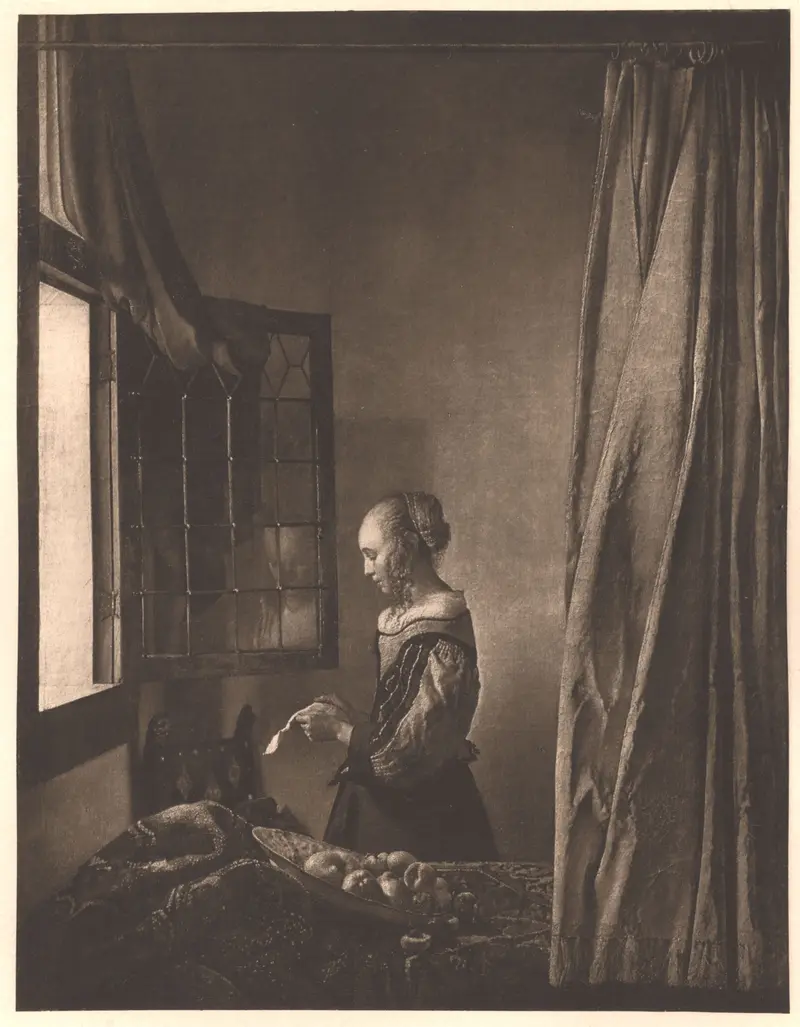
A Corner of the Studio — History & Facts
When Eugène Delacroix painted A Corner of the Studio in 1830, he was at the very threshold of revolution—both politically, as Paris was swept into the July Revolution, and artistically, as he pushed the boundaries of what a studio scene could be. Rather than presenting a grand narrative or myth, Delacroix turned his gaze inward, offering a rare, intimate glimpse into the creative sanctuary where some of his most famous works were born. This painting stands out because it is one of the few surviving records of the artist’s own working environment at a pivotal moment in his career, just as Romanticism was overtaking Neoclassicism in France. The scene captures a quiet, almost private moment: sunlight filtering through a high window, illuminating scattered canvases, brushes, and the clutter of artistic labor.
There is no grand gesture, no heroic subject—just the silent testimony of objects: a half-finished painting leans against the wall, a palette rests atop a stool, and a heavy drapery pools on the floor. Delacroix’s brushwork is loose and vibrant, lending a sense of immediacy and presence to the humble details. Unlike David’s meticulously ordered studios or Ingres’s polished interiors, Delacroix’s corner is alive with the traces of restless creativity, suggesting that the real drama lies not in the finished canvas, but in the act of making. Little is known about the early provenance of A Corner of the Studio, and its medium remains uncertain—oil on canvas is likely, but not confirmed.
The painting was probably kept in Delacroix’s own possession for some time, as artists often did with personal or experimental works. Over the years, it has passed quietly through private hands, occasionally surfacing in exhibitions that chart the evolution of French Romanticism. Today, it is recognized as a key document of Delacroix’s working life, and a touchstone for understanding the Romantic artist’s relationship to his own process.
Its survival allows us to step, for a moment, into the world where Delacroix’s revolutionary visions first took shape.
More Artworks by Eugène Delacroix

Femmes d'Alger dans leur intérieur
Eugène Delacroix

A Young Tiger Playing with Its Mother
Eugène Delacroix

The Massacre at Chios
Eugène Delacroix

Women of Algiers
Eugène Delacroix

Women of Algiers in Their Apartment
Eugène Delacroix

Death of Sardanapalus
Eugène Delacroix

The Barque of Dante
Eugène Delacroix

Jacob Wrestling with the Angel
Eugène Delacroix

la liberté guidant le peuple
Eugène Delacroix

Liberty Leading the People
Eugène Delacroix