
A Dutch Riverbank — History & Facts
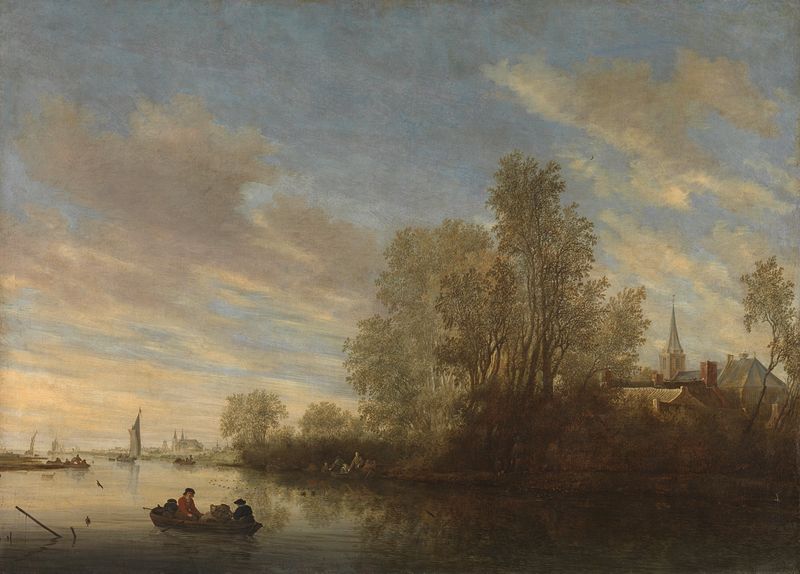
Can beauty exist without sorrow? In A Dutch Riverbank, a serene landscape invites us to ponder the intricate relationship between desire and the natural world. Focus on the gentle curve of the river that meanders through the painting, drawing your gaze to the horizon where the sky meets the land. Notice how the light glistens upon the water’s surface, creating a shimmering path that connects the viewer to the distant boats softly anchored at the riverbank. The muted greens and browns of the trees and earth harmonize with the soft blues of the sky, crafting a peaceful tableau that belies the complexities of human longing. Delve deeper into the composition to uncover layers of emotional tension hidden within the tranquil scene.
The juxtaposition of the calm waters with the distant figures of fishermen suggests a longing for sustenance, both physical and spiritual. The foliage, lush but slightly wild, hints at nature's untamed beauty, raising questions about the balance between human ambition and the serene acceptance of the natural ebb and flow of life. Every brushstroke embodies a desire for connection, not just with the landscape but with the essence of existence itself. During the years 1630-1635, as A Dutch Riverbank was painted, Salomon van Ruysdael was establishing himself in the Dutch Golden Age, a period marked by prosperity and artistic innovation.
This era was characterized by a growing appreciation for landscape painting, offering artists like him the chance to explore nature’s beauty amidst the backdrop of changing social dynamics and emerging trade.
More Artworks by Salomon van Ruysdael
Browse all →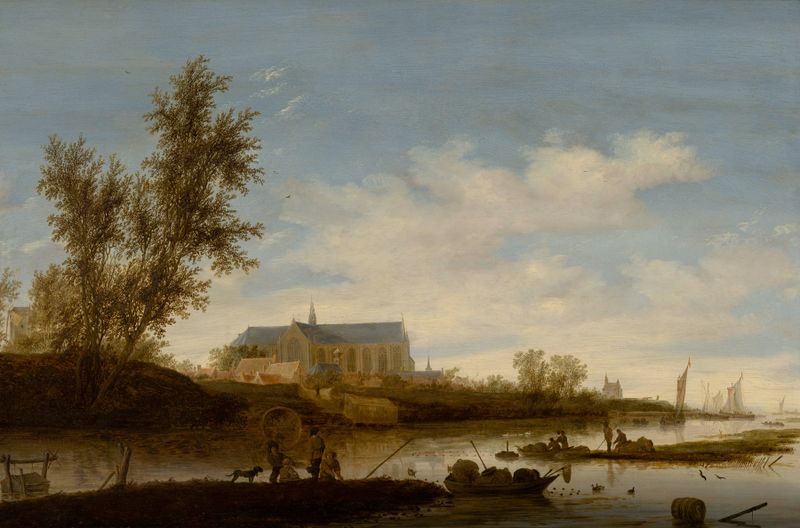
River landscape with fishermen in the foreground, the Laurenskerk in Alkmaar beyond
Salomon van Ruysdael

River Landscape with a View of Naarden
Salomon van Ruysdael
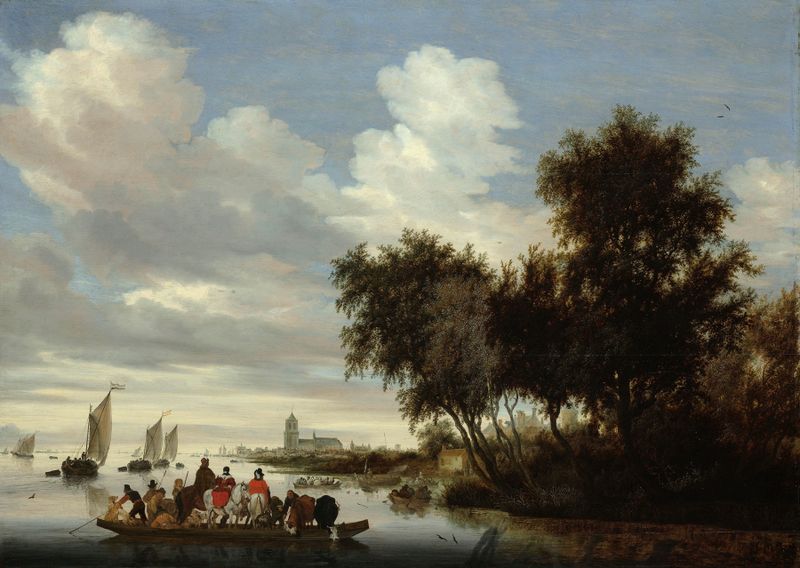
River Landscape with Ferry
Salomon van Ruysdael
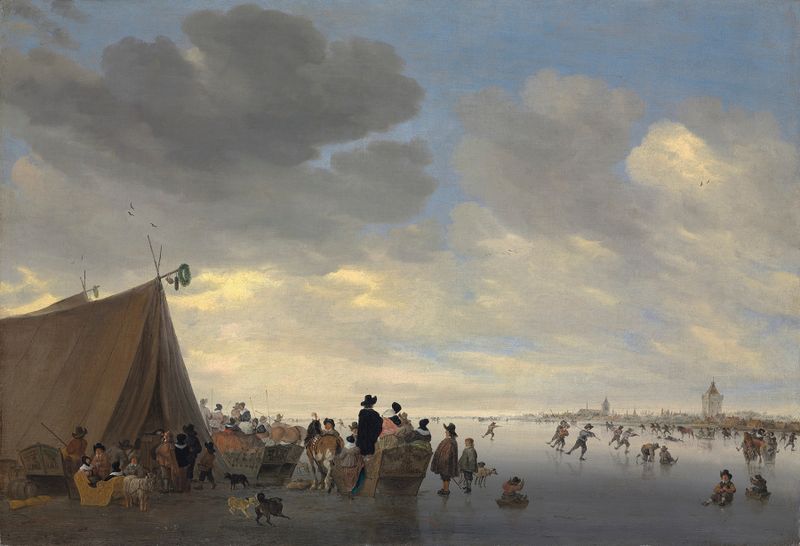
Skaters on the frozen river Lek, the town of Vianen beyond
Salomon van Ruysdael
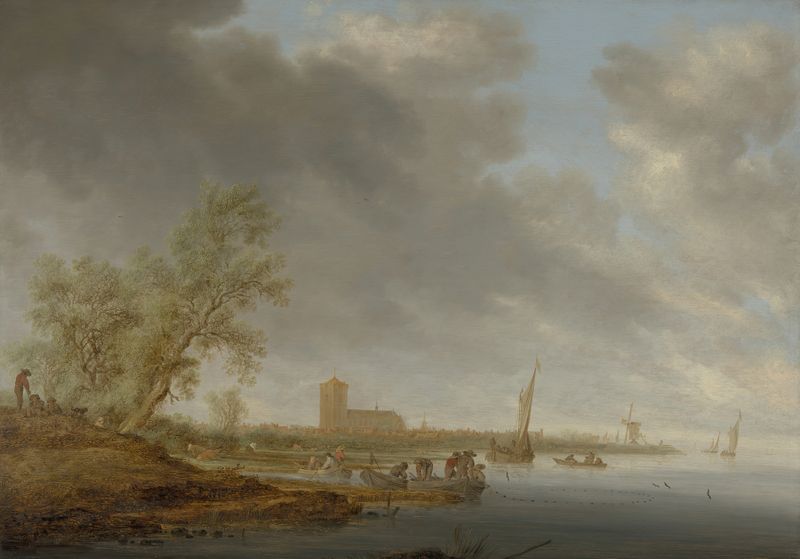
River Landscape with a View of Naarden
Salomon van Ruysdael
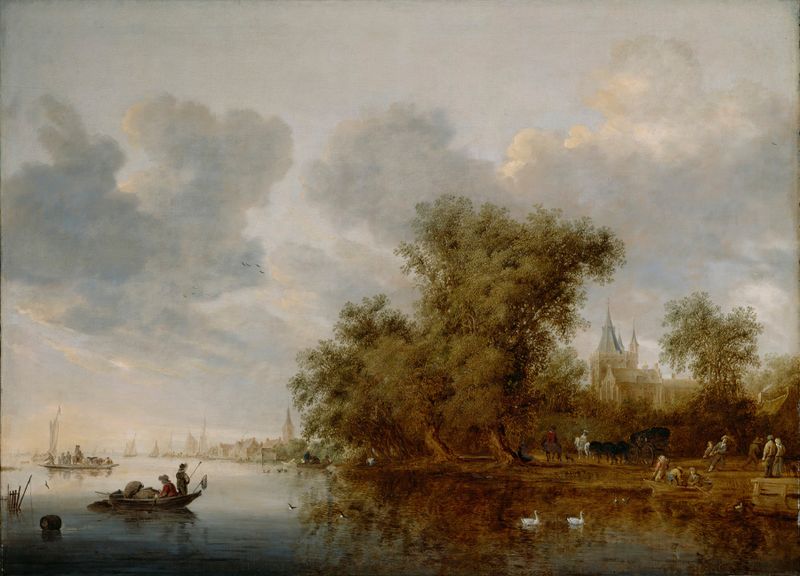
River Landscape
Salomon van Ruysdael
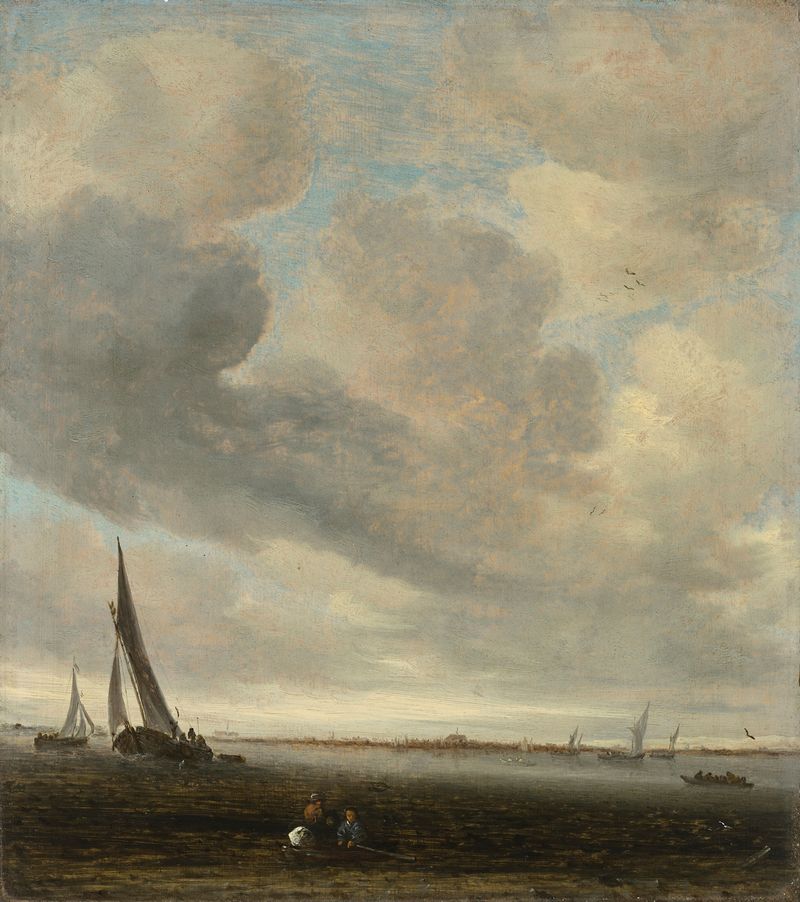
An estuary scene with a distant view of Haarlem
Salomon van Ruysdael
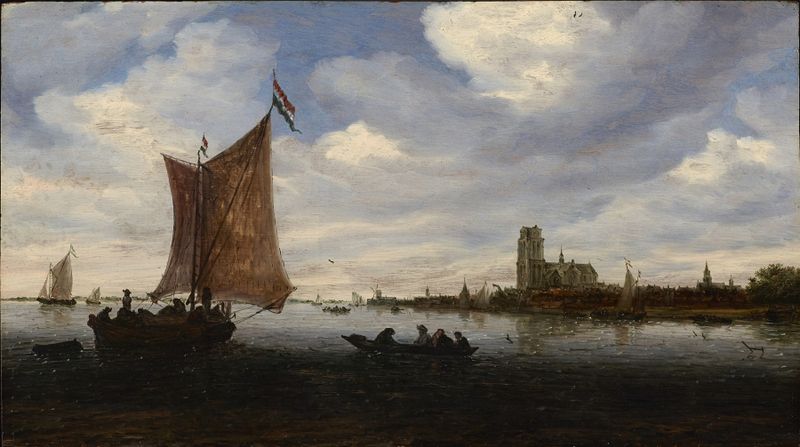
View of Dordrecht
Salomon van Ruysdael
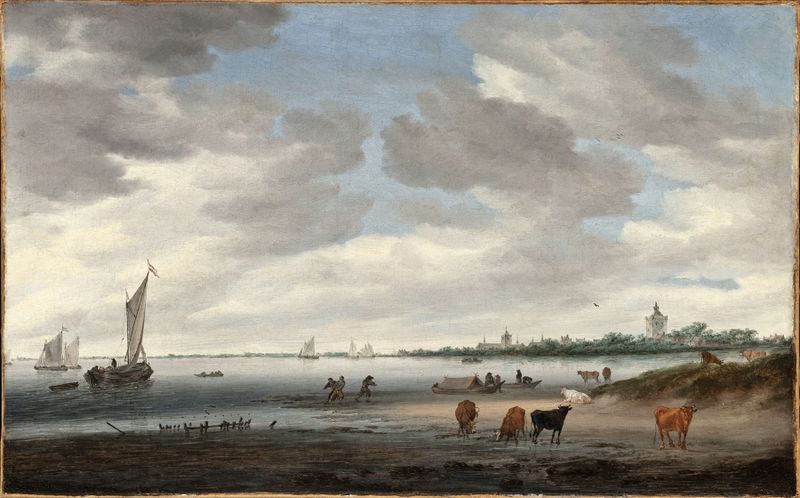
View of the River Lek and the Town of Vianen
Salomon van Ruysdael
River View near Deventer
Salomon van Ruysdael





