A Factory on Jawa — History & Facts
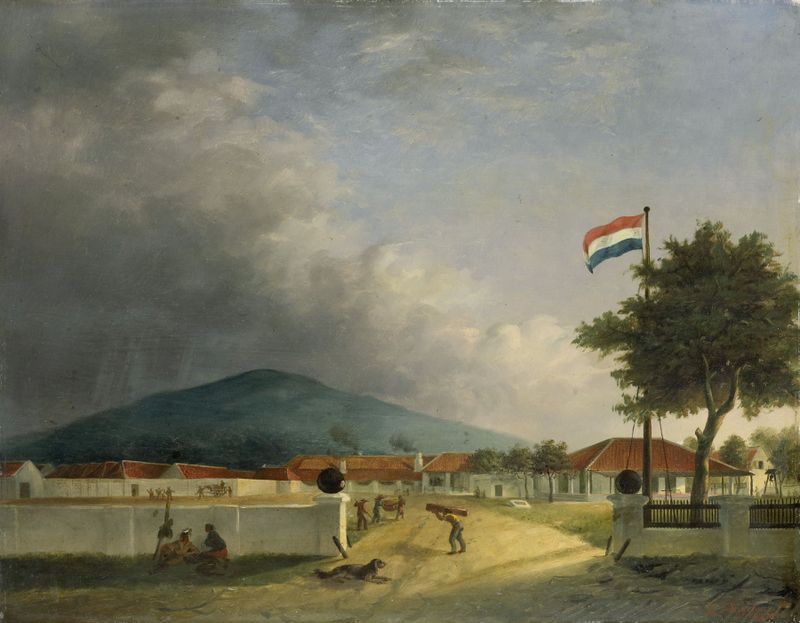
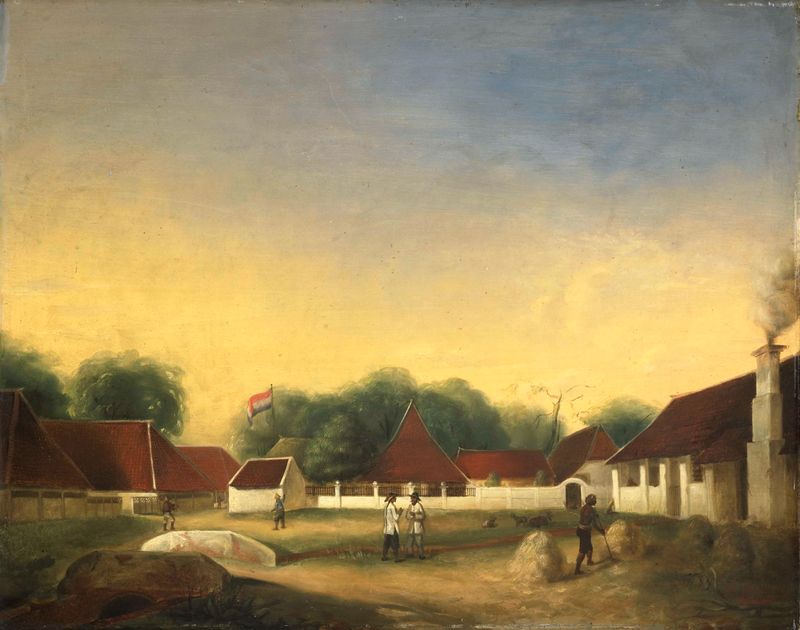
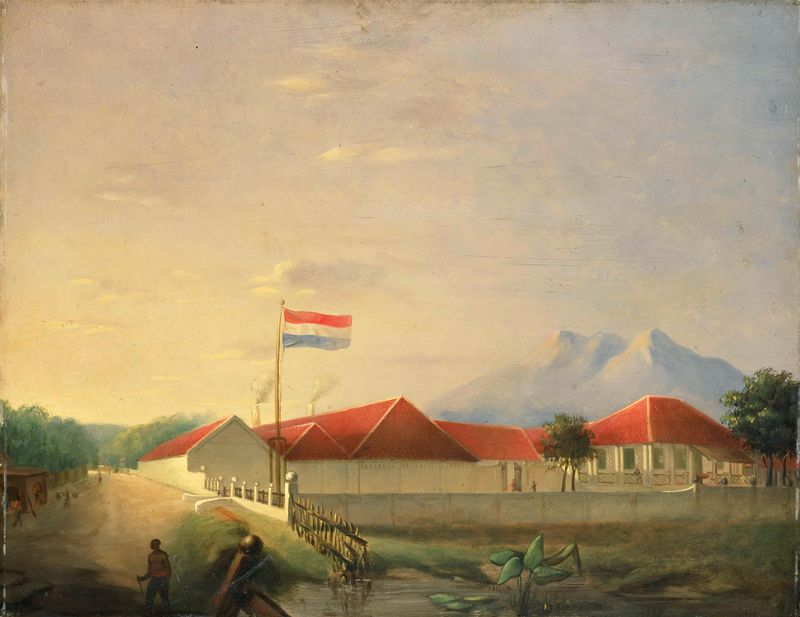
When did color learn to lie? In the heart of industrialization, a vibrant palette serves as both a celebration and a lament for the world that is transforming before our eyes. The hues pulsate with a sense of longing, capturing the essence of a time that teeters between progress and echoing nostalgia. Look to the center of the composition, where the factory looms large against a backdrop of swirling skies. The smokestacks rise, entwined with soft shades of orange and blue, creating a striking contrast that draws the eye.
Notice how the light dances across the scene, illuminating the workers below, their silhouettes a testament to toil and resilience. Hesselaar employs a masterful use of color and form, blending realism with a dreamlike quality that invites viewers to linger on the details—the glint of metal, the murmur of labor. The juxtaposition of industrial strength and the fragile beauty of nature embodies a complex emotional tension. In the distance, the horizon hints at an unseen world, one that yearns for the simplicity of the past, while the factory stands as a stark reminder of progress.
Each element, from the laborers to the billowing smoke, speaks to the cost of advancement, echoing a collective longing for balance between creation and preservation. In 1851, H.Th. Hesselaar painted this evocative scene amid a burgeoning industrial age, when the Netherlands grappled with rapid changes in society and economy. As cities expanded and factories proliferated, the artist sought to depict the duality of this transformation—revealing both the allure and the anxiety that accompanied it.
This work reflects his keen observation of human experience at a pivotal moment in history, as artists began to explore the implications of modernity through their craft.