
A Sugar Factory (?) on Java — History & Facts
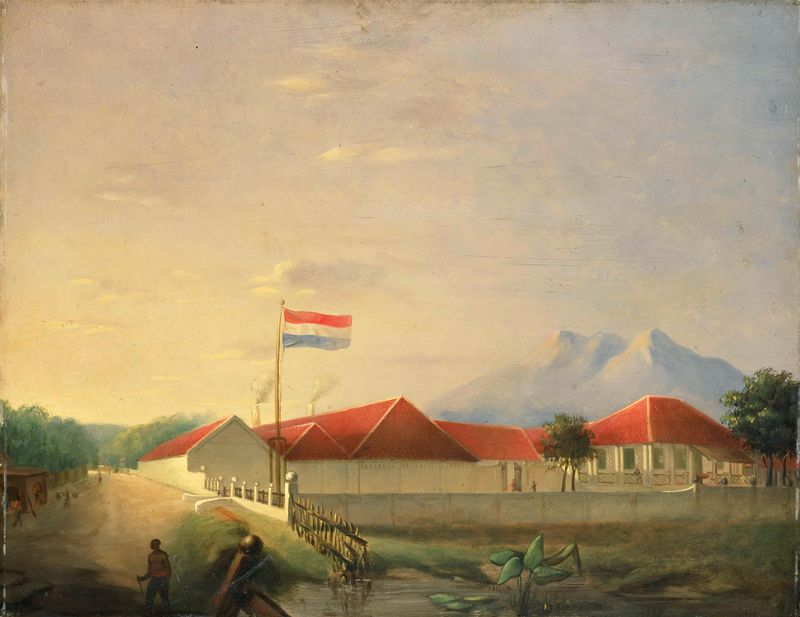
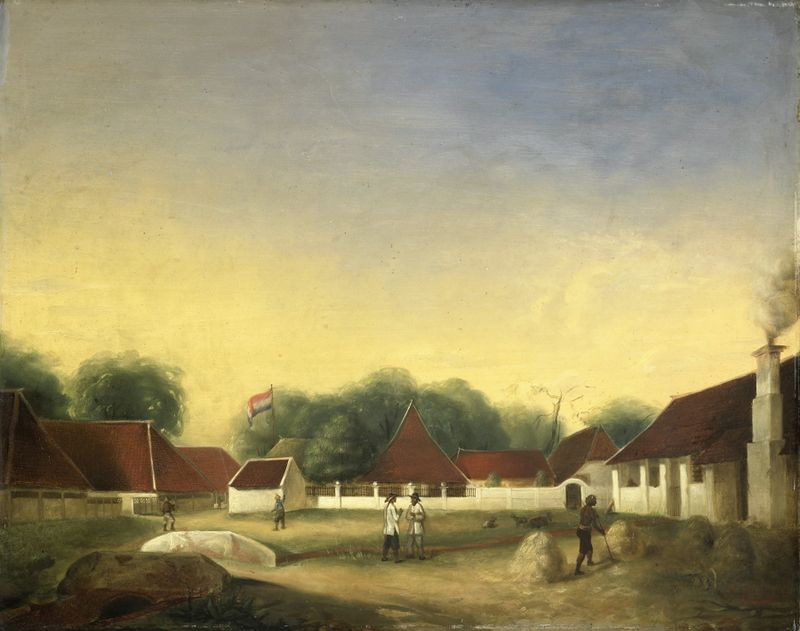
In the quiet haze of life’s relentless bustle, a moment of stillness unfurls, inviting reflection on the delicate equilibrium between industry and nature. Focus on the factory's intricate facade, the meticulous lines that define its structure against the backdrop of verdant Java. The muted colors, infused with earthy tones, evoke a sense of harmony, while the soft light bathes the scene, creating a gentle juxtaposition between human endeavor and the surrounding landscape. Notice the way the clouds hover above, almost cradling the factory, as if nature acknowledges its presence yet remains unyielding in its beauty. Within this composition lies a narrative of contrast — the industriousness of man and the serene persistence of nature.
Observe how the billowing smoke intertwines with the sky, embodying both the promise of progress and the potential for disruption. Each detail, from the workers’ gestures to the distant horizon, encapsulates a moment in time where the balance of progress teeters, eliciting both admiration and contemplation from the viewer. In 1849, H.Th. Hesselaar painted this scene during a period of rapid industrialization in the Dutch East Indies.
He was deeply engaged in capturing the essence of the era, as the world of art began to reflect the tensions between modernity and tradition. As the sugar industry flourished, so too did the complexities of colonial life, prompting Hesselaar to explore these multilayered influences through his work.
More Artworks by H.Th. Hesselaar
Browse all →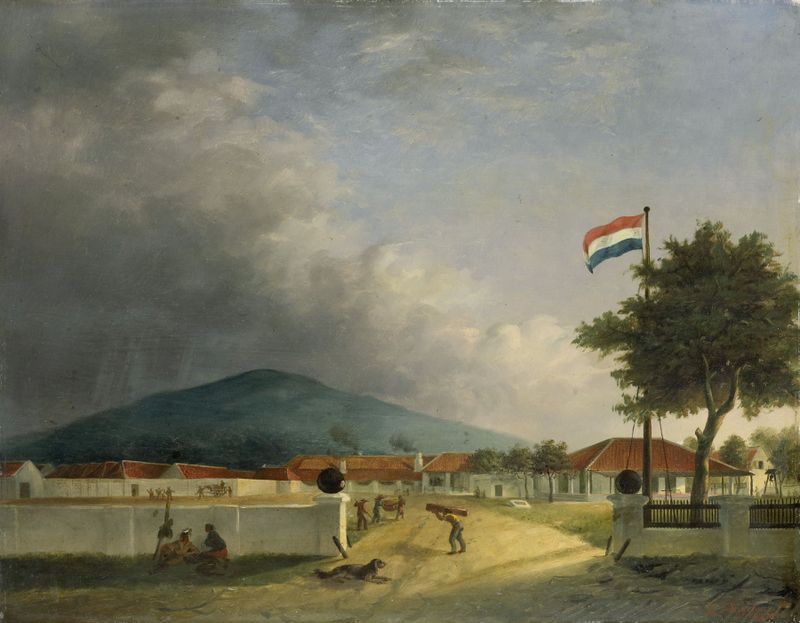


More Architecture Art
Browse all →
The statue of Liberty
Frédéric Auguste Bartholdi

View of Houses in Delft, Known as ‘The Little Street’
Johannes Vermeer

View of Houses in Delft, Known as ‘The Little Street’
Johannes Vermeer

The Cathedral in Rouen. The portal, Grey Weather
Claude Monet

The yellow house
Vincent van Gogh

The Church in Auvers-sur-Oise, View from the Chevet
Vincent van Gogh