A Sugar Factory on Java — History & Facts
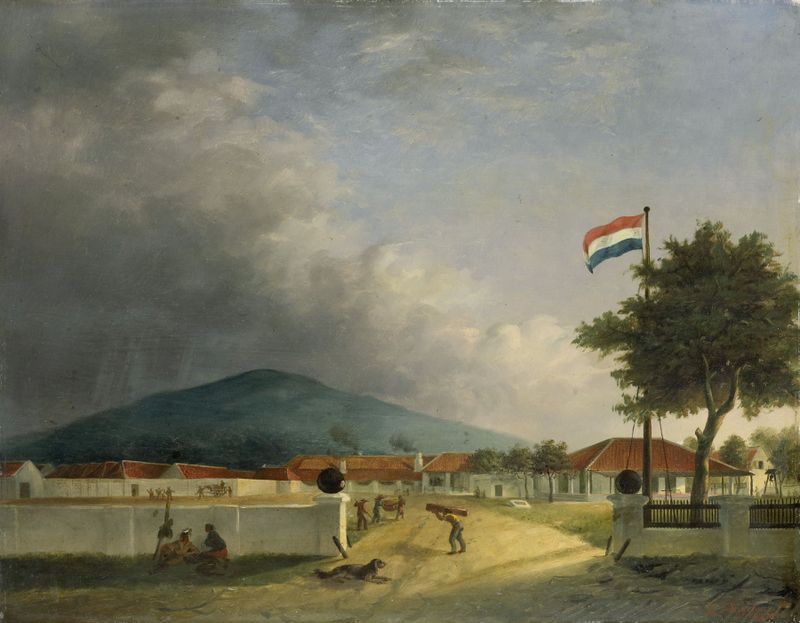
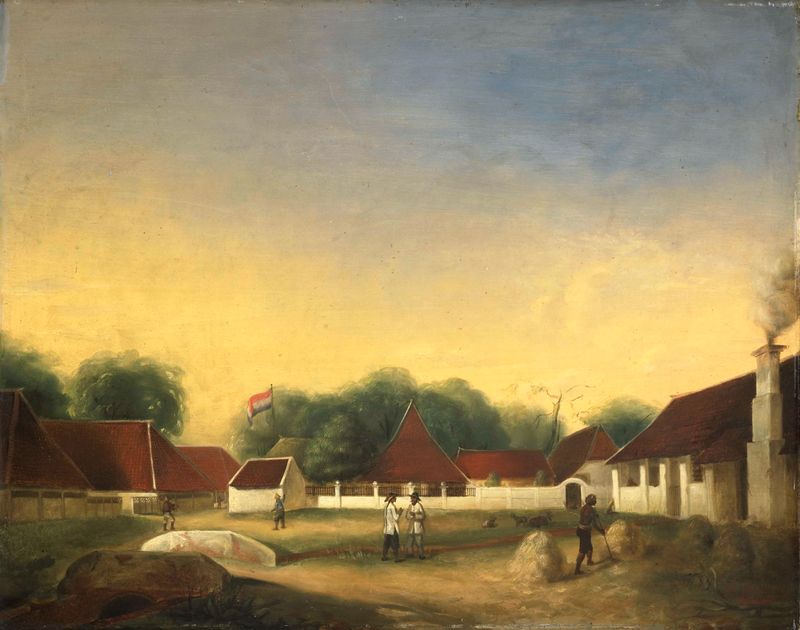
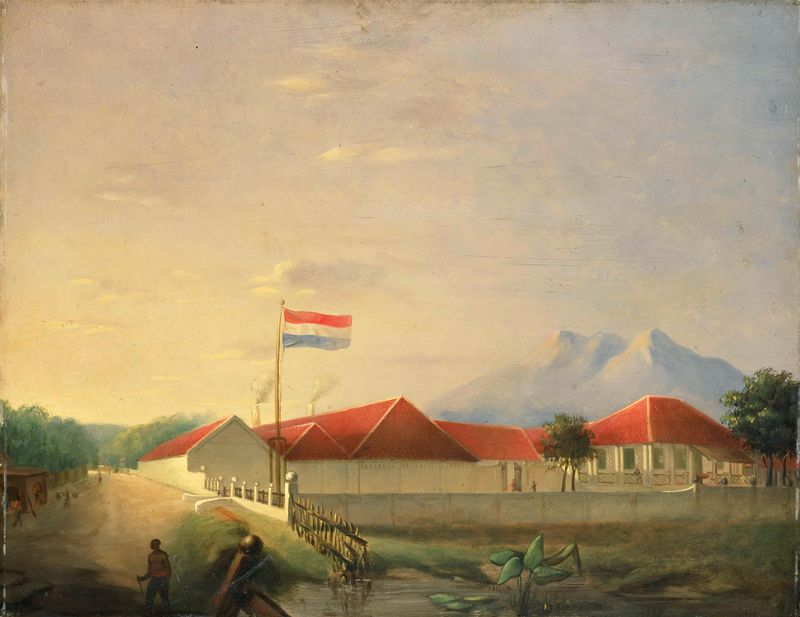
Can paint confess what words never could? In A Sugar Factory on Java, the vivid strokes reveal a world at the intersection of industry and nature, where madness weaves through progress. Look to the center of the canvas, where towering sugarcane stalks stretch upwards, their lush green juxtaposed against the warm browns of the factory structures. The artist employs a rich palette that captures the vibrancy of the landscape while hinting at the undercurrents of toil and transformation. Notice how the light breaks through the clouds, illuminating the factory's mechanical forms and casting a strange glow on the workers bustling below, their figures a flurry of motion amid the more static industrial backdrop. The painting speaks of contradictions: the beauty of abundance set against the bleakness of labor.
Each worker's posture hints at a struggle—some faces deeply furrowed, while others gaze into the distance, perhaps contemplating escape from this relentless cycle. The looming factory casts long shadows, symbolizing the looming specter of industrialization, while the expansive sky above holds a quiet promise of freedom and reprieve. This tension between nature's bounty and the exhausting demands of progress echoes with an unsettling resonance. H.Th.
Hesselaar created this compelling piece in 1849, during a transformative period in Dutch art and society. Having returned from the East Indies, he aimed to encapsulate the new realities of colonial industry. At a time when Europe was grappling with the consequences of industrialization, Hesselaar’s work reflected both fascination and foreboding, embodying the duality of human ambition and the costs it exacts.