The Kedawong Sugar Factory near Pasuruan, Java — History & Facts
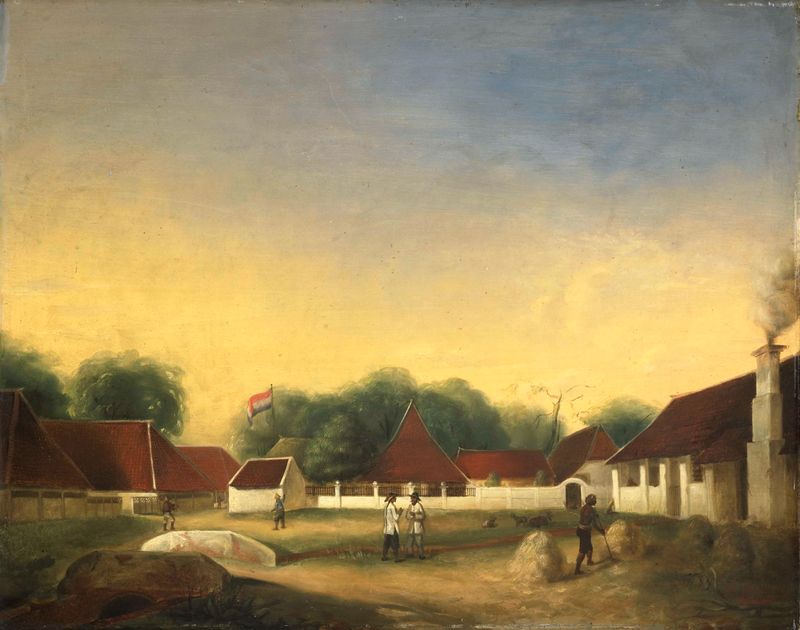
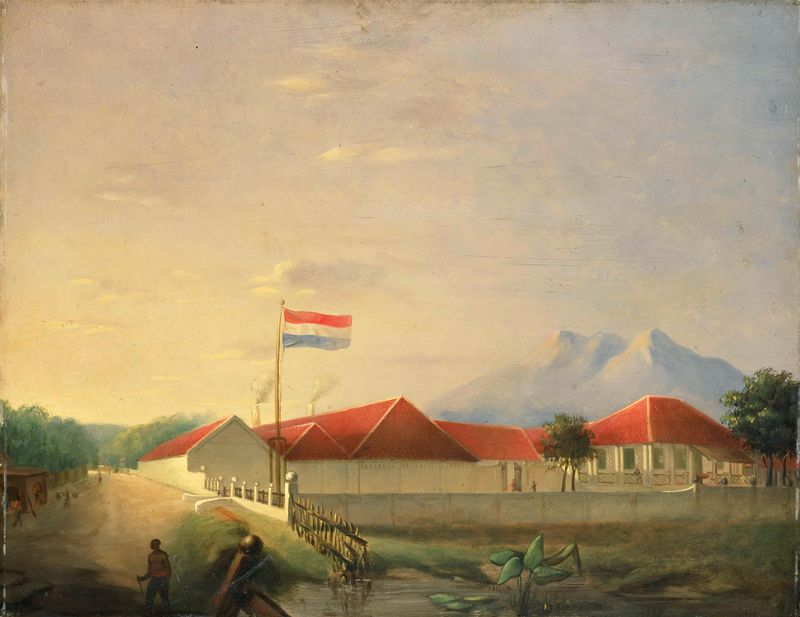
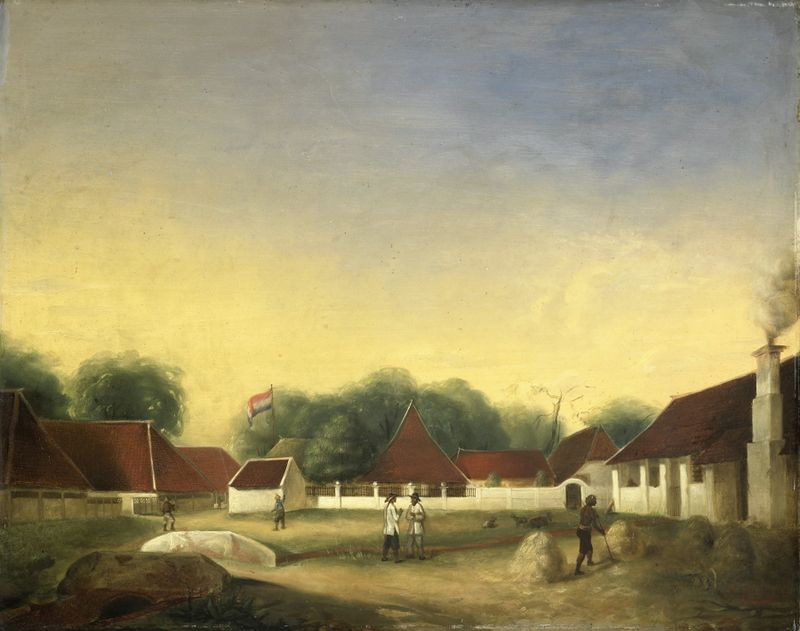
Could beauty survive in a century of chaos? In H.Th. Hesselaar's The Kedawong Sugar Factory near Pasuruan, Java, we confront this question, nestled within a landscape that radiates both industry and tranquility. Look closely at the gentle hills framing the factory; their soft greens contrast sharply with the stark, linear structures of the facility. The steam rising from the chimneys dances with the warm golden light of the setting sun, casting long shadows that stretch across the ground.
Notice how the artist skillfully balances the lushness of nature with the imposing presence of human endeavor, inviting the eye to wander between the two realms—the serene beauty and industrious life coexisting in harmony. Amidst the industrial tones, one can sense the subtle tension between progress and preservation. The rhythmic lines of the factory evoke the pulse of economic growth, yet the surrounding landscape reminds us of nature's quiet resilience. Small details, like the silhouettes of workers engaged in their tasks, hint at the labor and hope that underpin this scene, suggesting a deeper narrative of livelihood and sustainability, challenging us to ponder the costs of such development. In 1849, Hesselaar created this work during a period of significant transformation in Java, as the island transitioned into a major agricultural hub under Dutch colonial influence.
The painting reflects both the advancements in sugar production and the complex relationship between colonizer and land. It captures a moment where beauty and industry collided, replete with the promise of prosperity yet steeped in the shadows of exploitation and change.