
A Fisherman’s Home, Lillesand — History & Facts
Could beauty survive in a century of chaos? This question lingers like the mist above the serene waters in the era of Hans Gude's A Fisherman’s Home, Lillesand. The painting invites us into a tranquil moment, where simplicity and nature intertwine, beckoning us to ponder on the fleetingness of peace amidst life's storms. Look to the left at the delicate fishing boat, its soft lines cradled by the gentle waves. The warm, muted palette of ochres and greens evokes a sense of timelessness, while the light dances across the surface of the water, illuminating the fishermen as they prepare their nets.
Notice how the distant shoreline rises, dotted with quaint houses that blend harmoniously with the landscape, suggesting a life intertwined with the rhythm of the sea. Amidst this picturesque setting, there’s an undercurrent of longing for connection—between man and nature, and between the past and the future. The fishermen’s quiet diligence reflects not just their labor but a yearning for sustenance and belonging. The contrast between the tranquil water and the rugged rocks serves as a poignant reminder of the struggle inherent in such a serene life, hinting at the chaos that surrounds this idyllic scene. In 1858, Gude painted this work during a period of profound change in Norway and beyond.
Emerging from the Romantic movement, he sought to capture the essence of Norwegian landscapes and life, influenced by the growing interest in naturalism. At this time, the art world was shifting, and Gude, a leading figure, was establishing a distinct voice that celebrated both the beauty and hardships of rural existence.
More Artworks by Hans Gude
Browse all →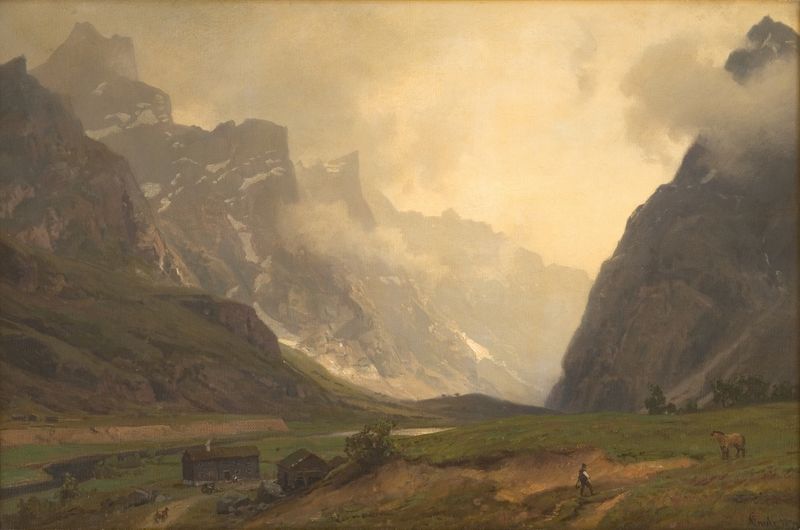
The Troll Peaks in Romsdalen, The Foot of Romsdalshorn to the Right
Hans Gude
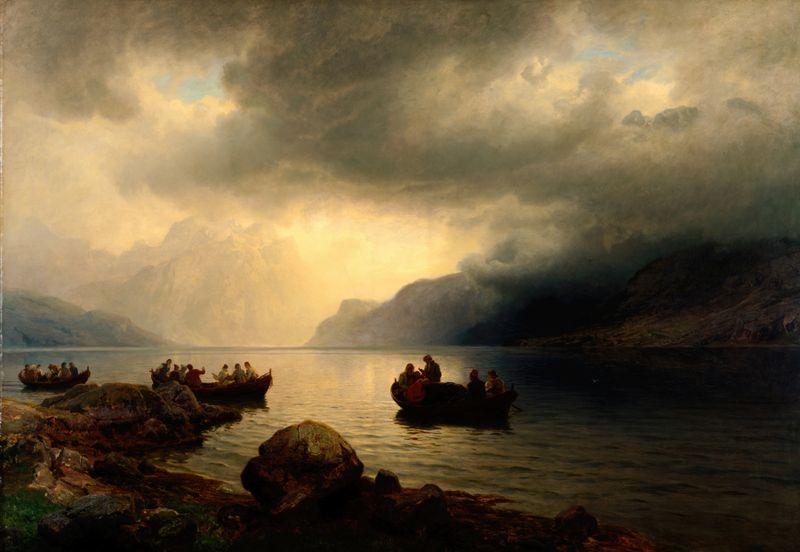
Funeral Procession on the Sogne Fjord
Hans Gude
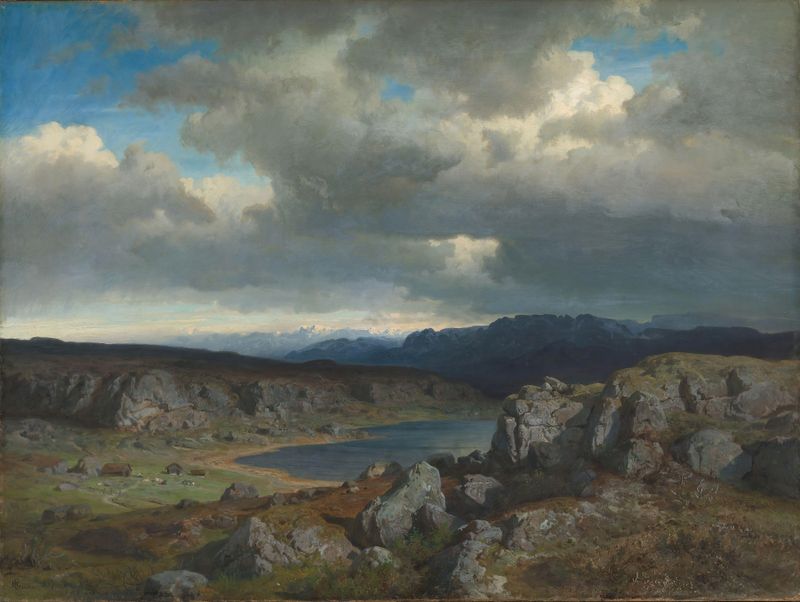
Norwegian Highlands
Hans Gude
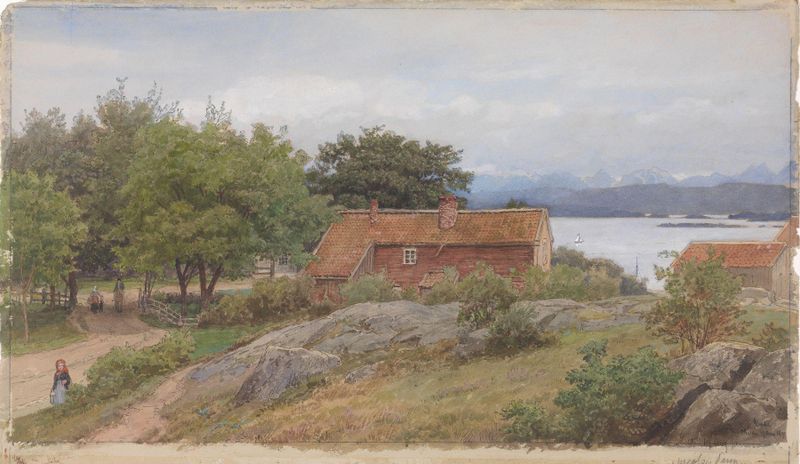
Landskap med bondegård ved Molde
Hans Gude
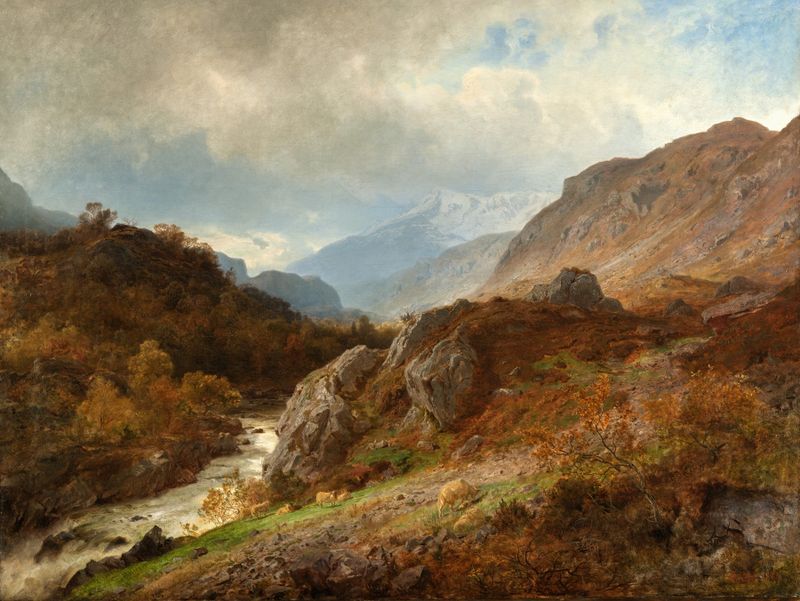
Mountain Landscape
Hans Gude
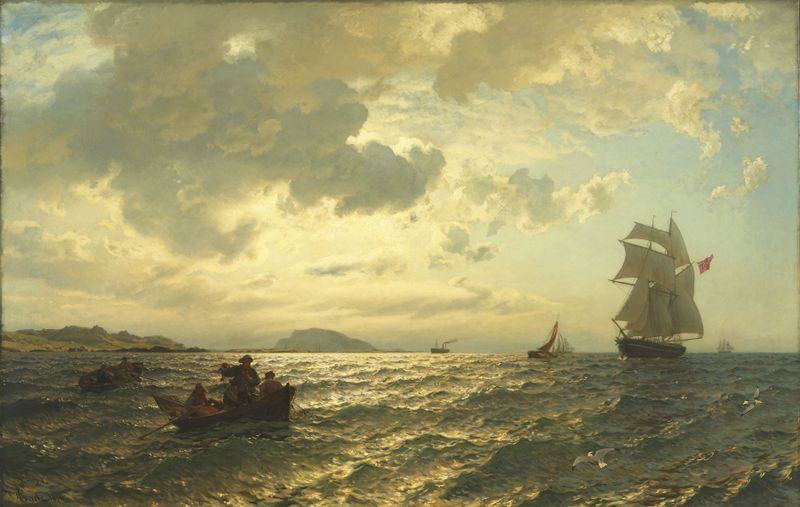
Fresh Breeze on the Norwegian Coast
Hans Gude
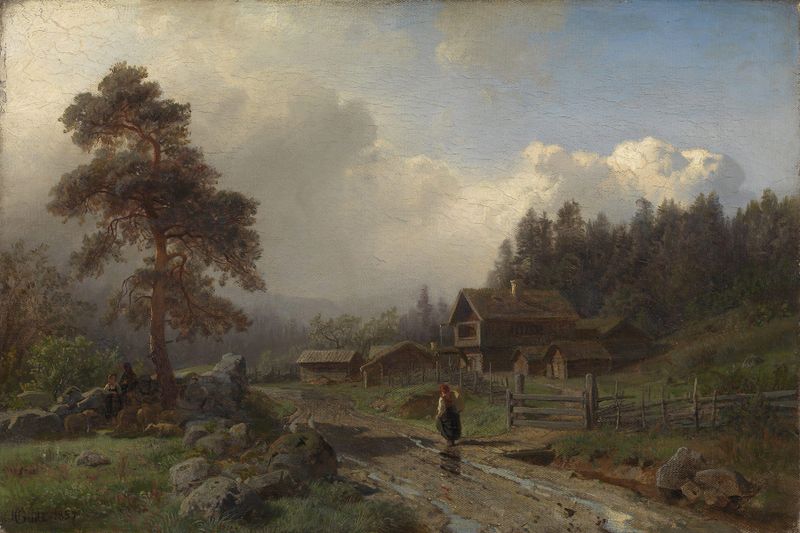
Norwegian Landscape in Rain
Hans Gude
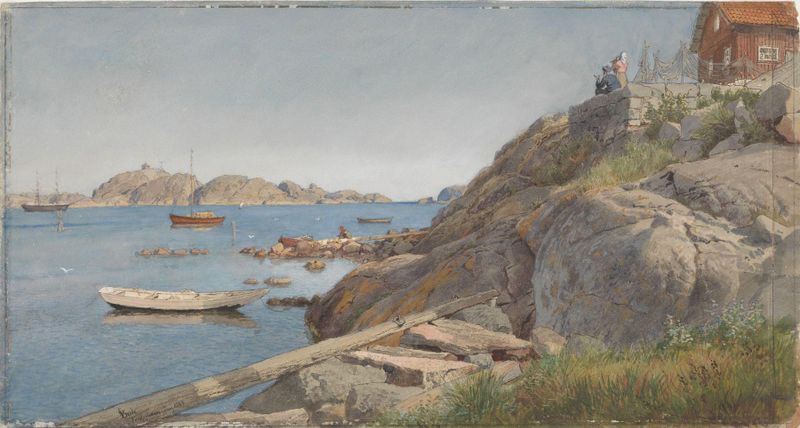
Landscape by Stavern
Hans Gude
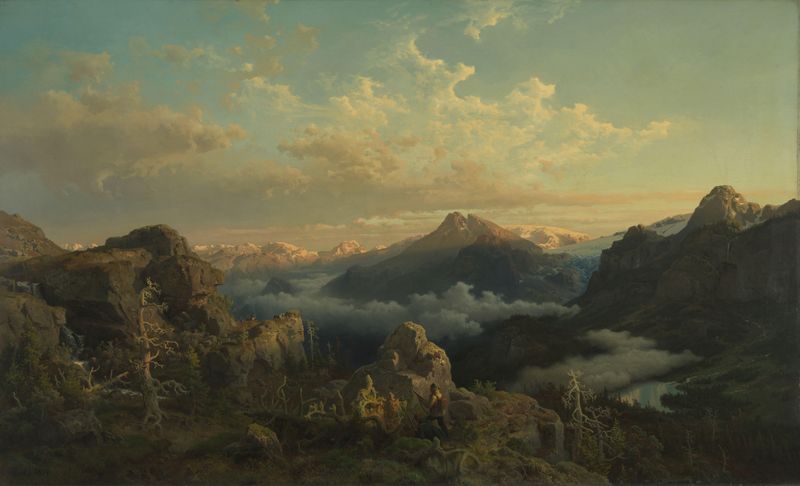
Norwegian Highlands in Sunrise
Hans Gude
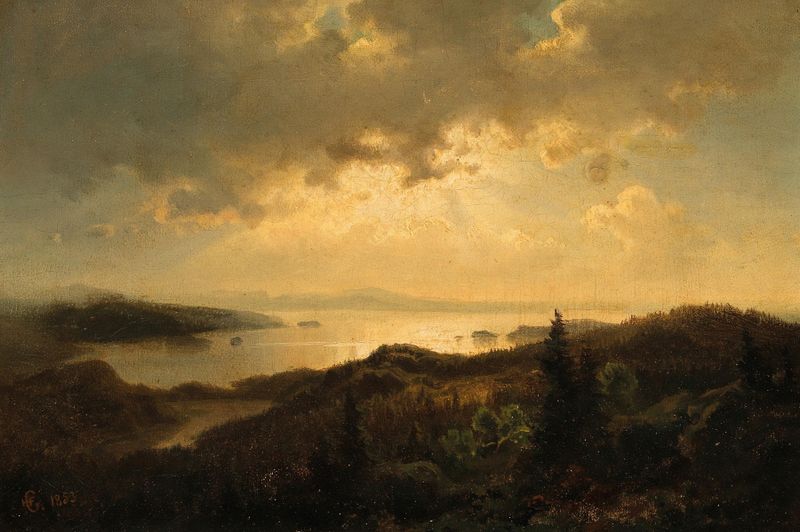
A Scene at Dusk in Norway
Hans Gude





