
A Landscape with a Man Fording a Stream — History & Facts
In the serene expanse of nature, one wonders: what truths do we reveal in our solitude? Such contemplation lies at the heart of this timeless work. Look to the foreground where the figure of a man stands resolutely at the edge of a stream, the water flowing briskly around his legs. His calm demeanor contrasts with the tumultuous movement of the water, suggesting a deeper struggle within. Notice how the painter employs a palette of verdant greens and earthy browns, giving life to the landscape, while the soft, golden light filters gently through the clouds above, illuminating the scene with a divine warmth. Beneath the tranquil surface, there are rich layers of meaning.
The man’s journey across the stream symbolizes a passage not only through nature but also through the crucible of faith. The stream, often associated with trials, invites contemplation of the balance between struggle and serenity. Furthermore, the juxtaposition of the steadfast man against the dynamic water reflects the eternal conflict between human agency and the uncontrollable forces of nature. Created in the 1740s, this artwork emerged during a period when Barret was deeply engaged in the English landscape tradition, influenced by both the pastoral ideals and the burgeoning Romantic spirit.
At this time, he was carving a niche for himself as a significant landscape painter, capturing not just the physical beauty of the outdoors but also the emotive responses it evokes in the viewer.
More Artworks by George Barret
Browse all →
A wooded landscape with a lake, anglers in the foreground
George Barret
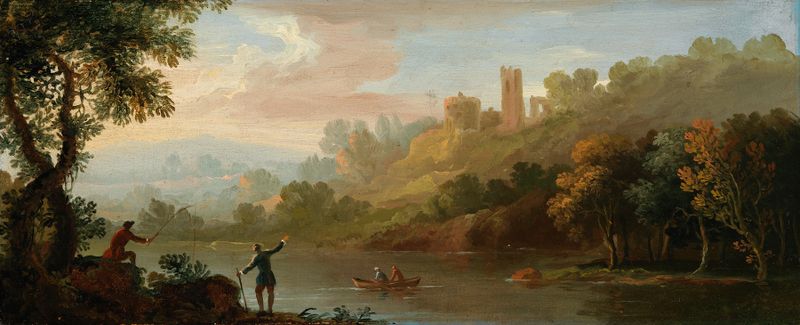
A River Scene
George Barret
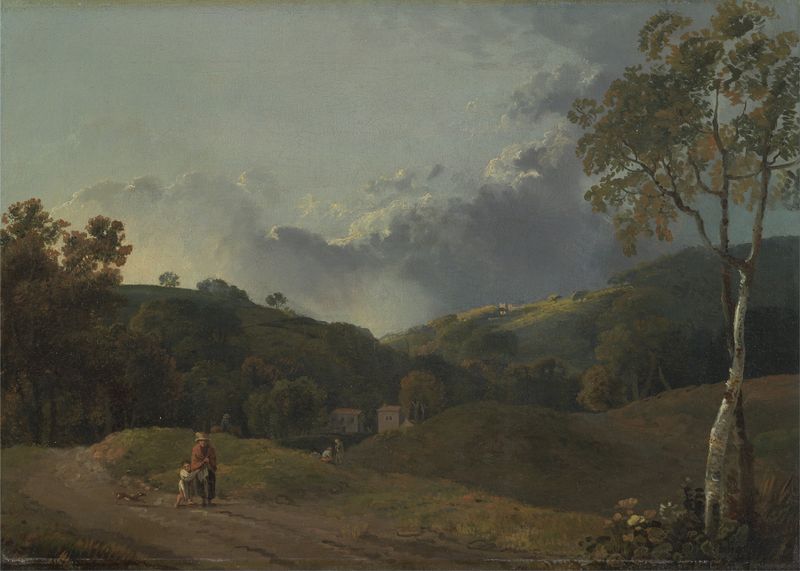
Landscape with Cottagers
George Barret

Landscape with Figures in the Background
George Barret

Morning: Landscape with Mares and Sheep
George Barret

View in a Park
George Barret
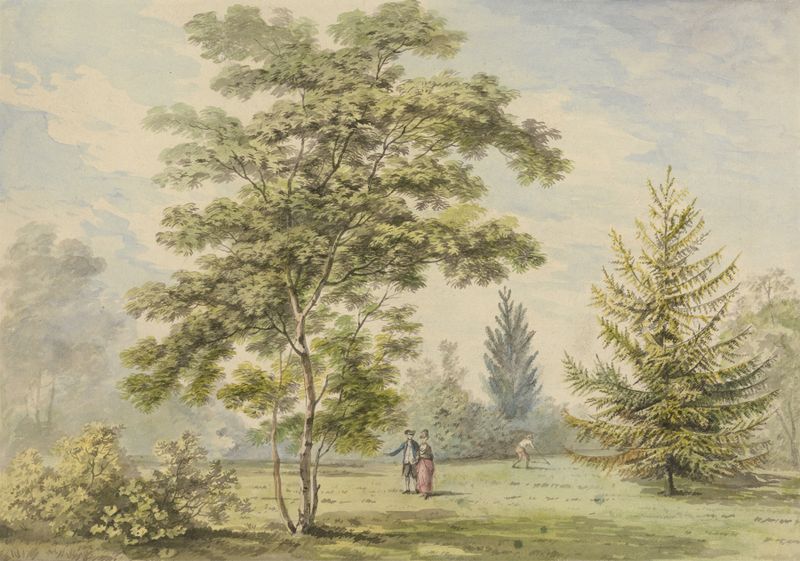
The Acacia Tree, Figures in a Park
George Barret

Timber Wain on a Rough Road
George Barret

Wooded Landscape with a Boy and his Dog
George Barret
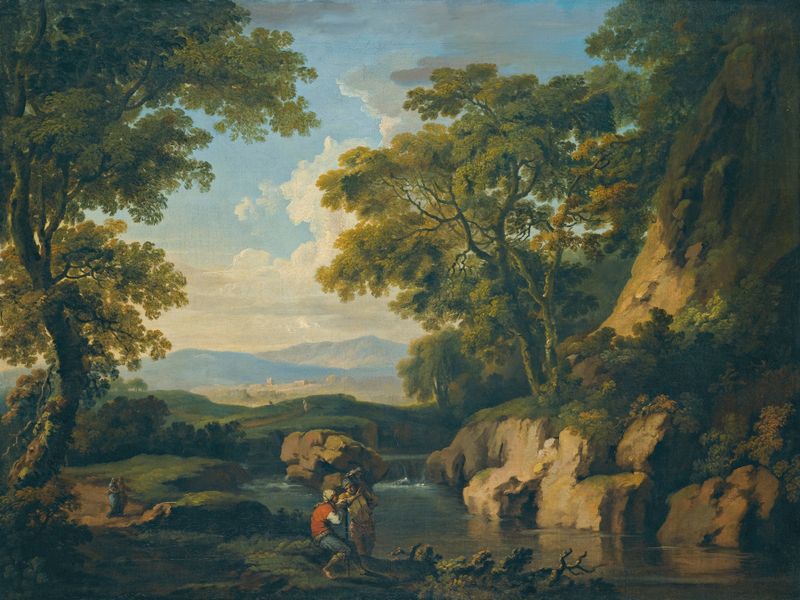
A Mountainous Wooded Landscape With Figures By A River In The Foreground
George Barret





