A Landscape With A Roman Ruin And Figures Resting Beside A Stream — History & Facts
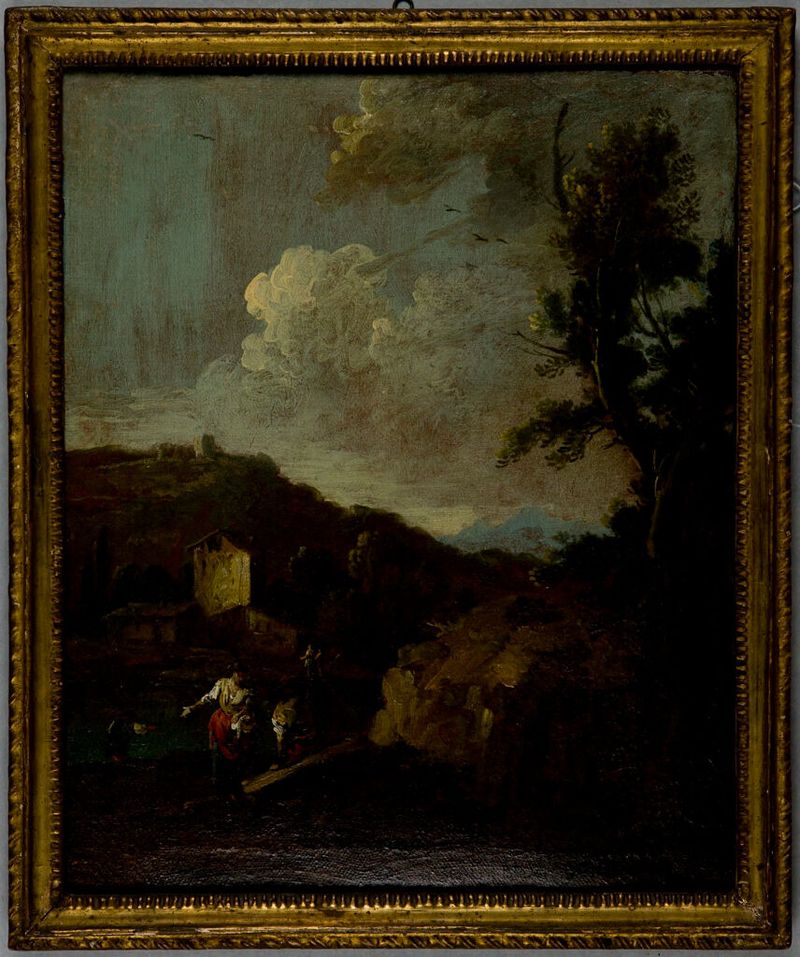
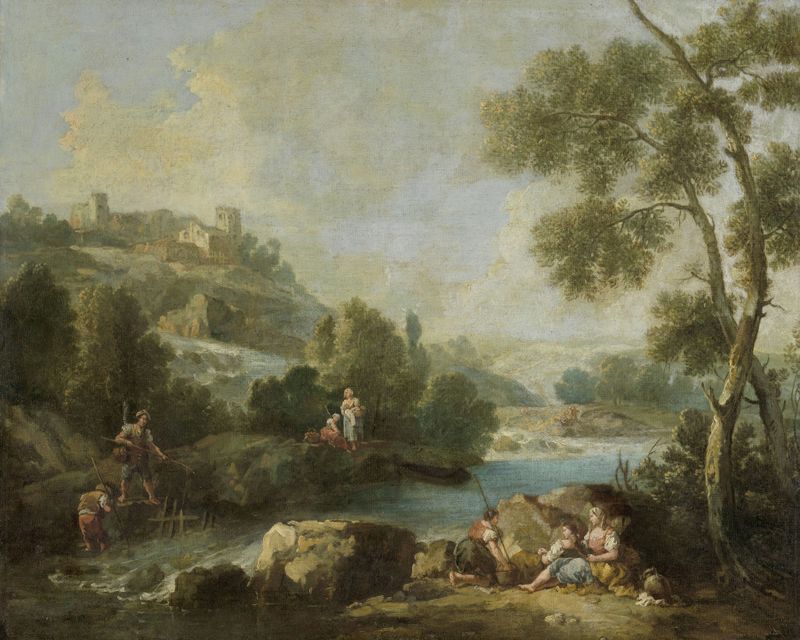
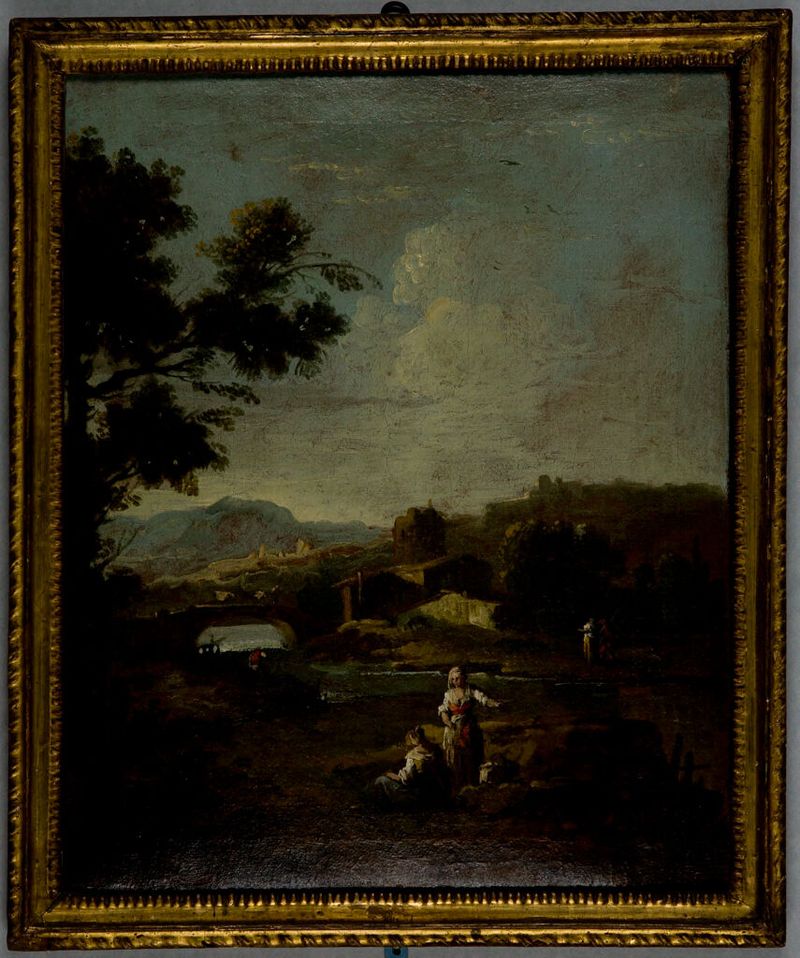
In a world where every brushstroke whispers a truth, what do we glean from the barren and the broken? Emptiness has a voice, and it beckons us to listen. Look to the center of the canvas where a crumbling Roman ruin emerges, stark against the backdrop of rolling hills. The soft hues of earth and sky blend harmoniously, yet there’s an unsettling stillness. Notice how the light spills over the stones, illuminating the remnants of an ancient civilization while casting elongated shadows that hint at stories long forgotten.
To the left, figures recline beside a tranquil stream, their muted clothing echoing the subdued palette of the landscape, suggesting peaceful contemplation amidst decay. The contrast between life and ruin is palpable. The figures appear relaxed and unhurried, yet their presence only accentuates the desolation of the surrounding architecture, as if they are momentary visitors in a timeless landscape. The gentle ripple of water juxtaposes the hardness of stone, hinting at nature’s enduring resilience against human constructs.
The emptiness surrounding them invites introspection, raises questions about the passage of time, and evokes a sense of longing for what once was. Giuseppe Zais painted this work during a period marked by a fascination with the sublime and romantic landscapes of the 18th century. Working in Italy, he was deeply influenced by both the classical past and the pastoral charm of his surroundings. This painting, created in an era where the complexities of modernity began to encroach upon the simplicity of nature, reflects his desire to capture not only the beauty of the landscape but also its poignant transience.