Landscape with Figures — History & Facts
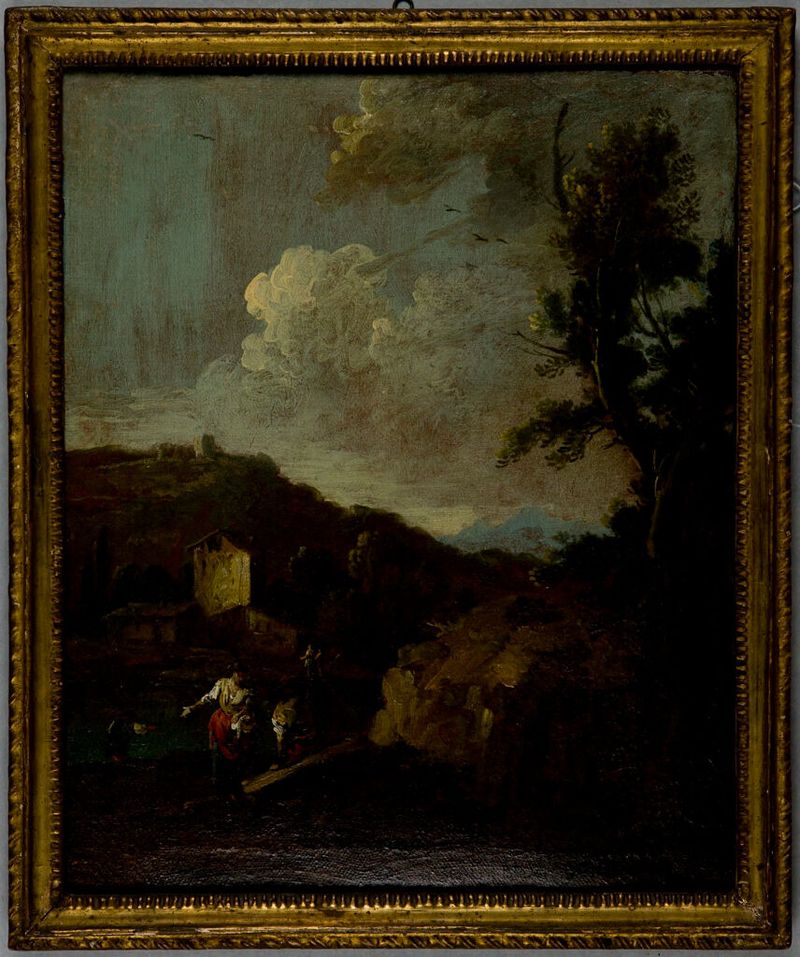
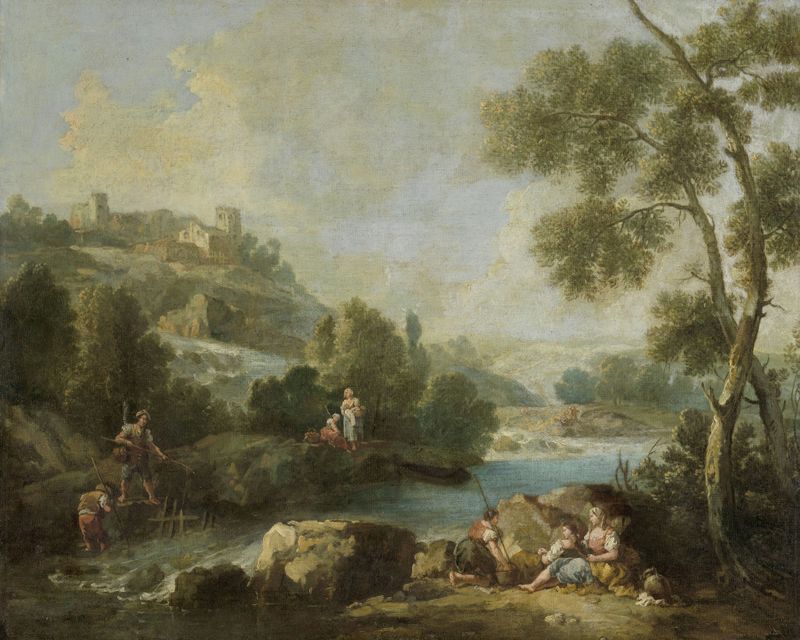
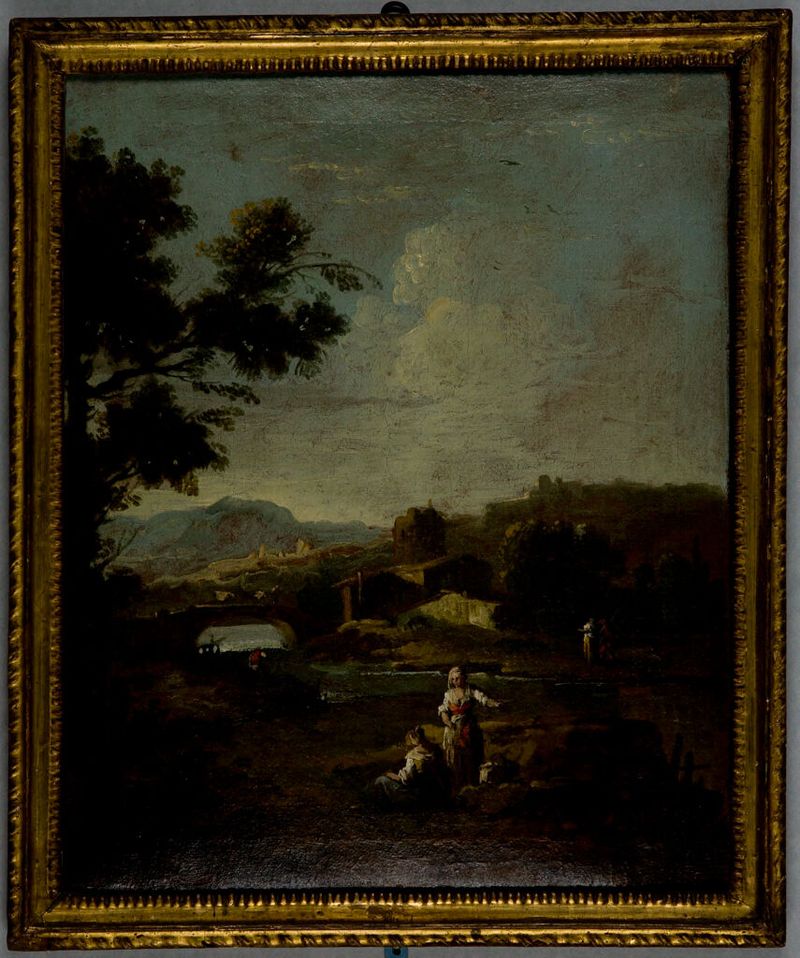
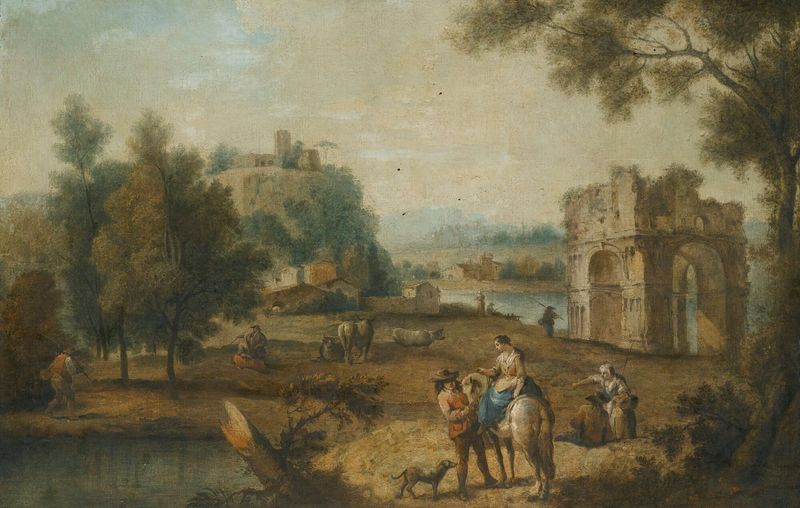
Did the painter know this moment would outlive them? In Landscape with Figures, a world of innocence unfolds, inviting viewers to ponder the transient beauty of life captured on canvas. Look to the foreground where figures meander through a lush, green expanse, their delicate forms harmonizing with the natural landscape. The careful brushwork reveals a tapestry of rich textures, from the soft strokes of the trees swaying gently in the breeze to the shimmering light that dances across the ground. Notice how the warm, golden hues of the setting sun embrace the scene, creating an atmosphere that feels both serene and ephemeral. Within this idyllic portrayal, contrasts emerge—a juxtaposition between the carefree innocence of the figures and the grandeur of the surrounding nature.
The distant mountains loom like silent guardians, while the figures appear blissfully unaware of their presence. Subtle moments of connection—a shared glance, a gesture of camaraderie—speak to the relationships woven into the fabric of this landscape, evoking the transient nature of happiness and human connection. Giuseppe Zais painted this work in a period marked by the evolution of landscape art, possibly during the 18th century. Settled in Venice, he found himself amidst a shifting art scene that was increasingly celebrating the beauty of nature through a more personal lens.
As he navigated his artistic journey, the burgeoning Romantic movement began to influence the ways artists expressed emotion, celebrating not only the natural world but also the inner lives of its inhabitants.