
A Mill by a Creek — History & Facts
Could beauty survive in a century of chaos? In A Mill by a Creek, the answer unfolds through a symphony of color and tranquility, inviting viewers to ponder the resilience of nature amidst human endeavor. Look to the left at the rich greens enveloping the scene, where the vibrant foliage reaches towards the water's edge. The mill stands steadfast in the middle, its warm earthy tones harmonizing with the surrounding landscape. Notice how the light cascades through the tree branches, casting playful shadows that dance across the creek’s surface, creating a delicate interplay of illumination and reflection that draws the eye across the canvas. The juxtaposition between the industrious mill and the serene creek speaks volumes about the coexistence of progress and nature.
The swirling water, painted with gentle strokes, conveys a sense of continuity, while the mill’s solid structure signifies human ambition. This contrast evokes an emotional tension—can the beauty of the landscape endure the relentless march of technology? Each detail, from the rippling water to the soft clouds above, captures a fleeting moment that invites reflection on the balance of life and progress. Ludwig Halauska painted this work in 1850, a time when the Industrial Revolution was reshaping Europe. Living and working in the context of rapid change, he aimed to capture both the beauty of the natural world and the sentiment of industrialization.
This piece represents an artist striving to reconcile the transformative forces of his era, forever immortalizing the delicate relationship between nature and human creation.
More Artworks by Ludwig Halauska
Browse all →
Der Schneeberg in Niederösterreich von Gutenstein aus gesehen
Ludwig Halauska

A View of Klamm Castle near Imst in the Inntal in Tyrol
Ludwig Halauska
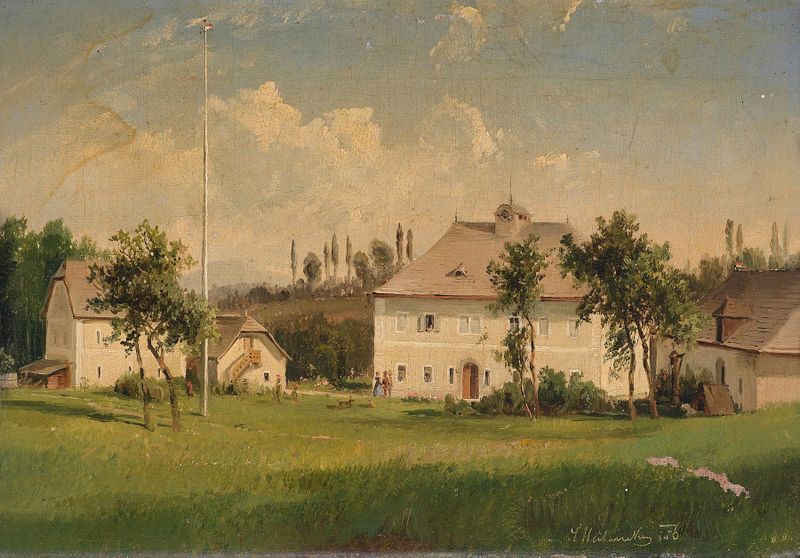
Blick auf einen Gutshof
Ludwig Halauska

Blick auf das Dorf Tutschach bei Aflenz
Ludwig Halauska
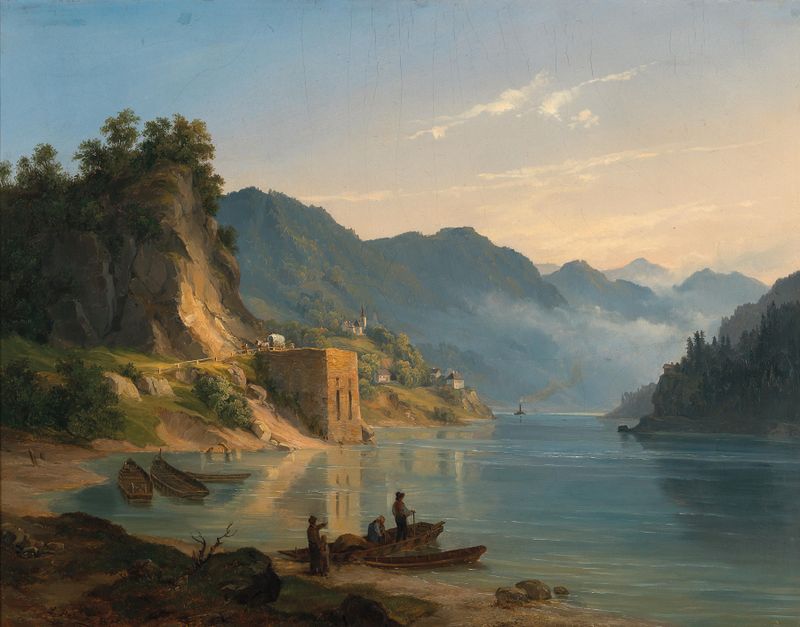
St. Nikola im Strudengau
Ludwig Halauska

Blick auf das Dorf Tutschach bei Aflenz mit dem Jauringbach im Vordergrund
Ludwig Halauska

Landschaft bei Flintsbach am Inn
Ludwig Halauska
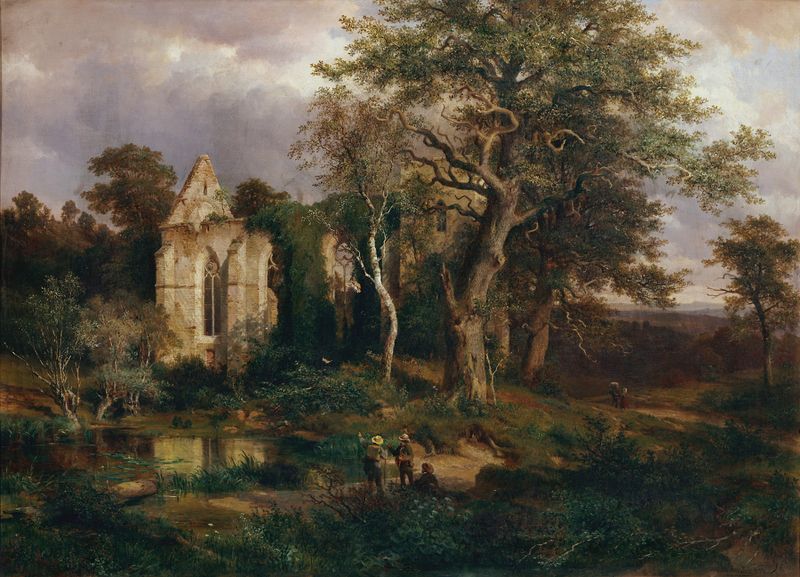
Kirchenruine
Ludwig Halauska

Partie aus Mittenwald am Karwendelgebirge
Ludwig Halauska

Sommerlandschaft
Ludwig Halauska





