
A Mountain Landscape with a Chapel and Wayside Shrine — History & Facts
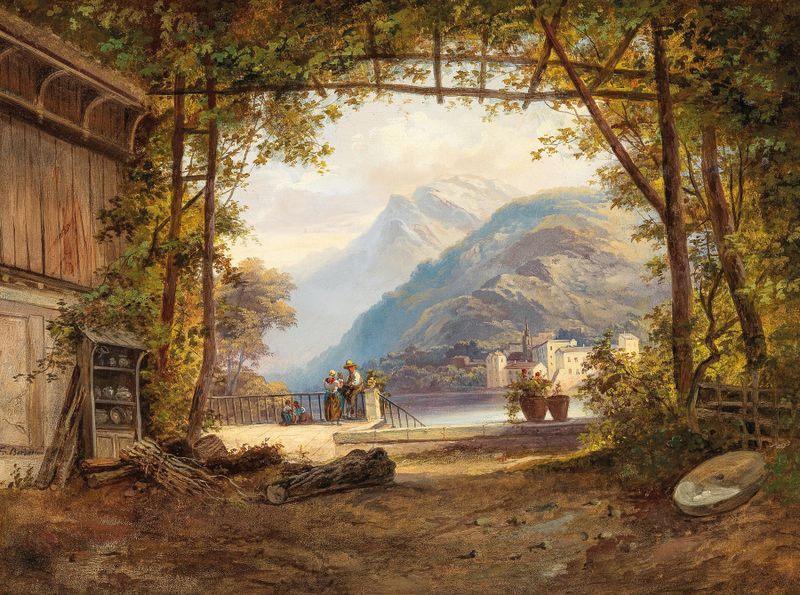
Each stroke, each hue, holds a truth that invites the viewer to peer beyond the surface and into the depths of existence, questioning the nature of reality itself. Look to the center of the composition, where a quaint chapel stands steadfast against a backdrop of towering mountains. The artist’s meticulous brushwork captures the intricate details of the stone façade, bathed in soft, golden sunlight. Notice how the light gently caresses the peaks, their snow-capped summits glowing with the warmth of dusk, while deep shadows linger in the valleys below, creating a harmonious interplay between light and dark. Upon closer inspection, the painting subtly reveals the tension between nature and humanity.
These sacred structures juxtaposed against the vastness of the mountains evoke a sense of both reverence and insignificance. The winding path leading to the shrine suggests a journey, both physical and spiritual, encouraging contemplation of one's place in the world. The delicate rendering of the flora surrounding the chapel hints at the fragility of life, offering a poignant reminder of the transient nature of existence. In 1853, when this work was created, the artist was immersed in a burgeoning movement that sought to bridge Romanticism and realism.
Painting in the tranquil regions of the Austrian Alps, he was inspired by the serene landscapes and the spiritual connections they fostered. This period was marked by a growing appreciation for nature's grandeur, as well as the pursuit of deeper truths through artistic expression.
More Artworks by Franz Barbarini
Browse all →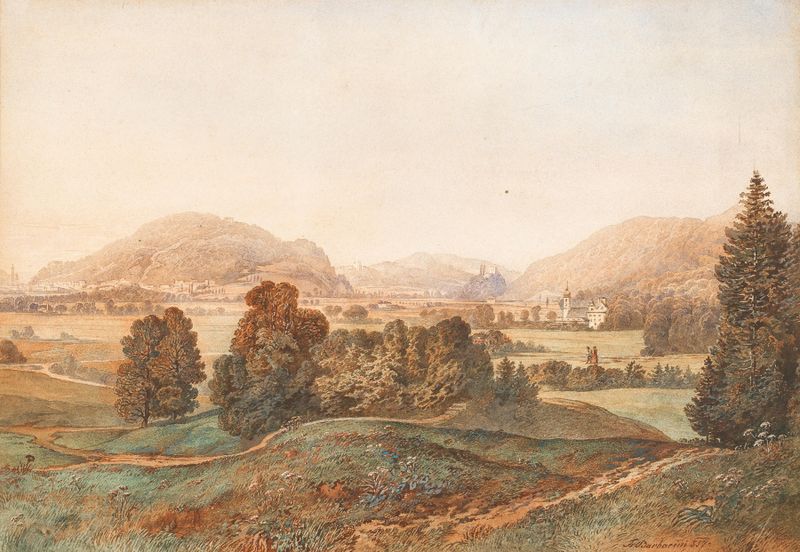
A landscape with church and Aigen castle seen from south east
Franz Barbarini
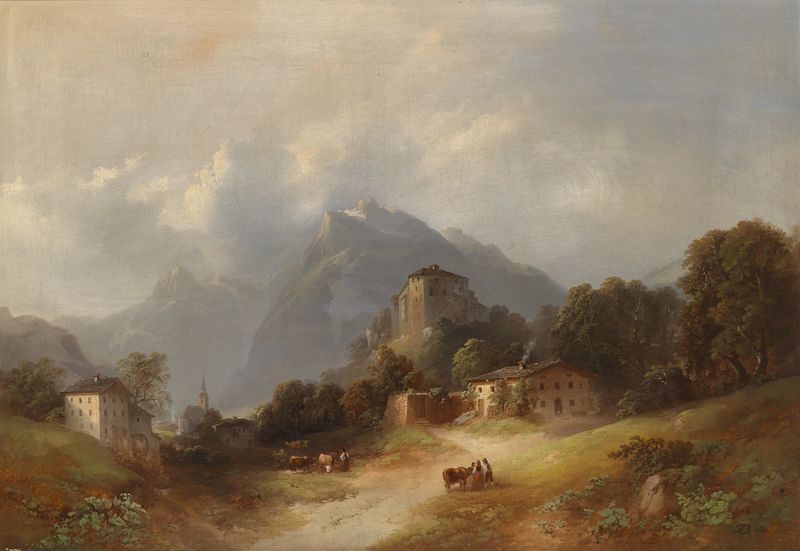
Landschaft
Franz Barbarini

Blick Auf St. Wolfgang Am Wolfgangsee
Franz Barbarini

Blick über Prag von Petrin aus
Franz Barbarini

Gebhardskapelle bei Bregenz
Franz Barbarini

Motiv aus Südtirol
Franz Barbarini
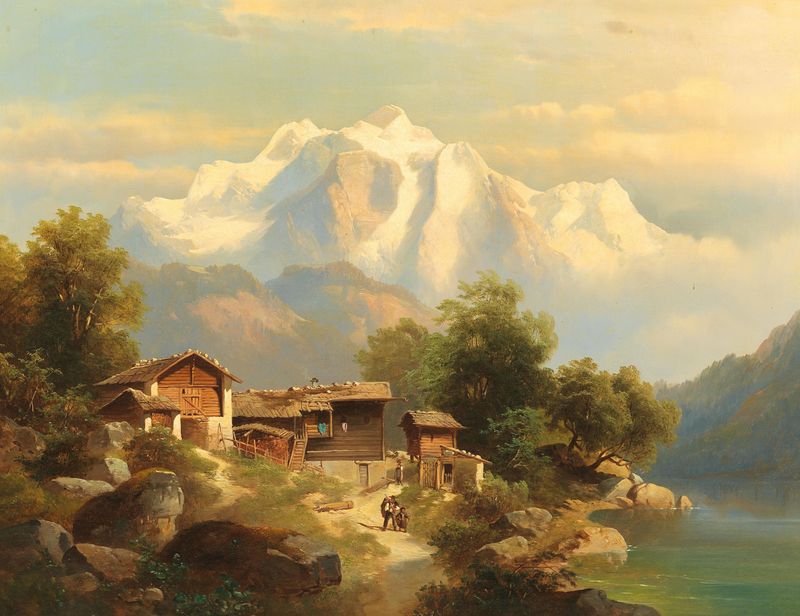
Scene In Switzerland
Franz Barbarini
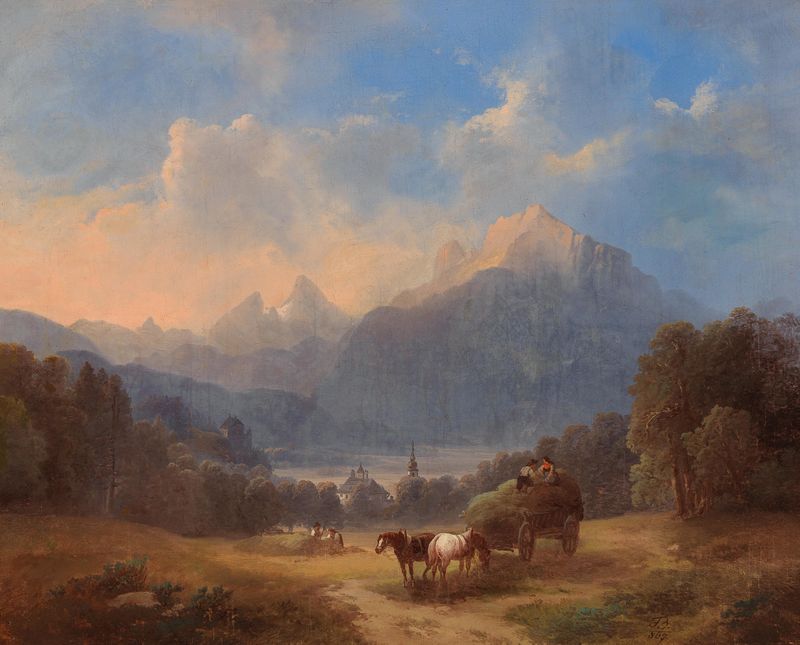
Scene Of The Salzkammergut
Franz Barbarini

Gebirgsstraße in Tirol
Franz Barbarini
An einem oberitalienischen See
Franz Barbarini





