
Landschaft — History & Facts
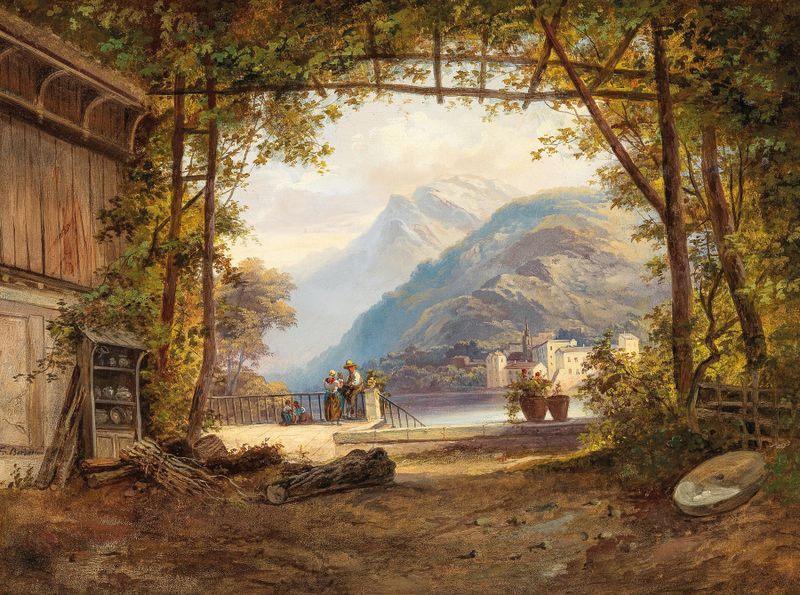
In a world perpetually in motion, serenity can often feel like an elusive dream, but in Landschaft, tranquility finds its voice. Look to the center of the canvas, where a gentle meadow unfolds beneath a vast, cloud-strewn sky. The lush greens and soft browns merge seamlessly, inviting the viewer into this pastoral landscape. Notice how the light dances delicately across the blades of grass, illuminating patches of wildflowers that seem to bloom in quiet defiance of the changing seasons.
The brushwork is both precise and fluid, suggesting a harmony between the artist's hand and nature's essence. As you absorb the peacefulness of the scene, subtle elements begin to reveal deeper meanings. The distant hills, shrouded in a light mist, evoke a sense of mystery and the passage of time, while the solitary tree standing proudly at the edge of the meadow embodies endurance amidst change. The contrast between the dynamic sky and the still ground underscores a beautiful tension, a reminder of life's fleeting moments captured in stillness. Franz Barbarini painted Landschaft in 1862 during a period when artists were increasingly drawn to Romantic ideals and the beauty of nature.
Living in the heart of Europe, he was influenced by the sweeping landscapes of the time and the burgeoning movement that sought to express emotional depth through the depiction of serene vistas. In this piece, he not only showcases his technical prowess but also his profound appreciation for the timeless and tranquil moments held within the natural world.
More Artworks by Franz Barbarini
Browse all →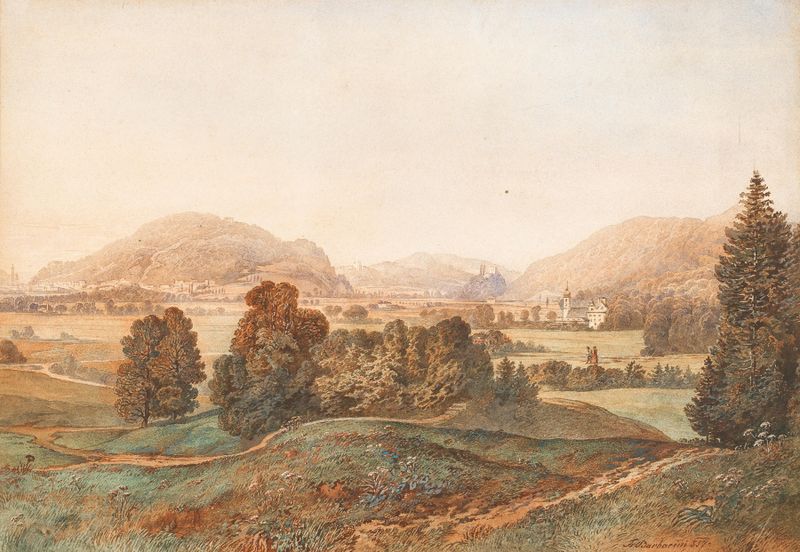
A landscape with church and Aigen castle seen from south east
Franz Barbarini
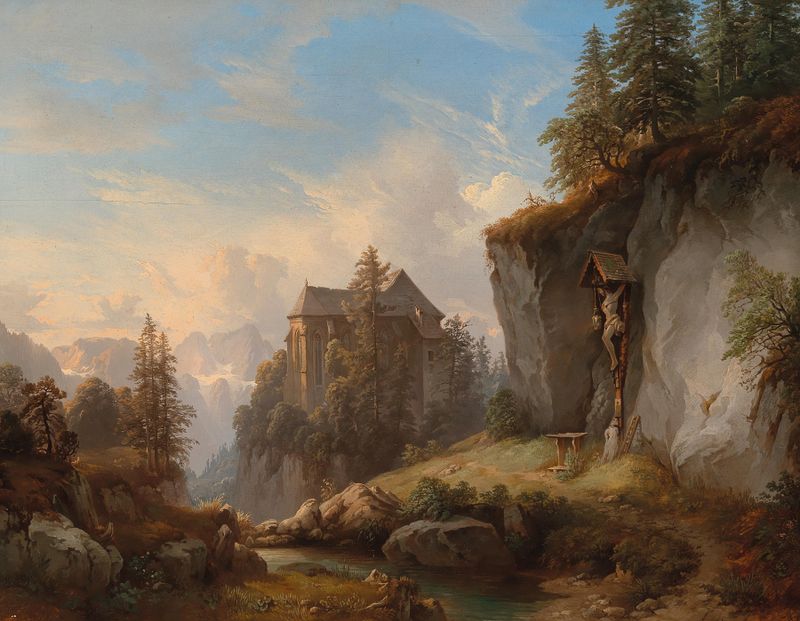
A Mountain Landscape with a Chapel and Wayside Shrine
Franz Barbarini

Blick Auf St. Wolfgang Am Wolfgangsee
Franz Barbarini

Blick über Prag von Petrin aus
Franz Barbarini

Gebhardskapelle bei Bregenz
Franz Barbarini

Motiv aus Südtirol
Franz Barbarini
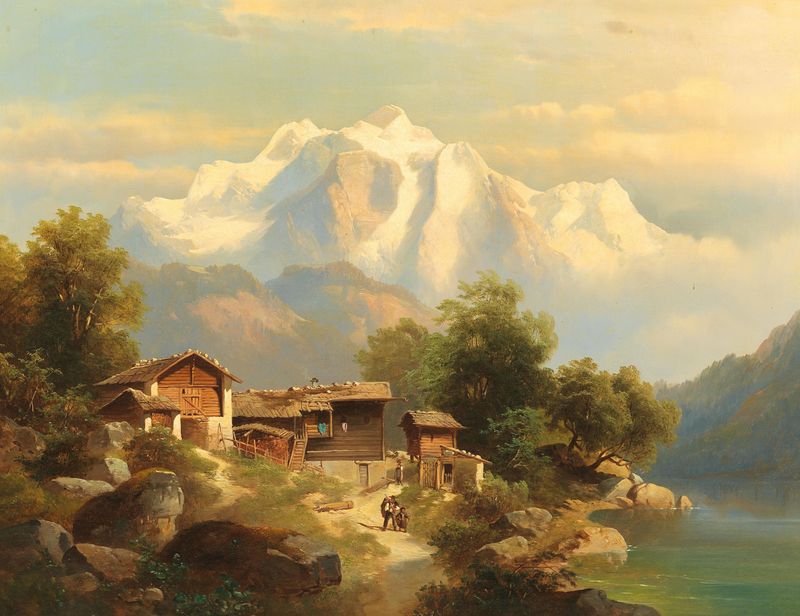
Scene In Switzerland
Franz Barbarini
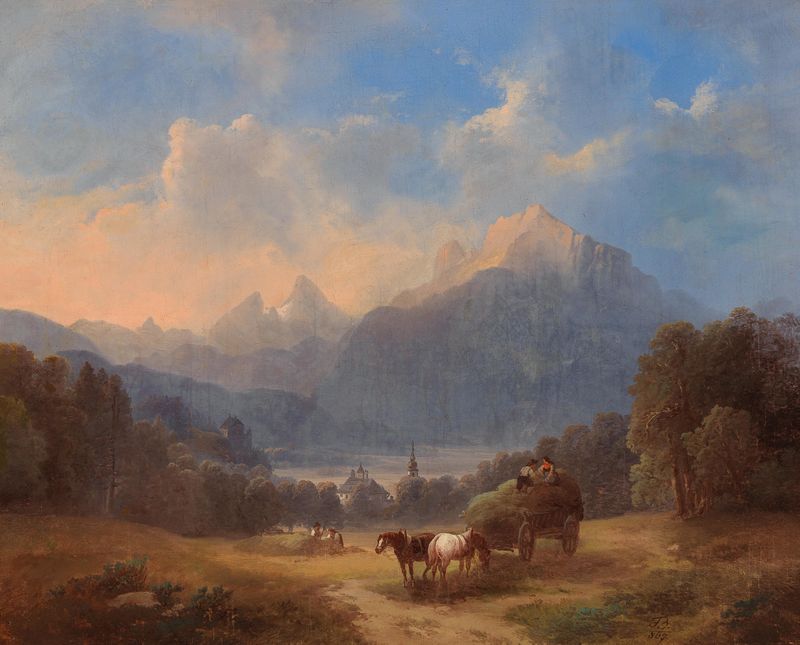
Scene Of The Salzkammergut
Franz Barbarini

Gebirgsstraße in Tirol
Franz Barbarini
An einem oberitalienischen See
Franz Barbarini





