
A Parkland View at Dusk — History & Facts
When did color learn to lie? Memories often blur the lines between truth and illusion, enveloping us in a nostalgic embrace that can both comfort and unsettle. Focus on the lush greens of the foliage that cradle the horizon, where the sun dips below the skyline, casting an amber glow over the parkland. Notice how the delicate brushstrokes create a sense of movement in the trees, like whispers of a breeze that carries stories untold. The light dances off the surface of a serene lake, inviting the viewer to pause and reflect, while the shadows stretch long, hinting at the passage of time and the fleeting nature of day. The underlying tension of this scene lies in its juxtaposition of vibrancy and melancholy.
The warm hues suggest a tranquil end to the day, yet they resonate with an underlying sadness as dusk approaches. The scattered figures in the distance—diminutive, almost ghostlike—remind us of the ephemeral moments of joy and connection that slip away into the twilight. Each stroke of color beckons one to explore both the beauty and the bittersweet nature of memory. In 1879, the artist was navigating a period of personal and professional growth, painting primarily in the picturesque landscapes of Scotland.
While the world of art was moving toward Impressionism, A Parkland View at Dusk reflects a moment of stillness, capturing a serene yet charged atmosphere. Leitch's works often depicted the interplay of light and nature, embodying a transitional phase in his style that set the stage for future explorations in landscape painting.
More Artworks by William Leighton Leitch
Browse all →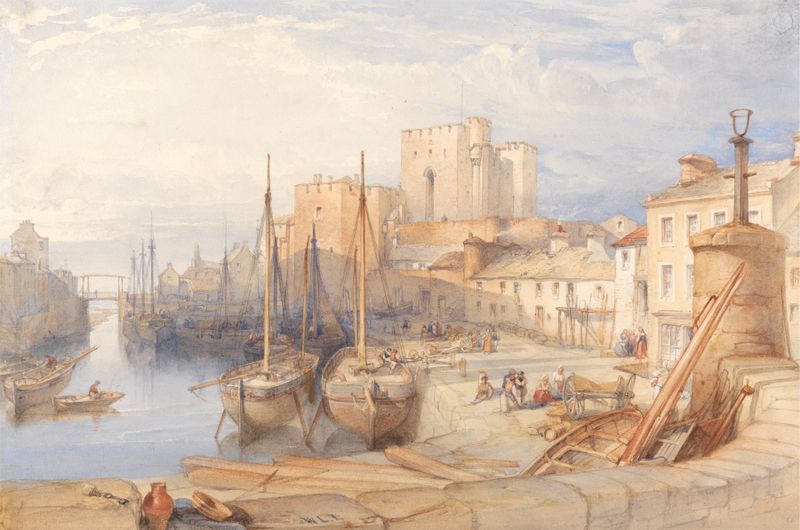
Castletown Harbour, Isle of Man
William Leighton Leitch

Landscape, Italy
William Leighton Leitch

Mist on the Downs
William Leighton Leitch
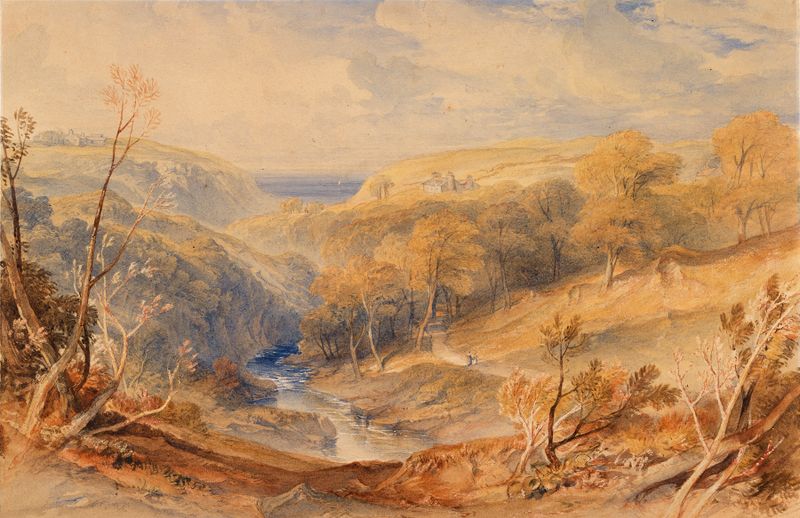
A Wooded Valley on the Isle of Man
William Leighton Leitch

Scottish Pine Tree
William Leighton Leitch
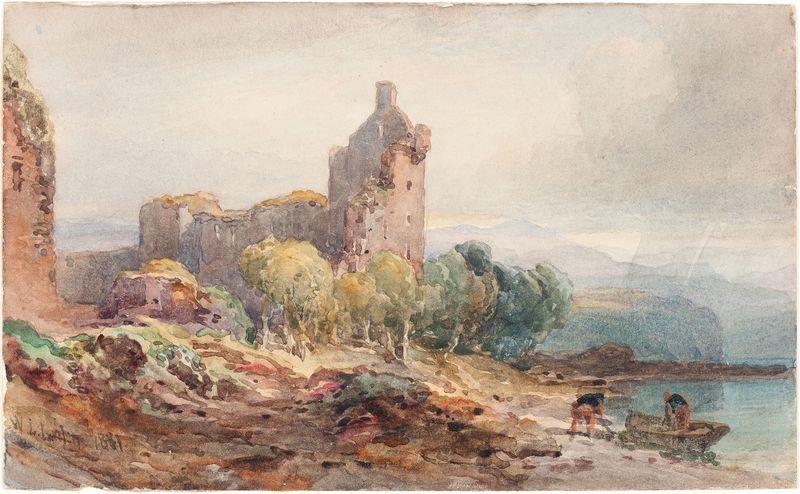
A Ruined Castle on a Lake
William Leighton Leitch

Porta S. Giovanni, Rome
William Leighton Leitch





