
Scottish Pine Tree — History & Facts
In Scottish Pine Tree, the canvas becomes a portal, inviting viewers to step into a serene yet illusory world, where nature stands timeless against the relentless march of time. Look to the left at the towering pine, its dark green needles creating a striking contrast against the delicate azure sky. Notice how the artist captures the intricate textures of the bark, evoking a sense of age and endurance. The brushstrokes, both meticulous and flowing, breathe life into the scene.
The interplay of light and shadow on the foliage suggests a gentle breeze, coaxing the viewer to feel the rustle of leaves and the whisper of nature’s secrets. Within this stillness lies a profound dichotomy; the permanence of the pine against the ephemeral nature of human existence. The solitary tree stands proud and resilient, yet it is also a reminder of fragility—a moment in time suspended in paint. This duality resonates deeply, prompting reflection on the relationship between humanity and the natural world, and how each influences the other.
The illusion of permanence is not merely visual; it speaks to our desire to hold onto moments that inevitably fade. During the years 1814 to 1883, the artist crafted this work amid the burgeoning movement of Romanticism in Britain, where the sublime beauty of nature was celebrated. As the Industrial Revolution transformed landscapes and lives, he sought solace in the wilderness, depicting the spiritual and emotional responses evoked by the natural environment. This piece embodies a longing for connection in an age increasingly defined by change.
More Artworks by William Leighton Leitch
Browse all →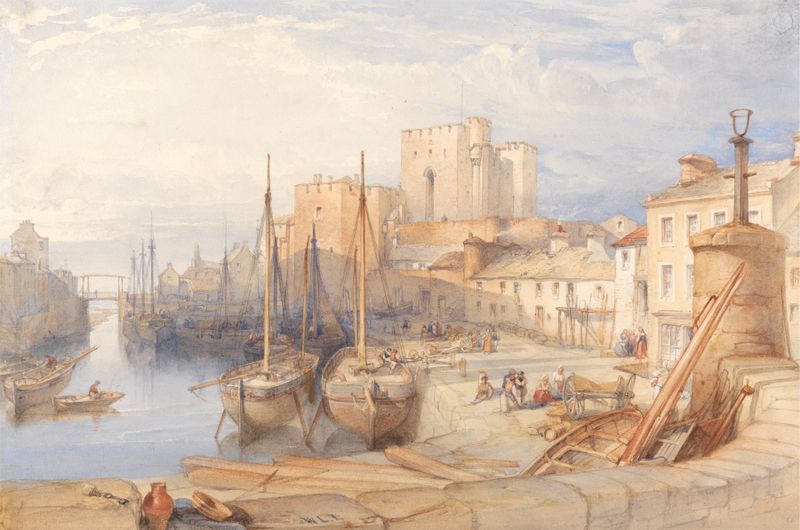
Castletown Harbour, Isle of Man
William Leighton Leitch

Landscape, Italy
William Leighton Leitch

Mist on the Downs
William Leighton Leitch
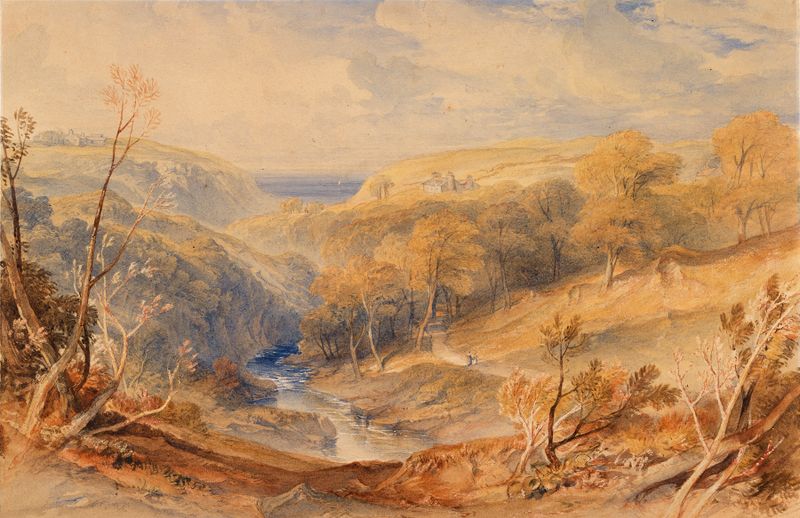
A Wooded Valley on the Isle of Man
William Leighton Leitch
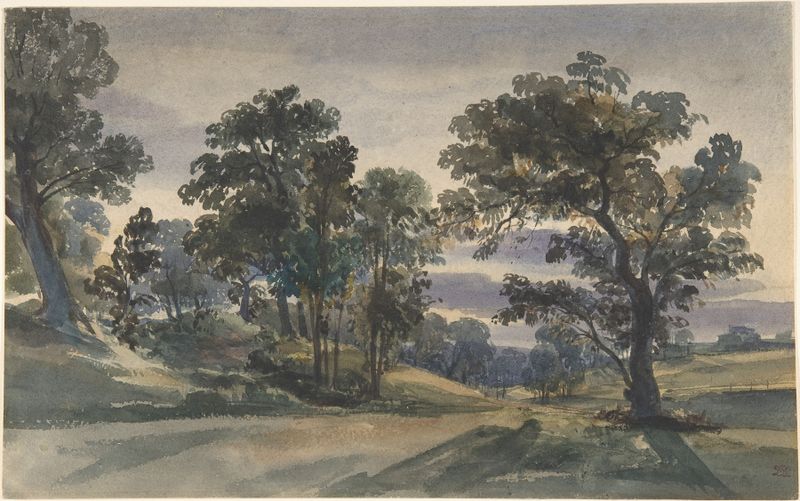
A Parkland View at Dusk
William Leighton Leitch
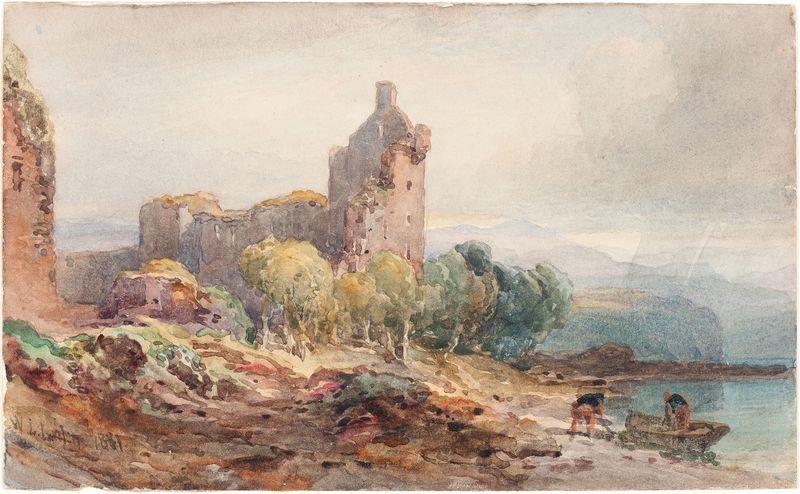
A Ruined Castle on a Lake
William Leighton Leitch

Porta S. Giovanni, Rome
William Leighton Leitch





