
A Wooded Valley on the Isle of Man — History & Facts
When did color learn to lie? In a world where beauty can mislead and truth can hide behind exquisite hues, the interplay of nature and art becomes a delicate balance. Focus on the rich greens and earthy browns that dance across the canvas, inviting you into the heart of a tranquil valley. Notice how the artist captures the play of light filtering through the trees, casting soft shadows on the underbrush. The brushstrokes are deliberate, each stroke revealing the textures of foliage and the gentle contours of the land, leading the eye deeper into the lush scene, as if beckoning you to step inside. Yet, amidst the serenity, hidden tensions emerge.
The winding path suggests a journey, perhaps one fraught with uncertainty, while the isolated tree perched on the hill evokes feelings of solitude. The contrast between the vibrant life of the valley and the stillness of the solitary figure hints at the transient nature of beauty, suggesting that while the landscape is alive, it also carries an underlying sense of melancholy and impermanence. The artwork was crafted during a period when its creator was deeply influenced by the Romantic movement, reflecting a fascination with nature's sublime beauty. Working in the mid-19th century, Leitch found himself in a world torn between industrialization and a longing for pastoral peace.
His experience on the Isle of Man provided a canvas for his exploration of these themes, as he sought to encapsulate not just the landscape, but the emotional resonance it invokes in the viewer.
More Artworks by William Leighton Leitch
Browse all →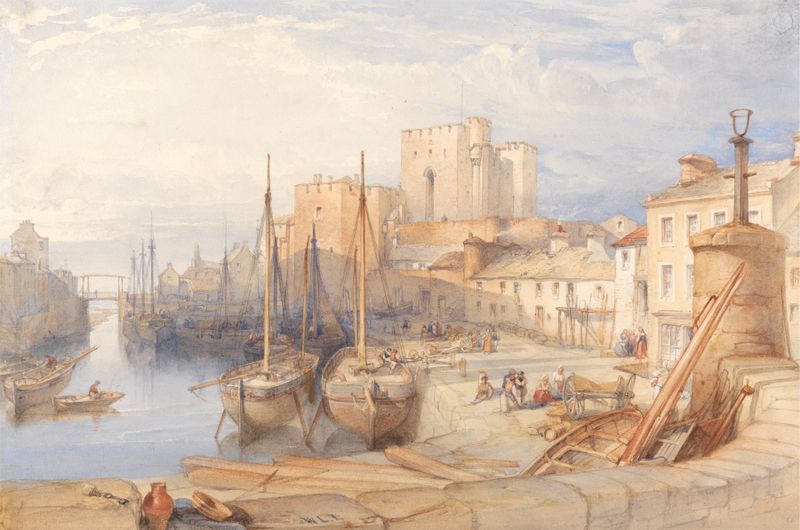
Castletown Harbour, Isle of Man
William Leighton Leitch

Landscape, Italy
William Leighton Leitch

Mist on the Downs
William Leighton Leitch

Scottish Pine Tree
William Leighton Leitch
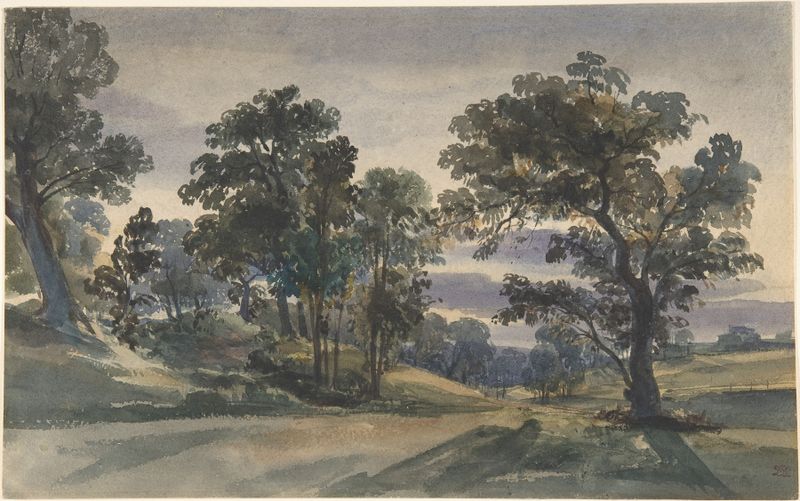
A Parkland View at Dusk
William Leighton Leitch
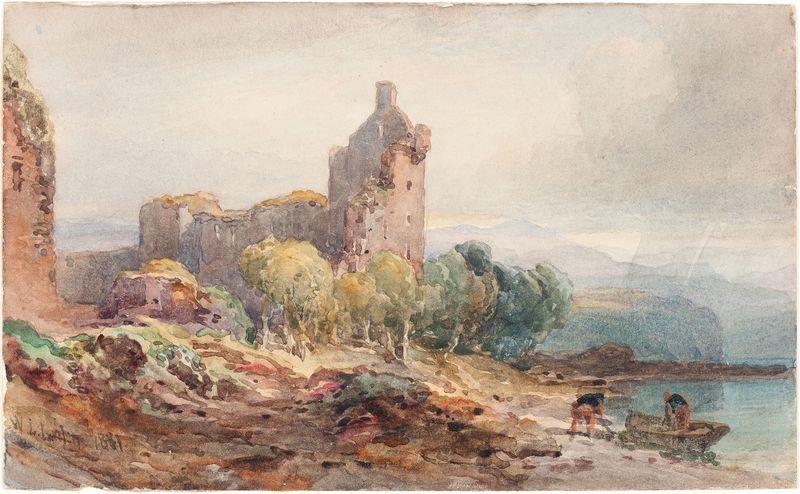
A Ruined Castle on a Lake
William Leighton Leitch

Porta S. Giovanni, Rome
William Leighton Leitch





